PEC – ENCLOSED
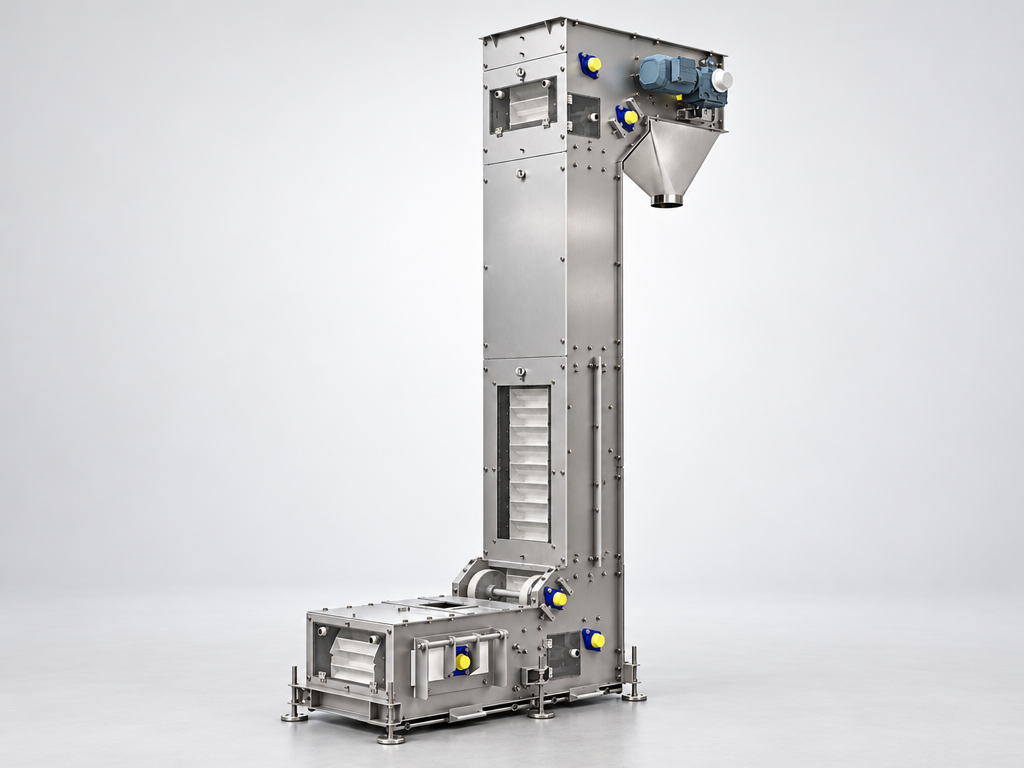
- Most versatile TipTrak design
- Enclosed product handling
- Easy inspection and maintenance access
- Multiple customization options
- FDA-compliant options available
Protect fragile products, reduce material loss and connect processes with gentle, spill-free conveying. TipTrak’s interlocking buckets and low-maintenance beltchain move powders, granules and blended materials through horizontal and vertical paths, with construction and discharge options selected around your application.
REQUEST AN APPLICATION REVIEWAllow Advertising cookies in Consent Preferences to watch the animation.
TipTrak is available in three primary models, allowing the construction to be matched to the requirements of the application.
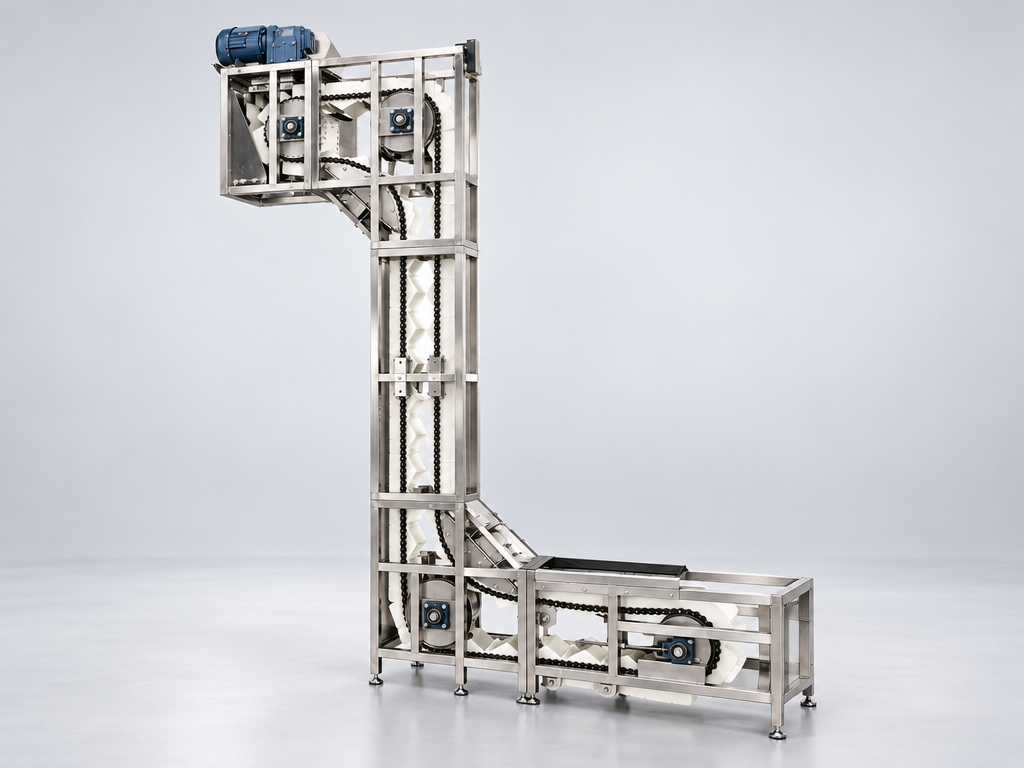
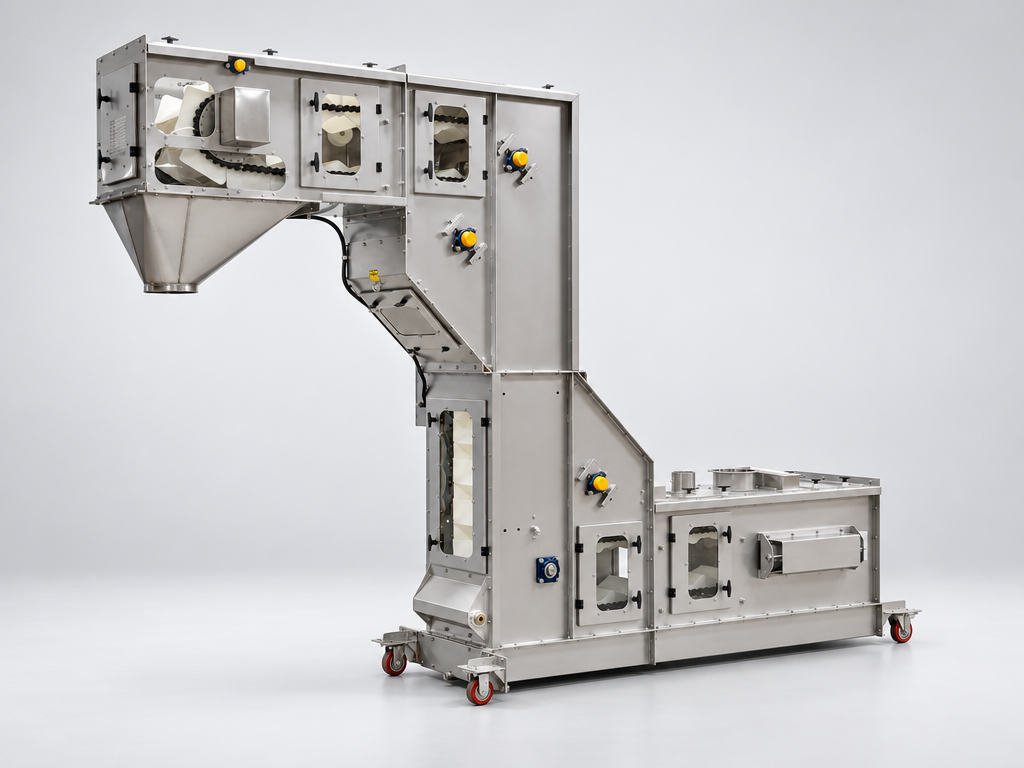
Compare TipTrak sizes, capacities and construction options, then match the conveying arrangement to your application.
Nominal volumetric capacity
157 ft³/hr4.4 m³/hrNominal volumetric capacity
313 ft³/hr8.9 m³/hrNominal volumetric capacity
711 ft³/hr20.1 m³/hrTwo rows of buckets
Nominal volumetric capacity
1,422 ft³/hr40.3 m³/hrNominal volumetric capacity
1,276 ft³/hr36.1 m³/hrTwo rows of buckets
Nominal volumetric capacity
2,552 ft³/hr72.3 m³/hrActual capacity depends on material characteristics, bulk density, bucket fill, belt speed and conveyor configuration.
FDA-compliant product-contact materials available.
TipTrak carries material in individual buckets through a controlled conveying path, minimizing impacts and unnecessary product movement that can cause breakage, degradation, and segregation.
TipTrak’s continuous, interlocking buckets keep material within the conveying path throughout horizontal and vertical transfer. The joint strips between buckets maintain product containment, preventing spillage and reducing material loss, cleanup and housekeeping.
Every TipTrak features a patented stainless-steel reinforced rubber chain which, once installed, never requires lubrication or tensioning.
This eliminates the articulating joints and chain lubrication associated with conventional roller chain, helping reduce routine maintenance and downtime.
Product retained inside conveying equipment affects yield, batch accuracy and changeovers. TipTrak’s self-emptying bucket design minimizes product retention so material reaches its intended destination. Bucket knockers and application-specific discharge arrangements support transfer of materials that cling to the buckets.
Explore common applications and material handling challenges across the industries served by TipTrak.
Food products require careful handling. Fragile materials can break, blends can separate, and powders can spill or remain in the conveyor, affecting product quality and batch accuracy.
TipTrak’s continuous bucket design provides gentle, spill-free conveying with low product retention. FDA-compliant product-contact components are available for food-grade applications, making TipTrak well suited for processes where product integrity, accurate batches and efficient changeovers matter.
Chemical materials can be challenging to convey safely and efficiently. Dusty, hazardous, corrosive or high-value materials require controlled handling to minimize product loss, contamination and material retention.
TipTrak can be configured around the material and process requirements. PEC construction provides an enclosure for dust containment and operator protection. Monocoque construction provides dust-tight and gas-tight conveying, with purge-gas and pressure-operation arrangements engineered around the application.
Plastic pellets and rubber products require reliable handling to prevent spillage, product loss and unnecessary equipment wear.
TipTrak’s continuous, interlocking buckets prevent spillage throughout the conveying path. Its stainless-steel reinforced rubber beltchain requires no lubrication or tensioning once installed, reducing routine maintenance.
Agricultural and fertilizer products can be fragile, dusty or difficult to contain. Gentle, controlled handling helps prevent product damage and spillage while protecting coatings and maintaining material quality.
Battery powders can be fine, dusty, high-value and difficult to contain, making product loss and material retention key considerations.
TipTrak provides spill-free, low-retention conveying to help maximize product recovery, with sealed construction options available for greater control of dust and the conveying environment.
Metal powders can be dense, abrasive, dusty and valuable, making containment and equipment durability important considerations.
TipTrak’s spill-free design helps keep valuable material within the process, while its rubber beltchain system reduces routine maintenance. Enclosed and sealed options provide additional control for dusty or hazardous applications.
Abrasive, dense and dusty ceramic and mineral products require durable, reliable conveying with effective material containment.
TipTrak combines continuous, interlocking buckets with a low-maintenance beltchain to prevent spillage and reduce routine maintenance. Bucket materials, loading and discharge arrangements are selected around the material’s density and abrasiveness, with enclosure options available for dust containment.
Some materials simply require a more specialized conveying solution. Whether dense, abrasive, dusty, fragile or difficult-flowing, the right system depends on the material and process.
TipTrak can be configured around the specific handling challenge, with flexible constructions, conveying layouts and application-specific options for demanding or unconventional applications.
Material characteristics on a data sheet don't always tell the full story. UniTrak can review your application and, where appropriate, test your actual product under representative conveying conditions.
Limited floor space, ceiling height and existing equipment can make conveyor integration challenging. TipTrak combines horizontal and vertical conveying in a single continuous system, providing the flexibility to navigate plant constraints, reduce transfer points and create a more direct path between processes.






Different materials, processes and spaces require different conveying solutions. TipTrak offers a range of configurations to fit your specific application.
Send us your process drawing, equipment layout or even a sketch. We can review the available space and determine how TipTrak could integrate with the surrounding process.
Applications shown include friable catalyst handling at Catalyst Trading Company and fibreglass manufacturing for Johns Manville.
Different conveying technologies have different strengths. The right choice depends on the material being handled, the process requirements and the problems the conveyor needs to solve.
When evaluating conveying equipment, consider what happens to the material throughout the process, not simply whether the equipment can achieve the required capacity.
| Process consideration | TipTrak | Alternative conveying methods |
|---|---|---|
| Gentle handling | Material travels in individual buckets, with speed and discharge selected around product integrity. | Screw contact, pneumatic conveying velocity and transfer impacts affect materials differently. Compare the handling action with the product’s sensitivity. |
| Spillage | Interlocking buckets keep material within the conveying path. Controlled feeding matches the infeed to conveyor capacity. | Open paths and intermediate transfers need appropriate containment. Enclosed alternatives can also control spillage. |
| Maintenance | The stainless-steel reinforced rubber beltchain requires no lubrication or tensioning once installed. | Roller-chain designs require chain maintenance. Belts, screws and pneumatic systems have different inspection and wear requirements. |
| Complete product transfer | Self-emptying buckets and application-specific discharge options minimize retained material. | Retention depends on the conveying principle, material behavior, equipment geometry and discharge design. |
| Process integration | Horizontal and vertical conveying can be combined within one continuous system driven by a single drive. | Routing flexibility varies. Some arrangements need additional conveyors, drives or transfer points. |
| Containment | Open, PEC and sealed Monocoque constructions address different access and containment requirements. | Compare enclosure, connection and cleaning arrangements for the specific material and process. |
If you're comparing conveying technologies, tell us about the material and what you're trying to accomplish. We can help determine whether TipTrak belongs on the shortlist.
TipTrak combines horizontal and vertical conveying within one continuous system driven by a single drive. This can reduce the separate conveyors and intermediate transfer points needed to connect processes.
Interlocking buckets carry material gently while preventing spillage along the conveying path. Its patented stainless-steel reinforced rubber beltchain requires no lubrication or tensioning once installed, reducing maintenance associated with conventional roller chain.
TipTrak handles powders, granules, pellets, flakes, prills and blended products. Applications include fragile foods, plastic pellets, coated seeds, catalysts, mineral powders and other materials where product damage, spillage or containment affects the process.
Selection depends on how the material behaves, including its bulk density, particle size, flow characteristics, abrasiveness, temperature and tendency to stick. Construction, bucket material and discharge options are selected around those requirements.
TipTrak’s continuous, interlocking buckets keep material within the conveying path, including through vertical sections. Combining horizontal and vertical travel in one system also reduces intermediate transfers where material can spill, fall or experience additional impact.
The buckets carry material rather than pushing or dragging it through the conveyor. Belt speed, controlled feeding and discharge arrangements are selected around the material to minimize unnecessary movement and protect product integrity.
Yes. TipTrak can handle suitable grains, flour, feed ingredients and finished feed products. Its gentle handling and spill-free conveying path are particularly useful where breakage, fines, segregation or product loss creates a processing problem.
Required throughput, material behavior, cleaning needs and plant layout determine the appropriate size and construction. Combustible-dust requirements also need to be addressed when selecting equipment for flour, grain and other dust-generating materials.
TipTrak keeps material within interlocking buckets and reduces intermediate transfer points, limiting opportunities for spillage and dust release.
The construction determines the level of enclosure. PEC provides an enclosure for dust containment and operator protection. Monocoque provides a sealed, dust-tight and gas-tight construction for applications requiring greater containment. Infeed and discharge connections must also be designed around the material and the surrounding process.
UniTrak offers three primary constructions:
Construction is selected around the material, cleaning requirements, operating environment and containment needs.
TipTrak requires controlled feeding and should not be flood fed.
The infeed arrangement must deliver material at a rate that matches the selected conveyor capacity and bucket loading. This helps prevent overfilling and supports consistent conveying without spillage.
A vibratory feeder or another suitable controlled-feed arrangement can be incorporated around the upstream equipment and material characteristics.
TipTrak can combine horizontal and vertical conveying to connect upstream and downstream equipment within the available plant space.
The conveying path, infeed elevation, discharge position, supports and equipment connections are developed around the process. Combining movements within one continuous system can reduce transfer points and separate drives.
A process drawing, equipment layout or initial sketch helps UniTrak review the route alongside capacity, material behavior, access and maintenance requirements.
Every TipTrak features a patented stainless-steel reinforced rubber chain which, once installed, never requires lubrication or tensioning. This eliminates the roller-chain lubrication and adjustment associated with conventional chain-driven designs.
The conveyor still requires inspection and preventative maintenance. Buckets, beltchain, drives, bearings, discharge components and safety devices need attention according to the equipment manual and operating conditions. Cleaning and component replacement requirements depend on the material and application.
TipTrak sizing starts with the required volumetric conveying rate and the material’s handling characteristics. A weight-based throughput must be considered alongside bulk density to establish the volume the conveyor needs to move.
Selection also considers bucket fill, belt speed, instantaneous feed rate, conveying distance, lift height, temperature and operating schedule. For batch processes, the required transfer time matters as well as the average production rate.
The capacity guidelines provide an initial reference. Final sizing considers the complete conveying arrangement.
TipTrak’s self-emptying bucket design minimizes retention and moves material to the next process, supporting product yield, batch accuracy and cleaner changeovers.
Bucket knockers and application-specific discharge arrangements support transfer of materials that cling to the buckets. Conveyor capacity and operating speed are selected around the required batch-transfer time.
Complete transfer supports batch recovery. Weighing and dosing accuracy are established by the equipment controlling those functions.
Cleaning options depend on the construction, bucket material, product and cleaning method. They can include inspection access, clean-out provisions and application-specific clean-in-place arrangements.
Open Tubular construction provides visibility and access to the bucket assembly. Enclosed and sealed constructions require access and cleaning provisions suited to their operating duty.
UniTrak reviews dry cleaning, washdown, product changeovers and carryover concerns when selecting the equipment and its cleaning options.
TipTrak can be engineered for suitable hazardous material and combustible dust applications. Selection requires review of the material hazards, operating conditions and applicable area classification.
Monocoque construction provides sealed containment, while conductive components, grounding, purge arrangements and other measures can be incorporated where required. Hazardous-area requirements, including explosion-proof components or ATEX requirements, are addressed as part of the complete equipment specification.
UniTrak can evaluate suitable customer materials using available test equipment to help assess conveying behavior and equipment suitability.
Testing can examine questions such as product degradation, material flow, discharge behavior and product retention. The scope is agreed around the application and the equipment available.
An SDS is required, and materials are subject to safety review before testing. Discuss the application with UniTrak before sending a sample so the testing arrangements and sample requirements can be confirmed.
Explore Material Testing
See how TipTrak eliminated product loss from an existing conveying process.
VIEW CASE STUDY
See how TipTrak was applied to protect a fragile, friable material during conveying.
VIEW CASE STUDY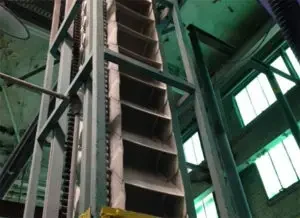
See how material testing helped develop a solution for a friable, static-prone industrial material.
VIEW CASE STUDY TipTrak BrochurePDF · 2 pages · 2.31 MBDownload brochure
Tell us what you're conveying and what you're trying to accomplish. Our team will review the material characteristics, capacity, process layout and operating requirements to determine whether TipTrak is a good fit for the application.
Where material behavior or equipment suitability needs to be confirmed, we can also test your actual product in our application testing facility before recommending a solution.