Conveying Equipment for Pharmaceutical & Nutraceutical Products
Protect product quality. Simplify transfer and changeovers.
Move nutritional powders, dry ingredients and finished tablets between production stages while protecting product integrity and limiting material loss. UniTrak selects conveying and bulk bag handling equipment around your material, cleaning requirements and connections to processing and packaging equipment.
Address the handling challenges that affect product quality and production efficiency.
PRODUCT CONTAMINATION & CARRYOVER
Keep different ingredients and formulations separated.
Nutraceutical and pharmaceutical manufacturers may handle multiple ingredients and formulations using shared production equipment.
Residual material remaining inside conveyors, hoppers and transfer connections can contribute to unwanted carryover between products.
This can become particularly important where different formulations, allergens or ingredients with specific handling requirements are produced on shared equipment.
Equipment selection should consider product-contact surfaces, material retention, cleaning access and the manufacturer's established changeover procedures.
CLEANING & PRODUCT CHANGEOVERS
Make cleaning practical between production runs.
Frequent changes between ingredients or finished products can make cleaning an important part of production scheduling.
Conveying equipment that is difficult to access or disassemble may require additional cleaning time.
Accessible product-contact areas, removable components and cleaning-oriented equipment features can help simplify changeovers.
The appropriate design depends on the material, required cleaning method and production environment.
DUST & MATERIAL CONTAINMENT
Keep fine ingredients within the production process.
Powdered vitamins, minerals, nutritional ingredients and other fine materials can generate dust during feeding and conveying.
Escaping material contributes to product loss, housekeeping requirements and contamination of surrounding equipment.
Enclosed conveying can help limit material exposure, but effective containment also depends on the design of inlets, discharges and equipment connections.
Dust characteristics and any associated hazards should be reviewed as part of equipment selection.
PRODUCT RETENTION & MATERIAL LOSS
Reduce unnecessary waste between processing stages.
Some nutritional and pharmaceutical ingredients can represent significant value even in relatively small quantities.
Material remaining within conveyors, hoppers or transfer connections after production can contribute to product loss and complicate subsequent cleaning.
Equipment geometry, conveying method, feeding and discharge should therefore be considered together.
The objective is to achieve effective transfer while limiting unnecessary material retention.
FRAGILE PRODUCT HANDLING
Protect tablets, granules and other sensitive products.
Finished tablets, granulated ingredients and other products may be damaged by excessive impact or agitation during conveying.
Breakage can affect product appearance, create fines and increase rejected or reprocessed material.
Gentle conveying can be particularly important when transferring finished products into downstream packaging operations.
Equipment selection should consider the complete material path, including feeding, elevation and discharge.
POWDER FLOW & CONSISTENT FEEDING
Understand how ingredients behave during transfer.
Dry ingredients can vary considerably in particle size, bulk density, moisture content and flow characteristics.
Some powders flow freely while others compact, bridge, cake or accumulate inside equipment.
These characteristics influence both conveyor selection and the design of receiving hoppers and feeding equipment.
Testing the actual material can help establish how it behaves during feeding, conveying and discharge.
Explore the characteristics that influence conveying selection.
Transfer nutritional ingredients between production stages.
Vitamin and mineral supplement manufacturing involves powders, granules, premixes and formulated products with different handling characteristics.
Fine materials may generate dust, while mineral ingredients can be dense or abrasive. Other products may be sensitive to moisture or prone to inconsistent flow.
The conveying arrangement should consider ingredient retention, cleaning requirements and integration with surrounding processing equipment.
Finished tablets and certain supplement products can be sensitive to breakage, chipping or abrasion.
Unnecessary impact during conveying can damage products and generate unwanted fines.
Gentle handling is particularly important where finished products must be elevated or transferred into packaging equipment.
Materials include:
Vitamin tablets
Mineral supplement tablets
Antacid tablets
Suitable compressed tablets
Supplement lozenges
Fragile nutritional granules
Common concerns: Breakage • Chipping • Fines • Product Integrity • Spillage • Packaging Transfer
Move suitable dry ingredients between processing stages.
Pharmaceutical and nutraceutical manufacturing can involve dry excipients and other process ingredients with different flow, dusting and cleaning characteristics.
The appropriate conveying method depends on the material and the requirements of the surrounding process.
Product retention, cleaning access, feeding and equipment connections should all be considered during equipment selection.
Materials include:
Lactose powder
Starch
Dextrose
Maltodextrin
Suitable cellulose-based ingredients
Selected powdered excipients
Compatible dry process ingredients
Common concerns: Dust • Material Retention • Cleaning • Flow Consistency • Contamination Control • Process Integration
Protect the physical characteristics of processed ingredients.
Granulation and agglomeration can improve the handling characteristics of certain powders, but some processed granules remain sensitive to breakage or abrasion.
The conveying method should consider product integrity, fines generation and the requirements of downstream processing or packaging equipment.
Materials include:
Nutritional granules
Agglomerated powders
Granulated supplement ingredients
Suitable dry ingredient blends
Selected pharmaceutical granules
Dry formulated products
Common concerns: Particle Breakage • Fines • Segregation • Product Integrity • Feeding • Discharge
Connect bulk ingredient delivery with production.
Many manufacturers receive powdered and granular ingredients in bulk bags.
These materials must be discharged into receiving hoppers and transferred to weighing, processing or storage equipment.
A coordinated bulk bag unloading and conveying arrangement can help control material flow and reduce unnecessary manual handling.
Materials include:
Bulk protein powders
Mineral ingredients
Powdered nutritional blends
Granulated supplements
Dry vitamin premixes
Compatible bulk ingredients
Common concerns: Bulk Bag Handling • Dust • Controlled Discharge • Weighing • Feeding • Equipment Integration
NOT SEEING YOUR MATERIAL?
Every formulation behaves differently.
Tell us what you're conveying, how the material behaves and where the handling problem occurs.
Our team can review your material and process requirements to determine which conveying options should be considered.
Different conveying methods address different handling requirements.
KLEANTRAK SANITARY BELT CONVEYOR
Keep product transfer accessible for cleaning.
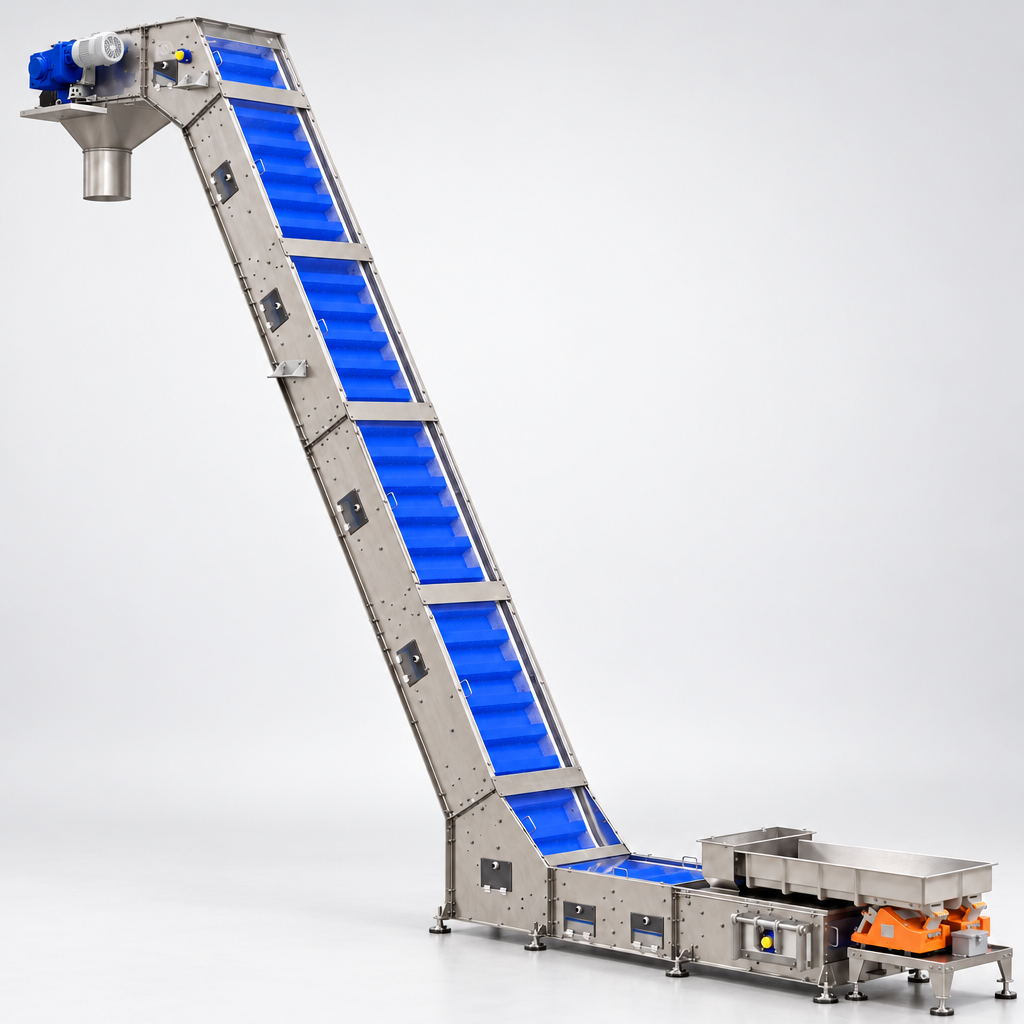
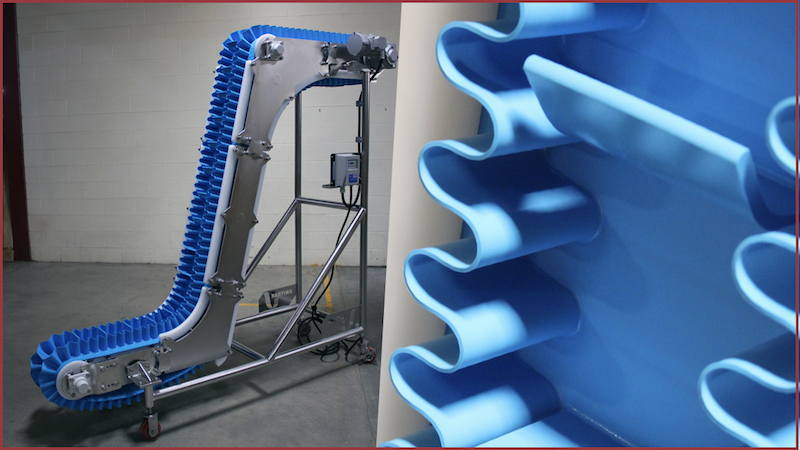
KleanTrak combines stainless steel construction with accessible product-contact areas. Its belt arrangement connects processing stages while supporting cleaning and changeovers. Controlled feeding provides consistent belt loading, with the conveying layout configured around the product and process.
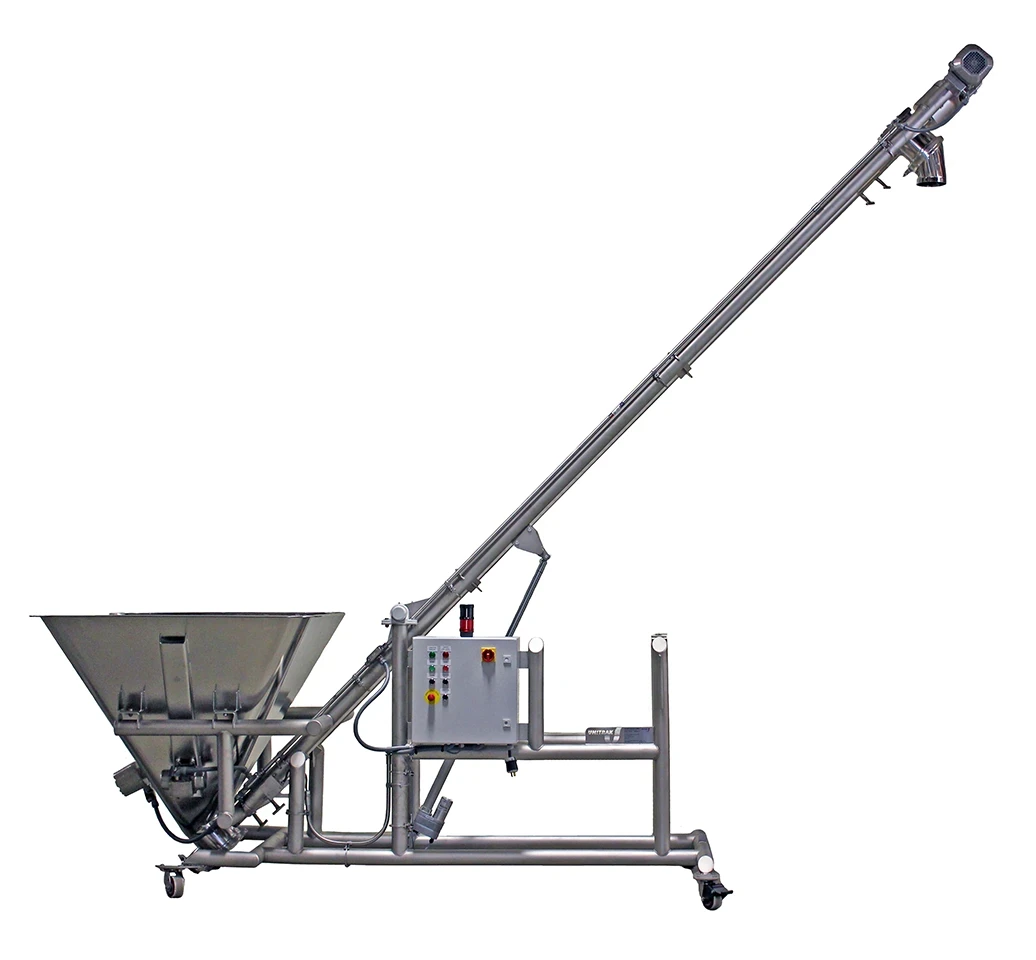
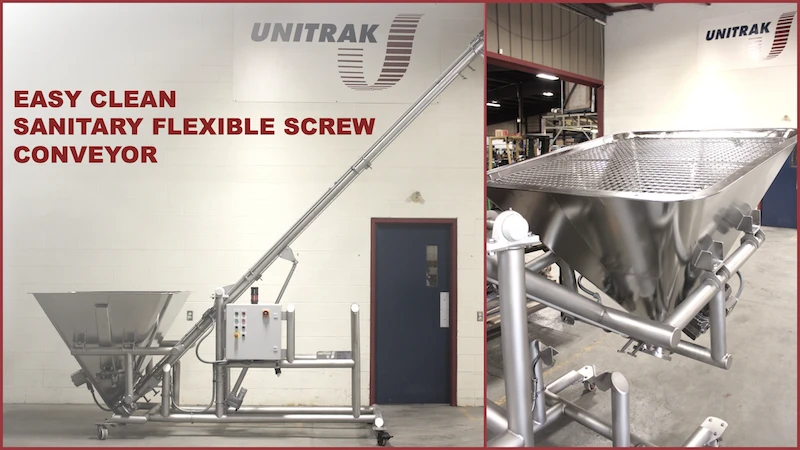
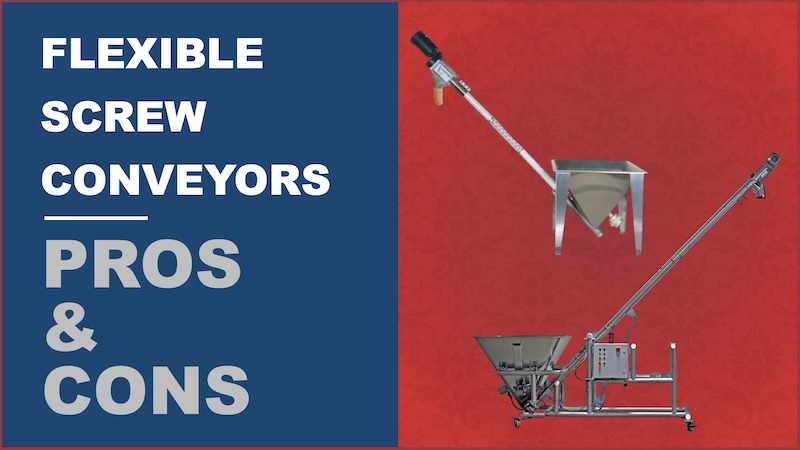
UniFlex draws material from a charged hopper using a rotating flexible screw inside a stationary tube. It transfers compatible powders and granules between production stages. Easy Clean options provide improved access where cleaning and product changeovers are priorities.
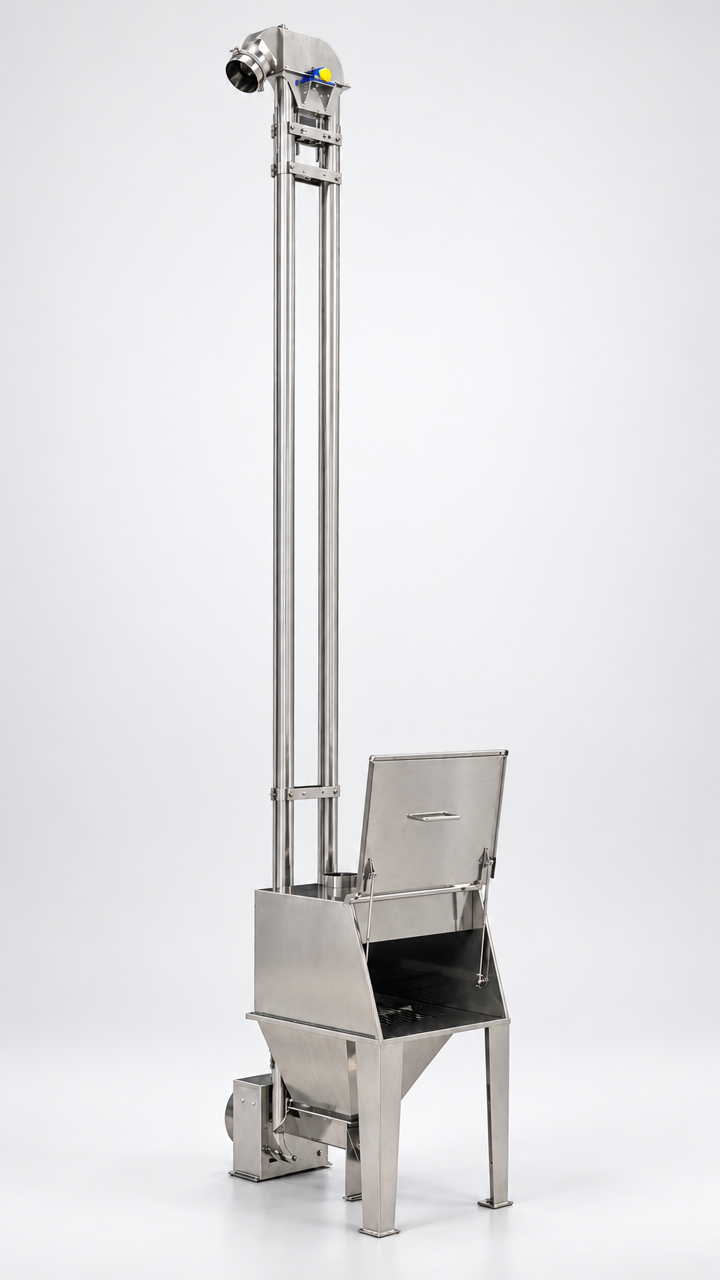
Powderflight uses a rope-and-disc assembly to create an air stream within an enclosed conveying tube. It transfers powders and granules between processes and can be flood fed from a receiving hopper. Separate metering is added when the process requires controlled dosing.
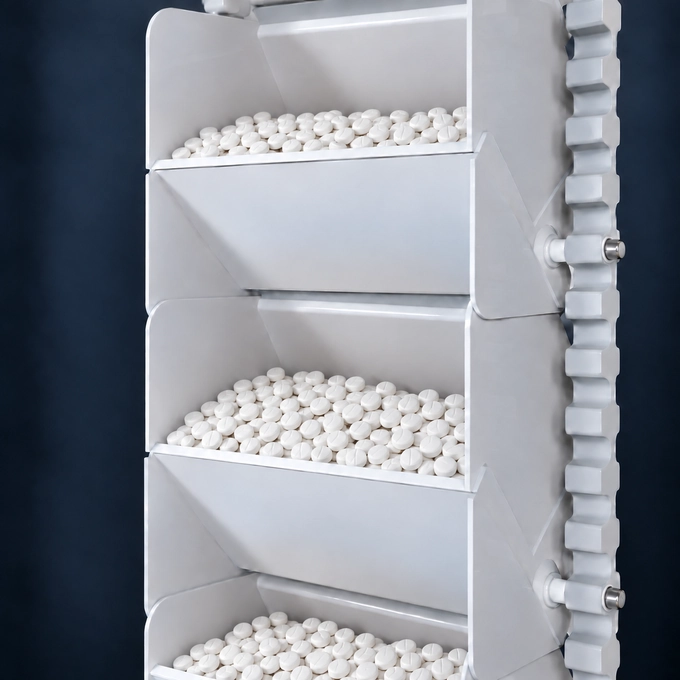
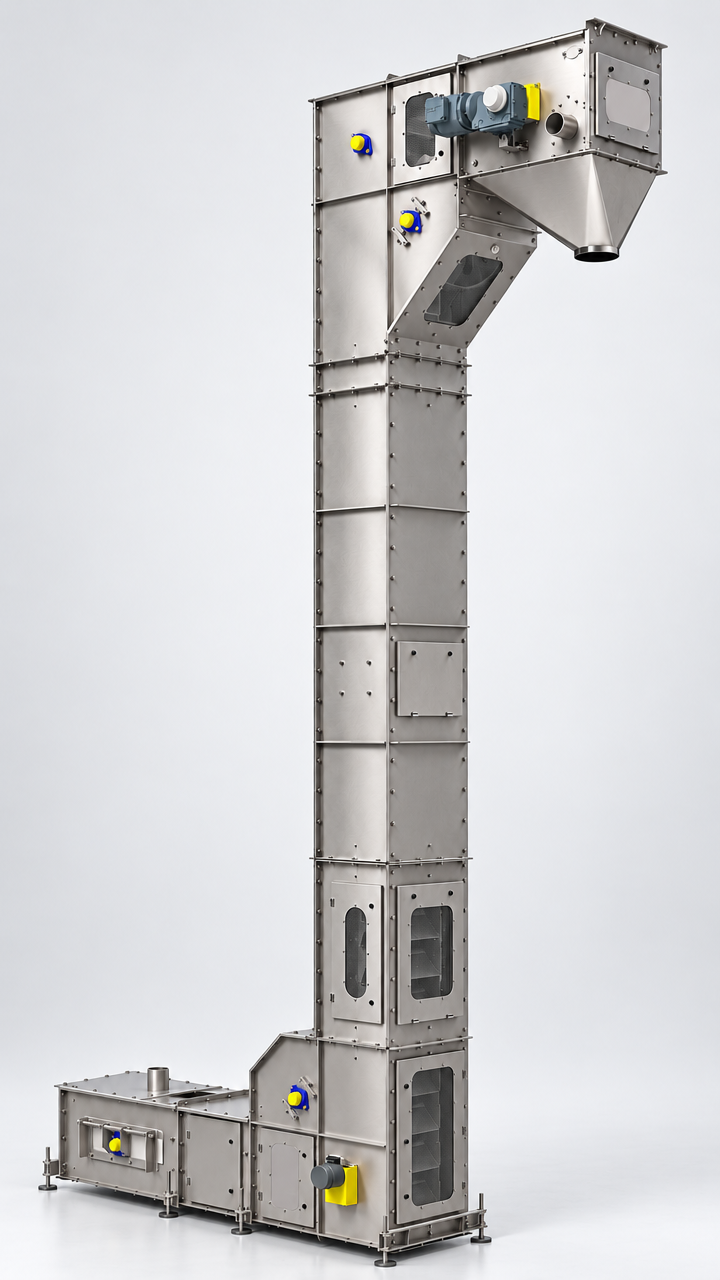
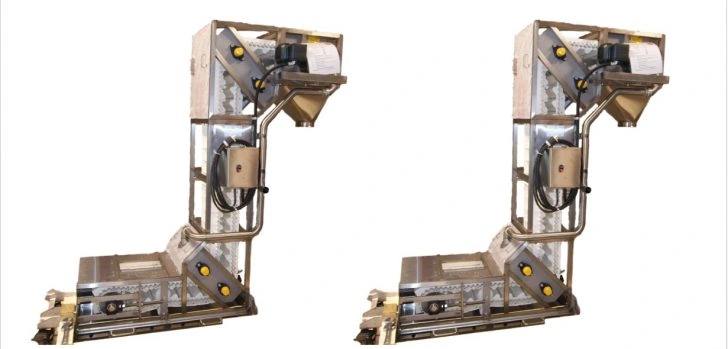
TipTrak’s continuous interlocking buckets prevent spillage while carrying material horizontally and vertically. Gentle handling protects tablets, granules, crystals and pellets from unnecessary impact. Controlled feeding loads the buckets consistently, with construction selected around the material and application.
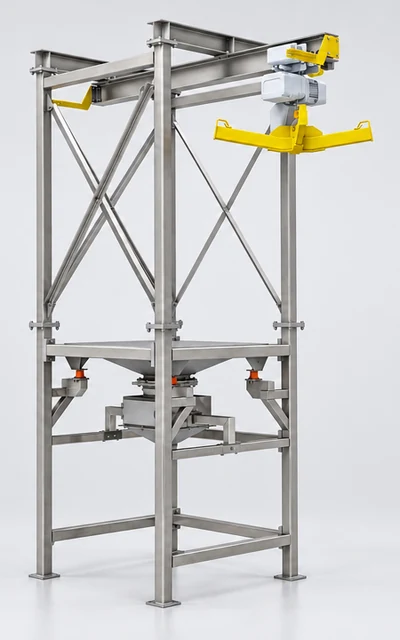
Bagstander supports bulk bag unloading or filling and integrates with conveying, receiving hoppers and optional weighing equipment. The discharge arrangement and flow assistance are selected around the material and downstream process.
See how UniTrak equipment has addressed ingredient and product-handling requirements.
Case Study
TipTrak: Protecting Antacid Tablets
A pharmaceutical manufacturer replaced conveying equipment that spilled and damaged antacid tablets with TipTrak. The installation reduced breakage and spillage while accommodating the application’s cleaning requirements.
An M100 Powderflight transferred fine corn cob grit used in the pharmaceutical industry from bulk bags into tanker trucks. Material testing established the infeed arrangement, and the published account reports minimal attrition.
Evaluate how your powder, granules or tablets behave during feeding, conveying and discharge. Material testing helps identify retention, buildup and product damage, supporting equipment selection around your actual product.
Contact UniTrak with your SDS and application details before sending material for safety review and acceptance.
Powderflight provides enclosed powder transfer with low product retention. UniFlex Easy Clean offers compact screw conveying with improved cleaning access, while TipTrak provides gentle elevation for compatible powders and granules. UniTrak matches the equipment to your ingredient, throughput, cleaning method and production layout.
Yes. UniTrak has supplied conveying equipment for pharmaceutical applications, including equipment used to transfer over-the-counter antacid tablets and suitable dry bulk ingredients.
Equipment selection depends on the material, production process, cleaning requirements and operating conditions.
Yes. UniTrak provides conveying and bulk bag handling options for nutritional powders, vitamin and mineral ingredients, granules and finished supplement tablets. Equipment construction, cleaning access and process connections are selected around the product and production requirements.
Yes. TipTrak’s low-speed, interlocking buckets protect fragile tablets during horizontal and vertical transfer. In a documented antacid-tablet application, TipTrak reduced breakage and spillage. Feeding and discharge arrangements are developed around the tablet and packaging process.
Yes. Powderflight provides enclosed transfer with low product retention, while UniFlex offers compact conveying for compatible protein powders. Ingredient flow, transfer rate, cleaning requirements and equipment layout guide the selection.
Cleaning provisions vary by equipment and configuration.
UniFlex Easy Clean provides tilting and quick-release features to improve access, while KleanTrak provides accessible product-contact areas.
The required cleaning method should be established during equipment selection.
Equipment selection can help address carryover by considering material retention, product-contact areas and cleaning access.
The complete transfer system and the facility's cleaning and changeover procedures should also be considered.
UniTrak can evaluate suitable dry excipients and related process ingredients.
Material flow, cleaning, retention and containment requirements should be considered before selecting equipment.
Enclosed conveying can help limit material exposure during transfer.
Effective dust control also depends on feeding, discharge connections and surrounding process equipment.
The complete application should be evaluated when establishing dust-control requirements.
UniTrak can evaluate batch and intermittent conveying applications.
UniFlex Easy Clean and Powderflight may be considered for suitable materials depending on product characteristics, required transfer rates and cleaning procedures.
Yes. UniTrak conveying equipment can be configured to connect with compatible customer or OEM processing equipment.
Inlet and discharge geometry, conveying rate, controls and operating requirements should be reviewed during application development.
Yes. Bagstander bulk bag handling equipment can be combined with receiving hoppers, feeders, valves and conveyors.
Weighing equipment may also be incorporated into selected arrangements.
Cleaning requirements depend on the material, production process and equipment configuration.
Important considerations include access to product-contact areas, material retention, removable components, the cleaning method and the frequency of product changeovers.
These requirements should be established during equipment selection.
Yes. UniTrak offers material testing for suitable applications.
Testing can help evaluate feeding, conveying, discharge, product breakage, buildup and material retention.
Testing is subject to material safety review and available test equipment.
DISCUSS YOUR NUTRACEUTICAL OR PHARMACEUTICAL CONVEYING APPLICATION
Let’s review your material and the transfer you need.
Tell us what you’re conveying, the capacity you need and where the material needs to go. Include the handling problem you want to solve and a layout or photo if available. Our team will help identify the next step.