Protect material quality. Control product flow. Keep production moving.
Move resins, pellets, polymer powders and additives between processes while reducing breakage, dust and material loss. UniTrak matches conveying and bulk bag handling equipment to your material, transfer path and changeover requirements, connecting receiving, processing and packaging with a practical handling solution.
Consider how electrical charge affects material handling.
Plastic materials can accumulate static electricity as particles contact conveying surfaces and one another.
Static charge may cause lightweight particles to cling to equipment, contribute to inconsistent discharge or complicate material containment.
Depending on the material and operating environment, electrostatic accumulation may also require additional safety consideration.
Equipment construction, grounding, conductive components and other appropriate protective measures should be evaluated for the specific application.
Static-control requirements cannot be determined from the material name alone.
DUST & POWDER CONTAINMENT
Control material exposure at every transfer point.
Polymer powders, powdered additives, pigments and certain fillers can generate dust during receiving, feeding and conveying.
Escaping material can create housekeeping problems, contribute to product loss and contaminate surrounding operations.
Enclosed conveying can help limit material exposure, but containment also depends on hopper connections, inlet geometry, discharge arrangements and associated equipment.
Where combustible dust hazards are present, equipment selection requires an application-specific safety review.
Maintain formulation quality during material transfer.
Masterbatch pellets, pigments and color additives are used to introduce color or other properties into plastic formulations.
These materials may be supplied as pellets, powders or granules.
Accurate feeding and controlled transfer are important where relatively small ingredient quantities influence the finished product.
Material retention and cleaning become particularly important when changing colors or formulations.
Materials include:
Color masterbatch pellets
Additive masterbatch
Pigment powders
Color concentrates
Polymer processing additives
Suitable powdered and granular colorants
Common concerns: Contamination • Color Changeovers • Dust • Segregation • Feeding Consistency • Product Retention
Account for density, abrasion and material behavior.
Fillers and reinforcing materials can introduce demanding conveying requirements.
Fine mineral fillers may generate dust or become cohesive. Abrasive particles can accelerate equipment wear, while lightweight or fibrous materials may be difficult to contain.
Equipment selection should consider the material's physical characteristics and the required transfer rate.
Materials include:
Calcium carbonate
Talc
Silica
Carbon black
Chopped fiberglass
Mineral fillers
Suitable reinforcing additives
Common concerns: Abrasion • Dust • Static • Particle Degradation • Bulk Density • Feeding
Manage variations in particle shape and flow.
Reprocessed plastic materials may have irregular particle shapes, varying sizes or inconsistent bulk density.
These characteristics can influence feeding, equipment loading and discharge behavior.
Some regrind materials may contain fines or lightweight particles that create additional dust and containment concerns.
Conveying suitability depends on particle size, shape, consistency and the presence of foreign material.
Handle pellets, chips and ingredients without unnecessary degradation.
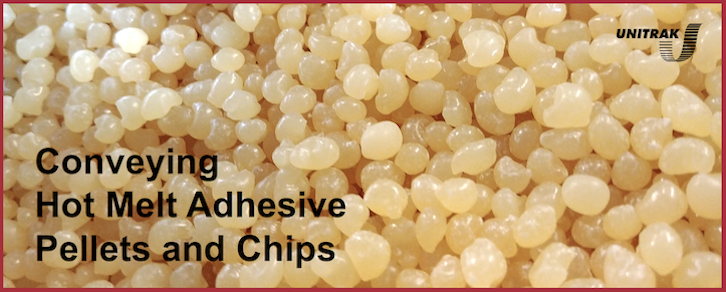
Hot-melt adhesive production involves transferring raw materials into processing equipment and conveying finished pellets or chips into storage or packaging.
Some products are free-flowing when cool but become tacky or prone to adhesion when warm.
Product temperature, particle characteristics and conveying geometry can influence performance.
Gentle handling and suitable product-contact surfaces may help reduce breakage and buildup.
Materials include:
Hot-melt adhesive pellets
Adhesive chips
Wax pellets and flakes
Resin blends
Polymer compounds
Suitable specialty adhesive ingredients
Common concerns: Sticking • Temperature • Pellet Breakage • Spillage • Feeding • Process Integration
Protect reinforcement materials and control transfer.
Composite manufacturing can involve reinforcing fibers, fillers and specialty polymer ingredients.
Some materials are lightweight, friable or prone to static accumulation.
Others may be abrasive or sensitive to particle degradation.
The conveying method should be evaluated around the specific material and its required condition at the next process.
Different equipment solves different plastics-handling problems.
TIPTRAK® BUCKET ELEVATOR
Gentle elevation that protects product integrity.
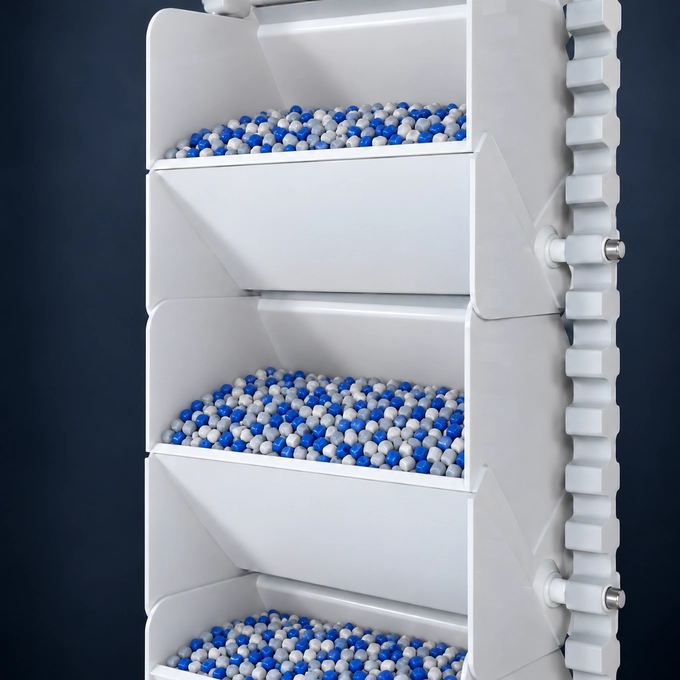
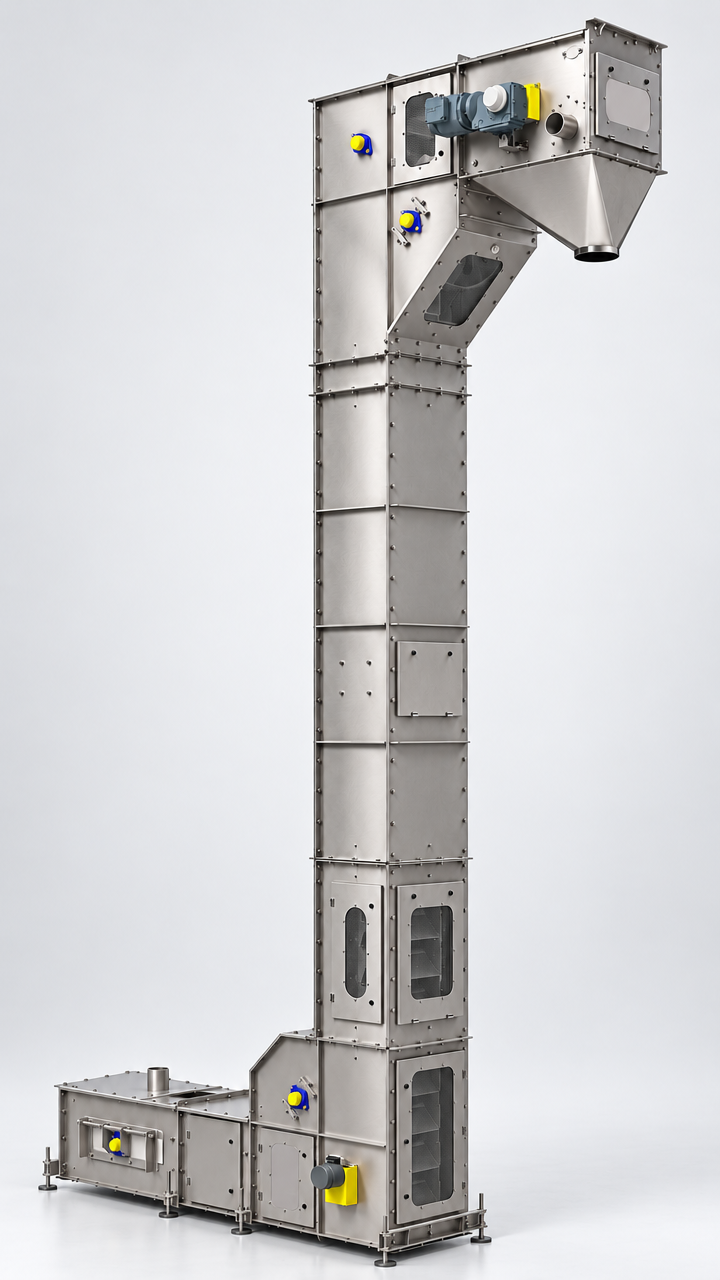
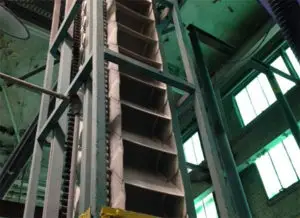
TipTrak’s low-speed, interlocking buckets move pellets, granules and fragile reinforcement materials through horizontal and vertical sections while preventing spillage along the conveying path. Documented applications include hot-melt adhesive pellets and dried chopped fiberglass. Construction and static-control options are selected for the application.
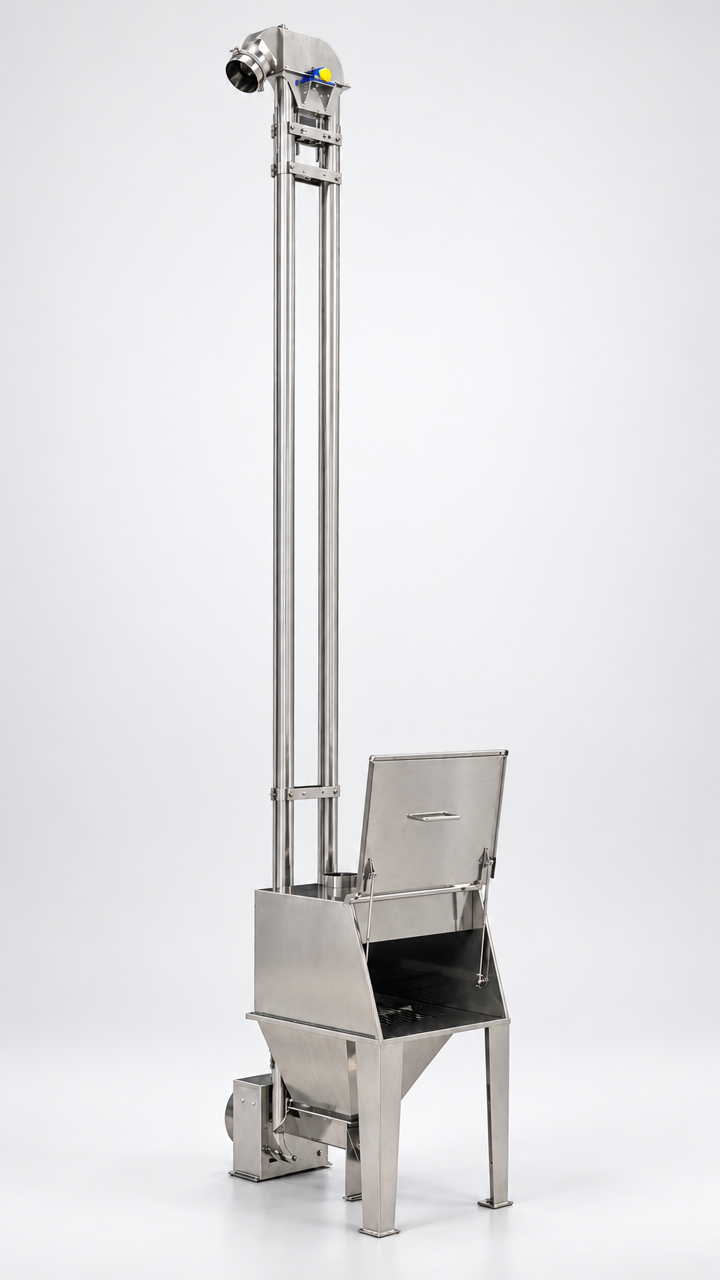
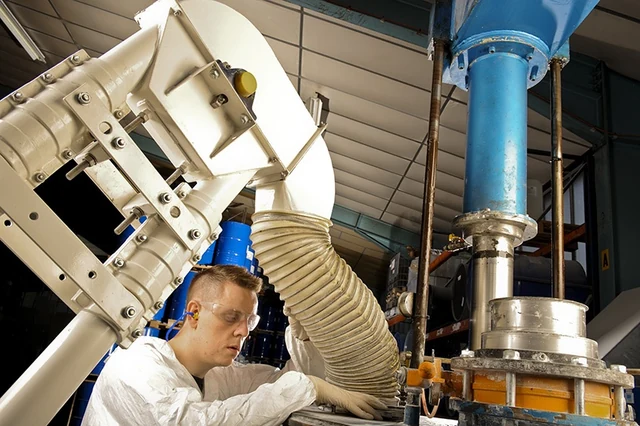
Powderflight’s rope-and-disc assembly generates an air stream that carries dry bulk material through an enclosed tube. It connects ingredient receiving with elevated processing equipment while limiting residual material. Documented applications include polymer ingredients at Beardow Adams and filler transfer at Baulé UK.
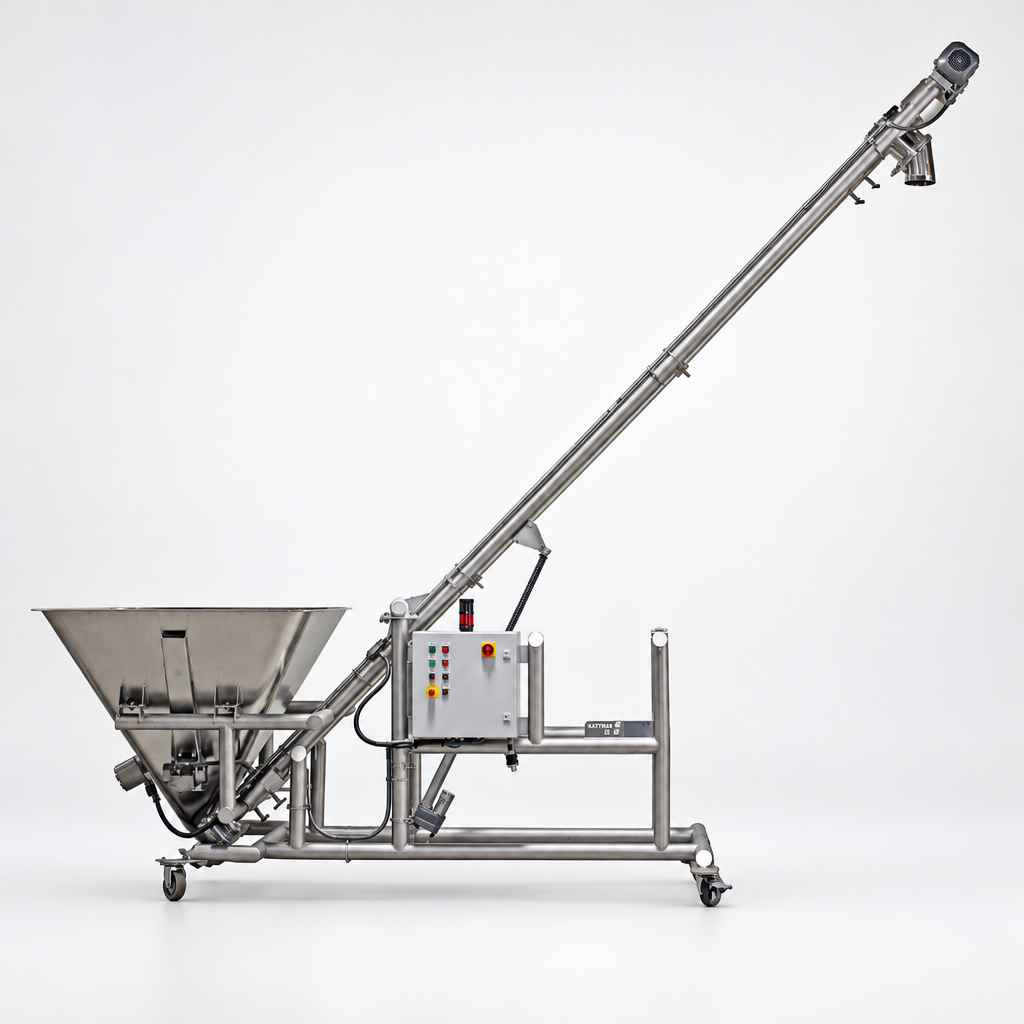
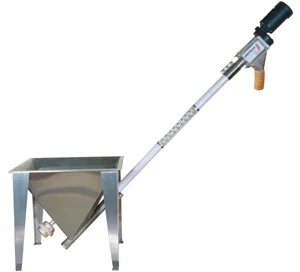
UniFlex’s rotating helical screw moves compatible powders and granules through a stationary tube. Its compact arrangement connects hoppers with mixers and other equipment in batch operations or restricted spaces. Material selection accounts for pellet fragility, abrasion and the effects of screw contact.
Consider for: Polymer Powders • Additives • Compatible Granules • Batch Transfer • Limited Space
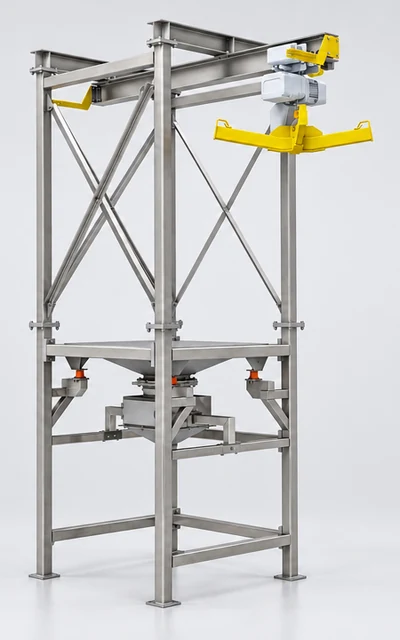
Bagstander unloaders and fillers connect bulk resin and additive handling with receiving hoppers, conveyors and weighing arrangements. Each system is built around the bag, material and process, with discharge and batching components selected to suit the application.
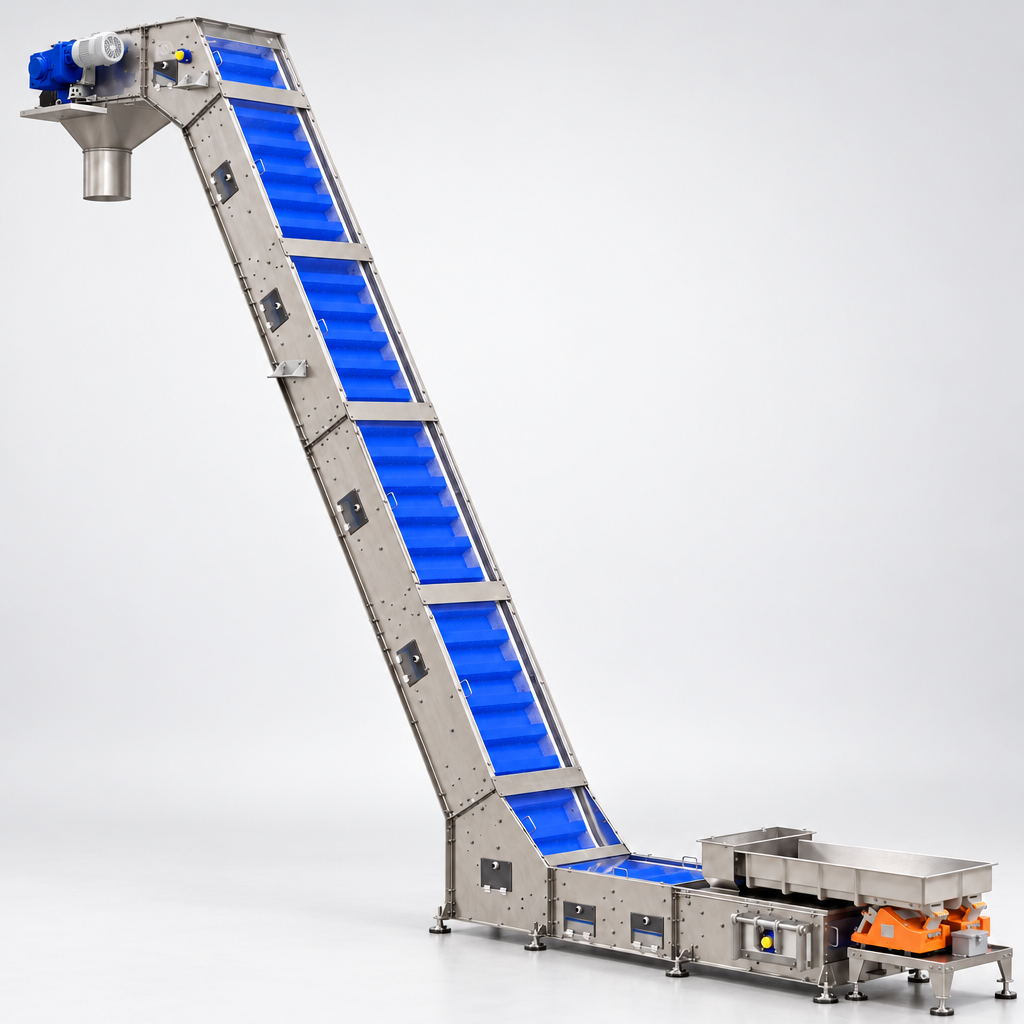
KleanTrak combines stainless steel construction with accessible product-contact areas for applications that benefit from belt transfer and cleaning access. Use it for compatible specialty polymer products where the product form and cleaning requirements favour a belt conveyor.
Consider for: Specialty Materials • Controlled Belt Transfer • Cleaning Access • Suitable Granular Products
Build the material-handling arrangement around the production process.
Plastics manufacturing frequently requires several material-handling operations between receiving raw materials and introducing them into processing equipment.
Resins may arrive in bulk bags, additives may require controlled feeding, and fillers may need to be transferred into elevated process equipment.
UniTrak can combine its conveying and bulk bag handling equipment with selected ancillary components to create a coordinated material-handling arrangement.
BULK BAG UNLOADING & POLYMER POWDER TRANSFER
Bagstander → Receiving Arrangement → Powderflight → Downstream Process
Powderflight can receive material directly from a suitable hopper. Add metering or weighing equipment when the process requires controlled ingredient dosing or batching.
RESIN PELLET ELEVATION
Receiving Hopper → Controlled Feeder → TipTrak → Downstream Process
For suitable pellets and granules requiring gentle elevation into storage, processing or packaging equipment.
ADDITIVE FEEDING & BATCH TRANSFER
Receiving Hopper → UniFlex → Downstream Equipment
For compatible powders and granular additives requiring compact, hopper-charged or flood-fed transfer; use separate metering where the process requires it.
WEIGHED BULK BAG DISCHARGE
Bulk Bag on Weighing Arrangement → Controlled Discharge → Conveyor
Load cells measure the supported bag or receiving arrangement to track material discharged into the process.
SCREENING & MATERIAL TRANSFER
Receiving Hopper → Screener/Sifter → Conveyor → Process Equipment
For applications requiring screening or removal of oversized material before conveying.
For applications requiring movement between several points within a production operation.
UniTrak manufactures its core conveying and bulk bag handling equipment. Selected ancillary components may be sourced from specialist suppliers and incorporated into the agreed material-handling package.
Our scope is the agreed material-handling equipment and its integration with surrounding processes, rather than the design or supply of an entire plastics manufacturing line.
See how UniTrak equipment has supported plastics, polymer and composite manufacturing.
Beardow Adams — Polymer Ingredient Transfer
Beardow Adams needed to transfer raw materials, including resins, wax and EVA, from a ground-level bag dump station into elevated melting equipment. UniTrak supplied a Powderflight aeromechanical conveyor configured around the available space and transfer path. The company subsequently ordered additional Powderflight conveyors for its North American operation.
Application focus: Polymer Ingredients • Enclosed Conveying • Vertical Transfer • Process Integration
Baulé UK — Filler Transfer for Cast Polyurethane Production
Baulé UK needed to add filler to its mixing process with less material loss and manual handling, within a confined production area. Following material testing, UniTrak supplied an M75 Powderflight conveyor. The published case study reports that the installation met the customer’s requirements, with no breakdowns or faults during its first three years.
Application focus: Polyurethane Manufacturing • Filler Transfer • Compact Equipment • Process Integration
Johns Manville — Gentle Handling of Chopped Fiberglass
Johns Manville needed to convey dried chopped fiberglass while protecting fragile strands, preventing spillage and addressing static accumulation. Material testing supported the selection of TipTrak S5 PEC bucket elevators with conductive options. The published case study reports reliable operation and product handling without damage or degradation at multiple facilities.
Test your actual resin, powder, additive or blend to understand feeding, conveying and discharge behaviour. UniTrak can assess breakage, fines, sticking, product retention and blend behaviour under the test conditions, helping refine equipment selection and the transfer arrangement.
Depending on the application, testing can examine:
Pellet breakage and generation of fines
Feeding and discharge consistency
Material sticking or buildup
Product retention
Segregation of blended materials
Conveying performance under the test conditions
Suitability of the proposed conveying arrangement
Contact our team with the material details and SDS before sending samples so we can confirm the test requirements.
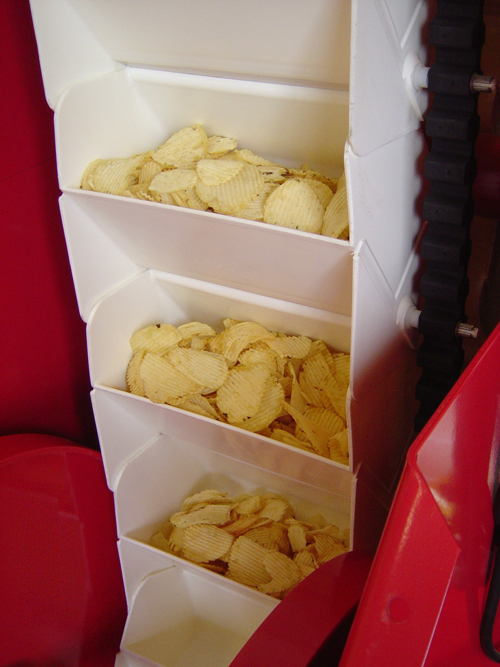
TipTrak provides gentle, low-speed elevation for plastic pellets where protecting particle integrity and preventing spillage are priorities. Its interlocking buckets move material through horizontal and vertical sections. Final selection depends on pellet characteristics, throughput, transfer height and the receiving and discharge arrangements.
Yes. Powderflight provides enclosed transfer with minimal product retention, UniFlex provides compact screw conveying, and TipTrak provides bucket conveying and elevation. The right approach depends on powder flow, abrasion, containment requirements and the production layout.
Reduce impact, unnecessary transfer points and aggressive agitation throughout feeding, conveying and discharge. TipTrak’s low-speed bucket conveying protects fragile products during elevation. Testing your actual pellets helps assess fines generation and product condition through the proposed transfer.
Certain UniTrak equipment configurations can incorporate grounding and conductive components.
The appropriate measures depend on the material, equipment design and operating environment.
Applications involving electrostatic hazards require a specific engineering and safety review.
UniTrak can evaluate suitable masterbatch pellets, pigment powders and other plastic additives.
Equipment selection should consider material flow, dust containment, feeding consistency and cleaning requirements.
Where different colors or formulations share equipment, product retention and changeover procedures become particularly important.
Some regrind materials may be suitable for UniTrak conveying equipment.
Particle size, shape, bulk density and flow behavior can vary significantly between applications.
The material should be reviewed to determine whether the proposed equipment can feed, convey and discharge it consistently.
UniTrak has experience evaluating carbon black in powder and pellet forms.
Powdered carbon black can present challenges involving dust, caking and material retention, while pelletized carbon black may be sensitive to breakage.
The appropriate equipment depends on the material grade and operating requirements.
Certain warm or sticky materials can be handled successfully, but suitability depends on temperature, surface characteristics and the tendency of the product to adhere to equipment.
Hot-melt adhesive pellets are an example of materials for which conveying geometry and product-contact surfaces require particular consideration.
Application review and testing are recommended.
UniTrak can review cleaning access, product retention and equipment construction around the customer's changeover requirements.
Different conveying methods offer different cleaning and cleanout provisions.
The proposed equipment and cleaning procedure should be evaluated against the plant's contamination-control requirements.
Yes. Bagstander bulk bag handling equipment can be integrated with receiving hoppers, feeders and conveyors.
The appropriate arrangement depends on bag dimensions, material characteristics, discharge requirements and the surrounding process.
UniTrak can develop conveying arrangements that interface with compatible downstream equipment.
The inlet, discharge, required feed rate and control interface should be reviewed with the customer or equipment supplier.
UniTrak's scope is the agreed material-handling equipment rather than the complete plastics processing system.
UniTrak can evaluate applications involving mineral fillers and other abrasive materials.
Particle hardness, bulk density, conveying speed and equipment construction influence suitability and expected wear.
Material testing may help assess conveying behavior, but a short test cannot necessarily predict long-term wear.
Yes. UniTrak offers material testing for suitable applications.
Testing can help evaluate feeding, conveying, discharge, product degradation and other relevant handling characteristics.
Testing is subject to material safety review and the capabilities of the available equipment.
PLASTICS & POLYMERS CONVEYING RESOURCES
CONVEYING HOT-MELT ADHESIVE PELLETS AND CHIPS
Explore conveying challenges associated with adhesive pellets, chips and raw polymer ingredients, including sticking, product breakage and feeding into processing equipment.
Start with the material and the handling problem you need to solve.
Tell us what you're conveying, where it needs to go and what happens during the existing transfer process.
Our team can review your material characteristics, required throughput, equipment layout and operating conditions to help determine an appropriate conveying arrangement.
For plastics and polymer applications, useful information includes:
Material type and physical form
Particle size and bulk density
Required conveying rate
Transfer distance and elevation
Material temperature
Dust and static-control requirements
Pellet breakage or fines concerns
Abrasion or sticking concerns
Product changeover requirements
Existing processing equipment and connections
Whether you're developing a new plastics production line or replacing equipment that damages pellets, creates dust or struggles with difficult materials, UniTrak can help evaluate the next step.