Protect product value. Control dust and material loss.
Move mineral powders, granules and industrial ingredients between processes with equipment selected around abrasion, bulk density and flow. UniTrak combines conveying and bulk bag handling to protect product integrity, control material loss and connect receiving, processing and packaging.
Fine mineral and industrial powders can generate significant dust during feeding, conveying and discharge.
Escaping material contributes to housekeeping requirements, product loss and contamination of surrounding equipment.
Enclosed conveying can help limit material exposure, while properly designed connections and transfer points are important to the complete containment strategy.
Material characteristics and any associated dust hazards should be reviewed as part of equipment selection.
Not every mineral or industrial product is simply an abrasive powder.
Granules, agglomerates, crystals and other processed materials may be susceptible to breakage during conveying.
Excessive impact can create fines, change particle-size distribution or affect the value of the finished product.
Gentle conveying, reduced free fall and appropriately designed transfer points help protect granules and agglomerates from unnecessary breakage and fines.
Explore the material characteristics that influence conveying selection.
Transfer fine and dense mineral products between processing stages.
Mineral powders can range from free-flowing products to cohesive materials that resist consistent discharge.
Many are dense or abrasive, while fine particles can generate significant dust.
The conveying arrangement should consider bulk density, particle hardness, dust generation, feeding and expected equipment wear.
Materials include suitable forms of:
Calcium carbonate
Limestone
Limestone powder
Dolomite
Gypsum
Talc
Kaolin
Bentonite
Clay powders
Silica-based materials
Selected mineral fillers
Other processed industrial minerals
Suitable ground mineral products
Common concerns: Abrasion • Dust • Bulk Density • Feeding • Equipment Wear • Material Retention
Protect processed materials while designing around mass flow, not just volume.
Granulated and agglomerated products may have different handling requirements than the powders from which they were produced.
Some products are relatively robust, while others can fracture or generate fines when subjected to excessive impact.
Dense granules and particulate mineral materials can create high equipment loads even at moderate volumetric rates, so drive requirements, structural loading and wear considerations should be evaluated using actual bulk density and required mass throughput.
Some mineral products are intentionally agglomerated or pelletized to create a specific particle size, flow characteristic or downstream performance.
Where degradation matters, gentler transfer and reduced free fall may provide value beyond simply moving the material.
Materials include suitable forms of:
Mineral granules
Agglomerated powders
Industrial crystals
Prilled materials
Pellets
Beads
Crushed particulates
Processed mineral products
Suitable dry granulated materials
Dense processed mineral products
Common concerns: Breakage • Fines • Abrasion • Segregation • Product Integrity • Controlled Transfer
Move dry ingredients into manufacturing processes.
Mineral fillers and dry additives are used across plastics, coatings, construction materials and other industrial manufacturing processes.
These materials may be fine, dusty and dense, while some products can be difficult to feed consistently.
The conveying system should be evaluated together with the receiving hopper, feeder and downstream process connection.
Materials include suitable forms of:
Calcium carbonate fillers
Talc
Silica-based materials
Mineral additives
Dry functional fillers
Powdered process additives
Compatible industrial ingredients
Dry construction additives
Selected cementitious ingredients
Compatible powdered building-product ingredients
Common concerns: Dust • Feeding • Bulk Density • Containment • Material Retention • Process Integration
Plan for wear before selecting the conveyor.
Abrasive products can accelerate wear throughout the material-handling system.
Particle hardness, shape and bulk density all influence the severity of abrasion.
Equipment selection should consider the contact between the material and conveying components as well as expected maintenance and replacement requirements.
Materials for evaluation include:
Abrasive mineral powders
Sand-like materials
Dense mineral granules
Selected ceramic materials
Hard granular products
Other compatible abrasive dry solids
Common concerns: Abrasion • Equipment Wear • Bulk Density • Dust • Maintenance • Feeding
Address feeding before it becomes a conveying problem.
Fine powders do not always flow freely from hoppers into conveying equipment.
Some products compact, bridge or form stable arches above the outlet. Others may cake after exposure to moisture or prolonged storage.
The complete material-handling arrangement may require hopper modifications, agitation or controlled feeding to maintain consistent flow.
Evaluate unusual materials based on how they actually behave.
Specialty minerals may be produced in relatively low volumes but carry significant value or process importance.
Industrial manufacturing also involves dry bulk materials that do not fit neatly into a single category and may be lightweight or extremely dense, free-flowing or cohesive, fragile or highly abrasive.
For these applications, product retention, dust control, contamination and cleanout may matter as much as throughput, so equipment should be selected around the actual material rather than its industry label.
Handle suitable recovered materials without assuming every recycled stream is consistent.
Some recovery processes produce mineral powders, fines, granules or other relatively consistent dry bulk materials requiring transfer between process stages.
Suitability depends on particle consistency, contamination, foreign material, moisture and temperature.
UniTrak equipment is not positioned for large rock, unsorted demolition debris or general-purpose aggregate handling.
Potential forms include:
Recovered mineral powders
Recovered fines
Recovered mineral granules
Other relatively consistent dry bulk materials
Common concerns: Abrasion • Variable Material • Dust • Density • Foreign Material • Wear
NOT SEEING YOUR MATERIAL?
Industrial powders vary enormously in particle size, density, hardness and flow behavior.
Tell us what you're conveying and what makes it difficult to handle.
Our team can review the material and process requirements and determine which conveying methods should be considered.
Mineral powder, dense granules and fragile agglomerates create different handling demands. Match the conveying action, equipment loading and discharge arrangement to the processed material.
TIPTRAK® BUCKET ELEVATOR
Protect granules and agglomerates during elevation.
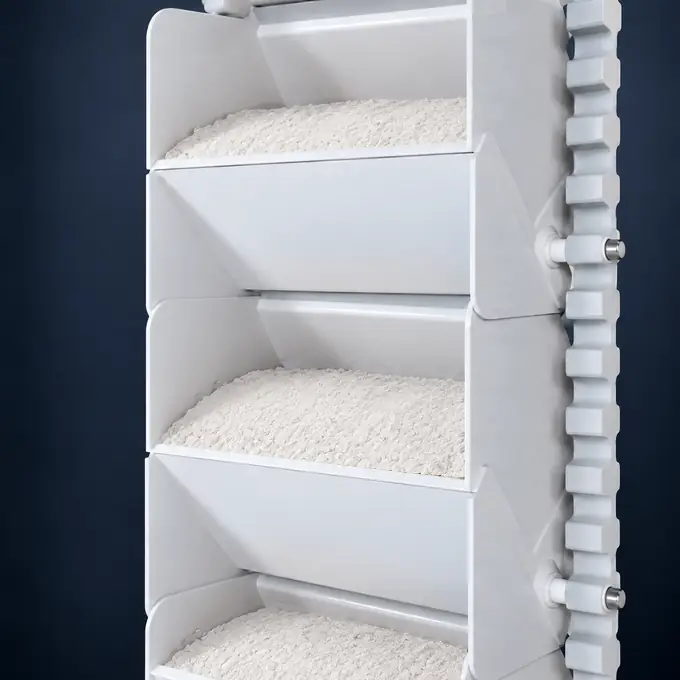
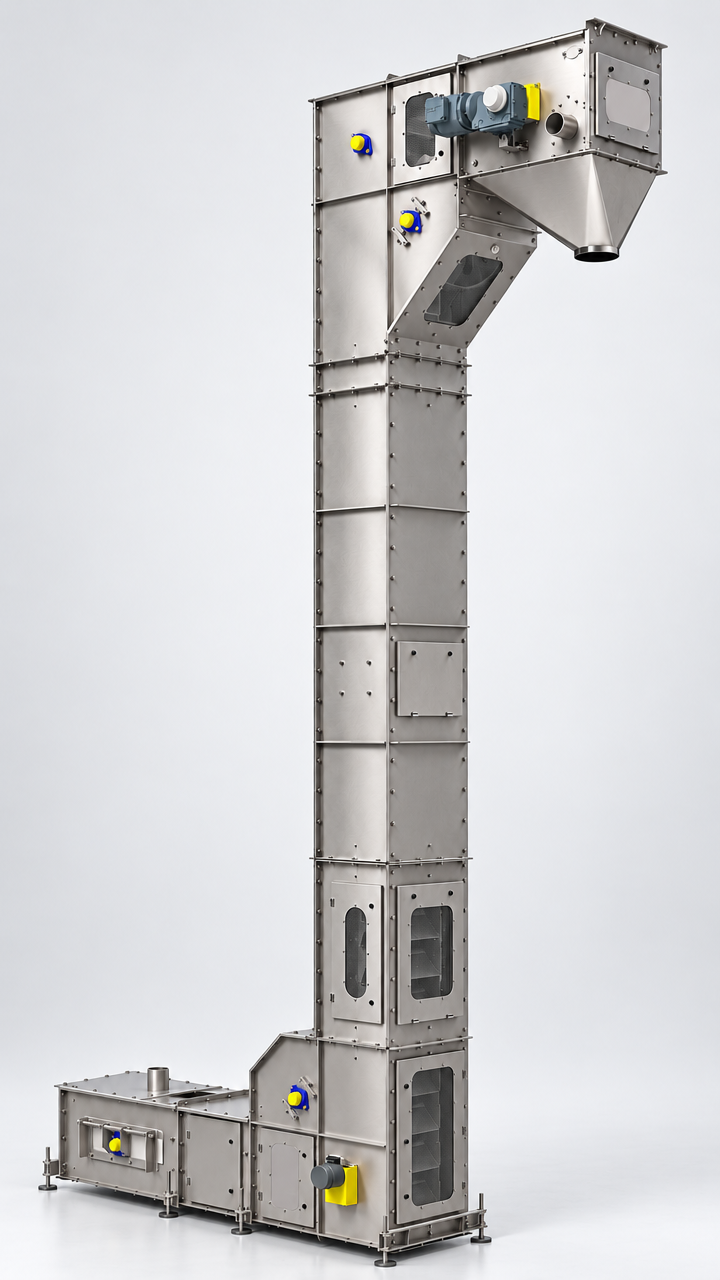
TipTrak’s low-speed, interlocking buckets reduce unnecessary impact and prevent spillage along the conveying path. Bucket materials, construction and loading are selected around the mineral’s density and abrasion, with discharge options available for products that need additional assistance. Controlled feeding loads the buckets consistently.
Connect mineral-powder transfers through an enclosed path.
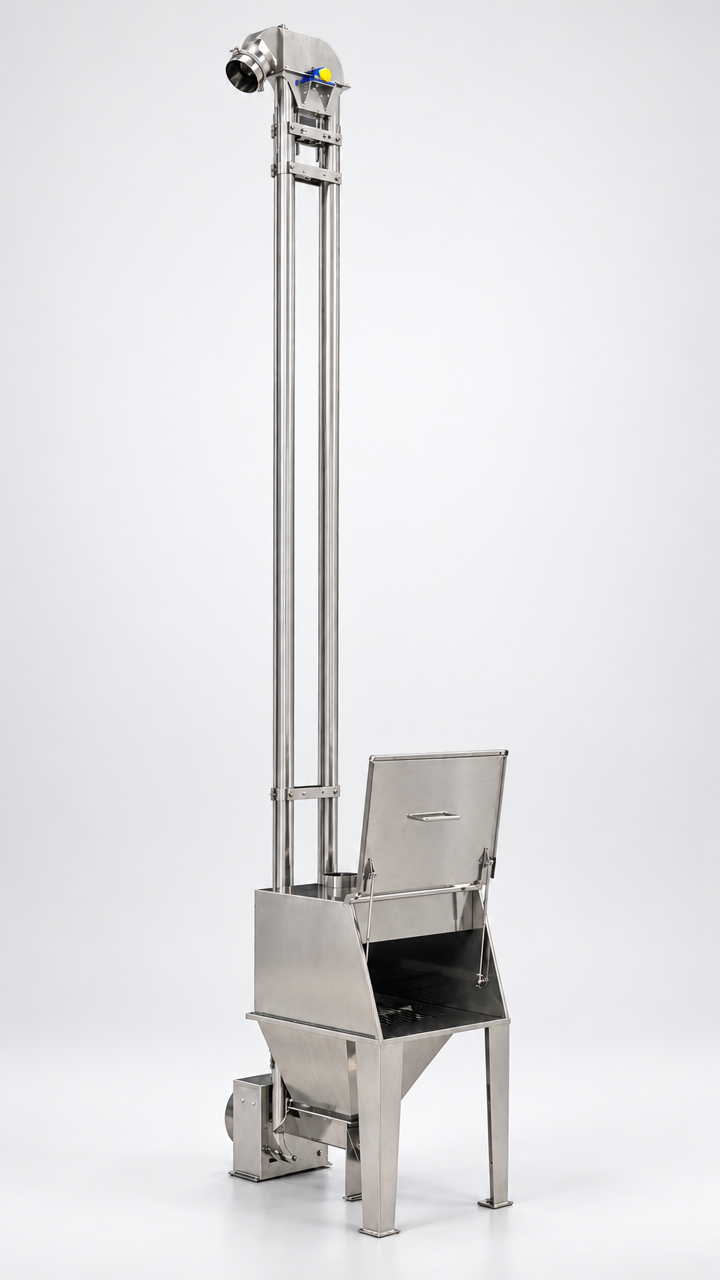
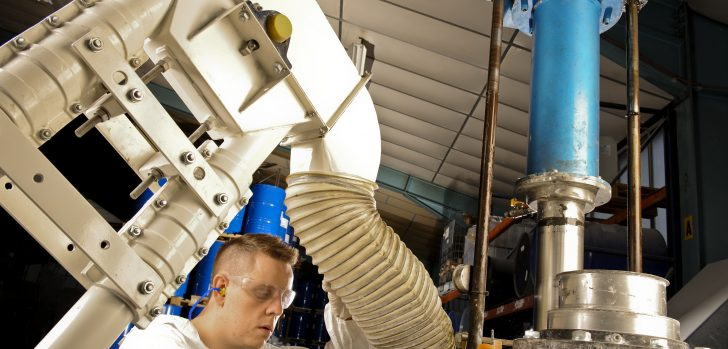
Powderflight uses a rope-and-disc assembly to create an air stream within an enclosed conveying tube for compatible powders and granules. It can be flood fed from a suitable receiving hopper; separate metering is added when the process requires controlled dosing. The conveying arrangement is developed around the mineral’s flow, density and abrasion.
Relevant considerations: Enclosed Transfer • Powders • Dust • Compact Routing • Process Integration
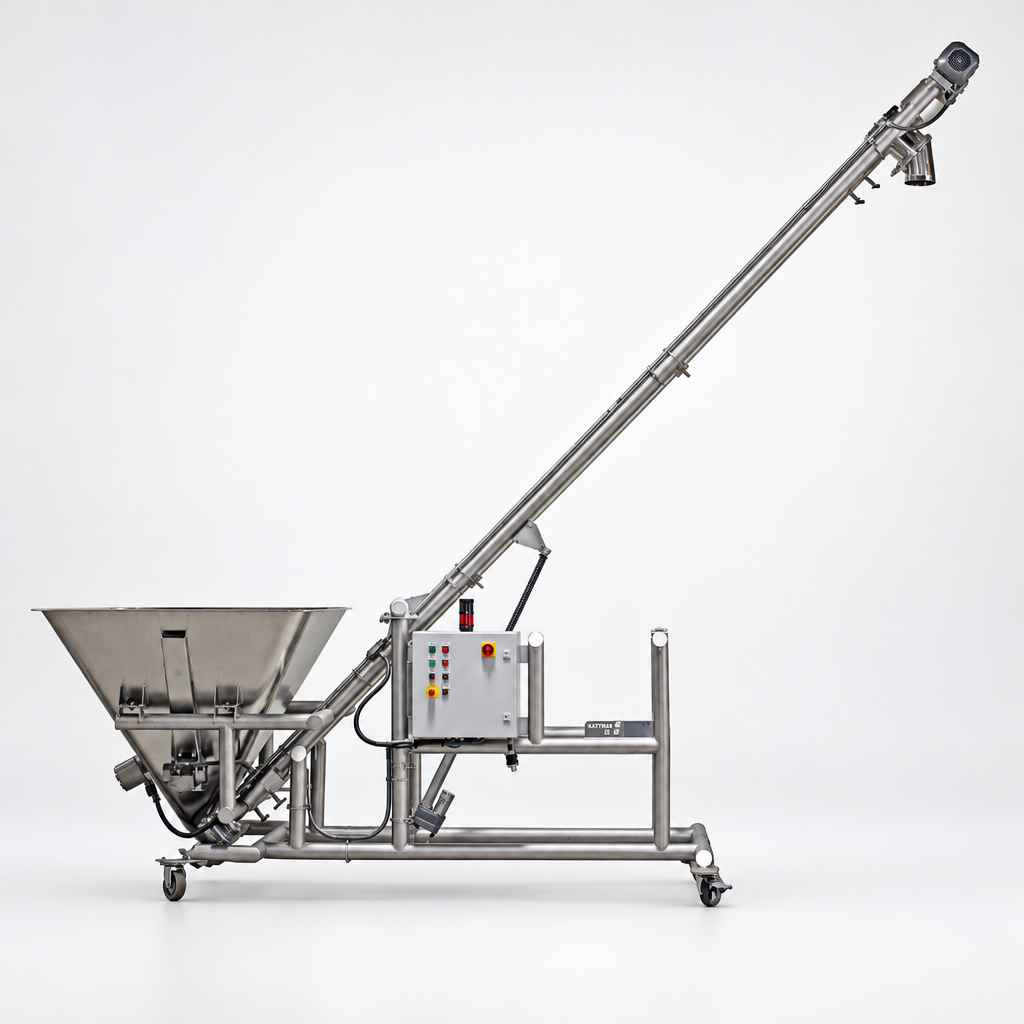
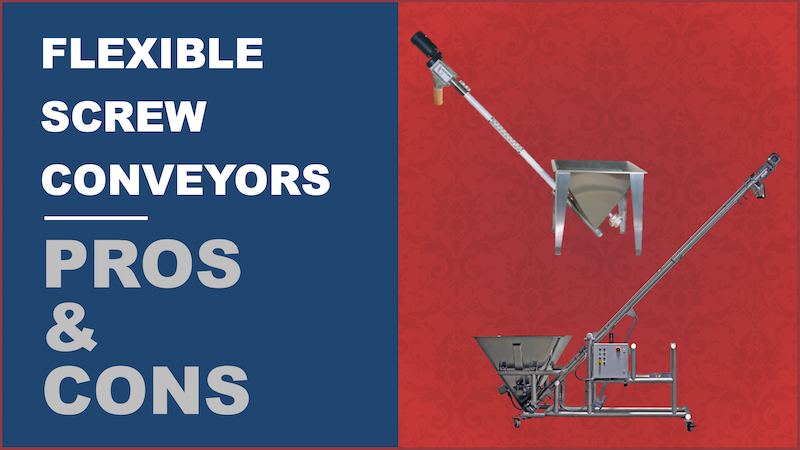
UniFlex draws material from a charged hopper using a rotating flexible screw inside a stationary tube. It transfers compatible powders and granules between production stages. Easy Clean options provide improved access where cleaning and product changeovers are priorities; selection accounts for screw contact, material flow, abrasion and bulk density.
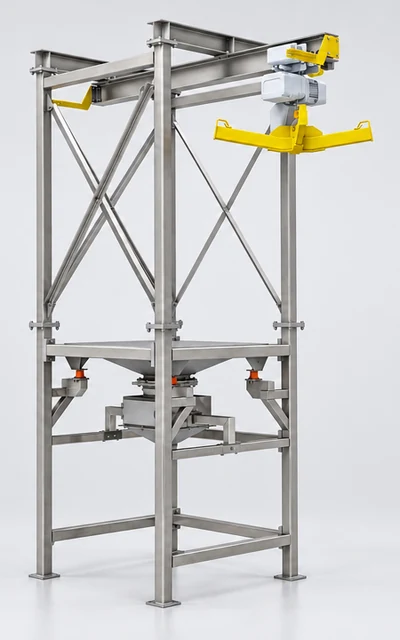
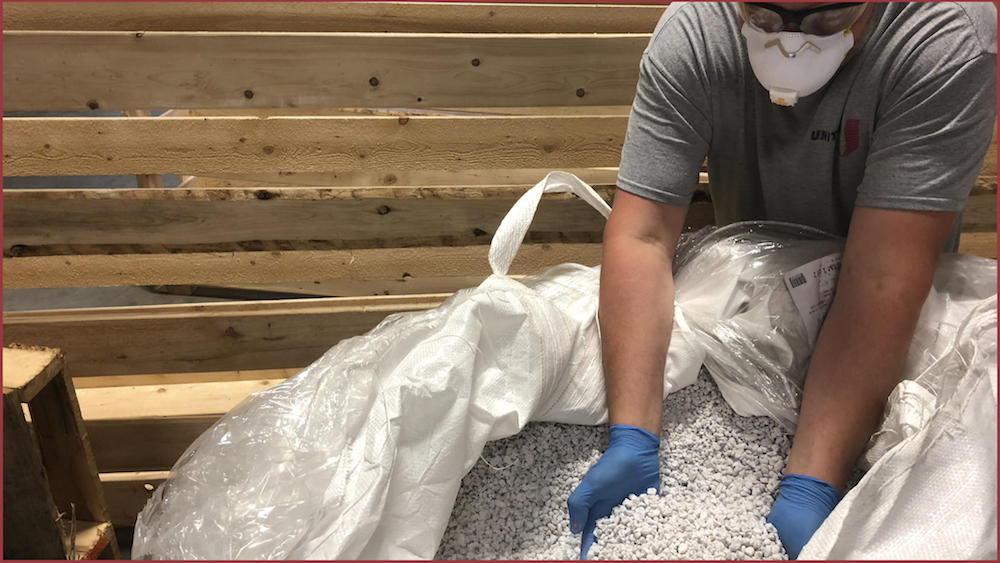
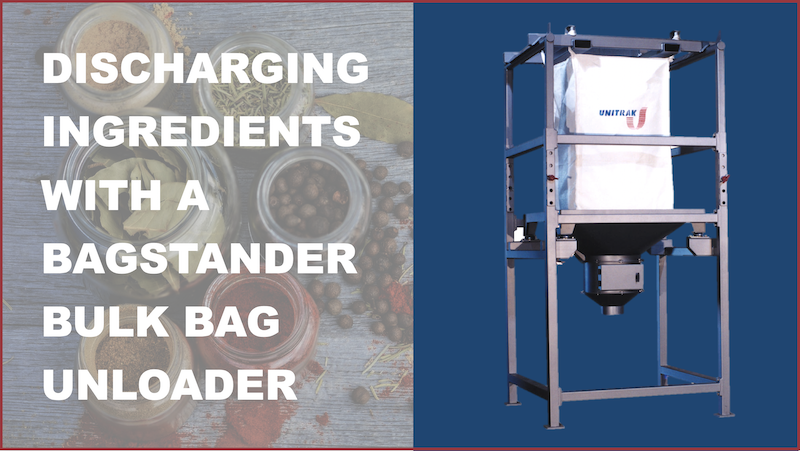
Bagstander supports bulk bag unloading or filling and integrates with conveying, receiving hoppers and optional weighing equipment. The discharge arrangement and flow assistance are selected around the bag, material and downstream process.
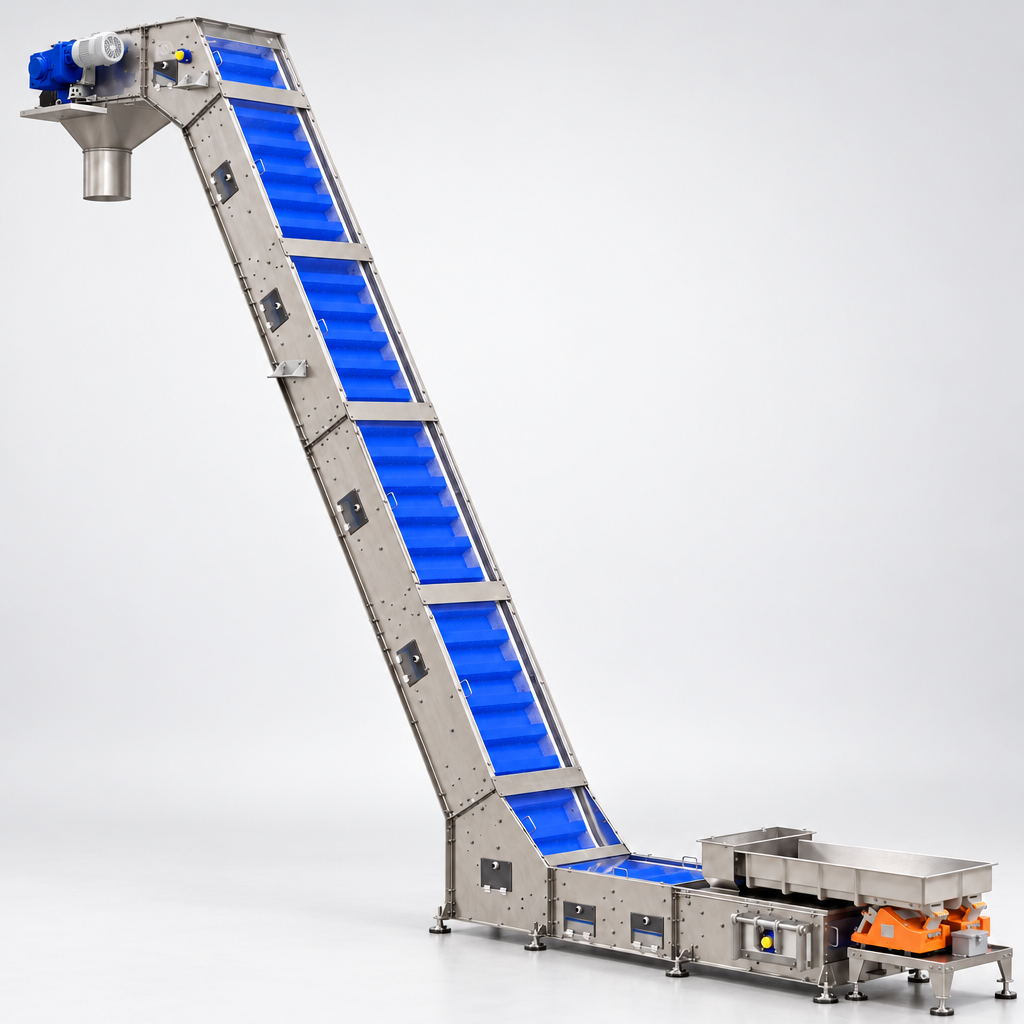
KleanTrak combines stainless steel construction with accessible belt and product-contact areas. Its belt arrangement connects selected processing stages while supporting cleaning and changeovers. Belt material, loading and cleaning arrangements are selected around the product, and controlled feeding provides consistent belt loading.
Connect receiving, conveying and the next process around the material and required process sequence.
UniTrak combines its conveying and bulk bag handling equipment with selected ancillary components to connect receiving, processing, storage and packaging.
BULK BAG UNLOADING & POWDER TRANSFER
Typical Process Arrangement
Bagstander → Receiving Hopper → Powderflight → Process Equipment
For suitable mineral and industrial powders requiring enclosed transfer from bulk bag receiving to downstream processing.
Powderflight can be flood fed from a suitable hopper. Separate metering equipment is an option when the process requires dosing or batching.
BULK BAG UNLOADING & PROCESS FEEDING
Typical Process Arrangement
Bagstander → Charged Hopper → UniFlex → Downstream Process Equipment
A compact arrangement for compatible mineral powders or granules suitable for flexible screw conveying.
UniFlex operates from a charged hopper. Separate metering equipment is an option when the process requires dosing or batching.
WEIGHED BULK BAG DISCHARGE
Typical Process Arrangement
Bagstander with Load Cells → Receiving Hopper → Selected Conveyor
For applications where visibility into material discharged from each bulk bag is useful for batching or inventory control.
Load cells measure the supported bag or receiving arrangement.
See how UniTrak equipment has been applied to demanding dry bulk materials and explore material-specific guidance.
Case Study
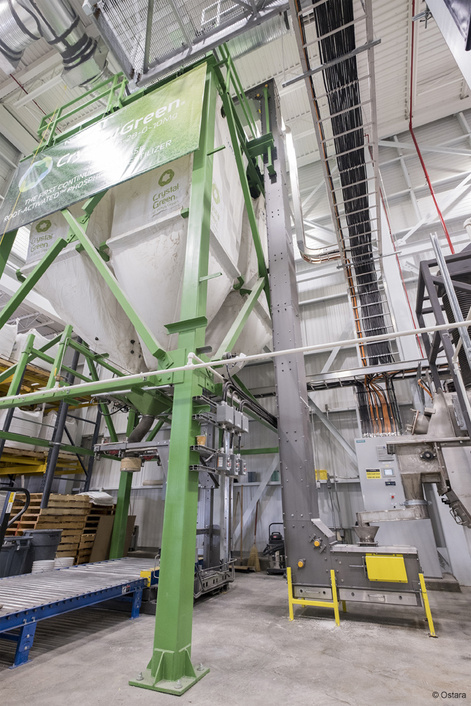
Ostara: Protecting Recovered Fertilizer
Ostara selected TipTrak to convey valuable struvite prills through its nutrient-recovery process within a restricted footprint. Gentle handling and spillage control supported product integrity. The published case study describes use across multiple installations and Ostara’s standardization on the equipment.
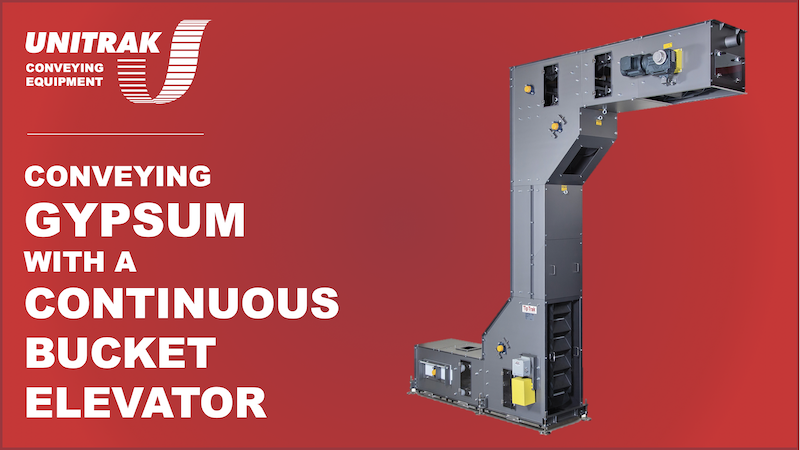
Conveying Gypsum with a Continuous Bucket Elevator
Powdered and pelletized gypsum create different feeding and discharge requirements. Explore the effects of abrasion, cohesion and dust, along with bucket materials, discharge assistance and cleaning access.
Testing actual mineral powders, granules and agglomerates can help evaluate feeding, conveying, discharge, sticking, product retention and particle degradation under test conditions. The results help refine the transfer arrangement around the material’s flow and product-integrity requirements.
Where appropriate, testing actual material can help evaluate:
Material flow
Feeding behavior
Conveying behavior
Discharge
Dust generation
Buildup
Abrasion
Particle degradation
Residual material
Equipment suitability
Contact UniTrak with your SDS and application details before sending material for safety review and acceptance. Testing is subject to available test equipment.
UniTrak can evaluate suitable mineral powders, granules, agglomerates, specialty minerals and other processed dry bulk materials. Suitability depends on particle characteristics, bulk density, abrasiveness, flow behavior, required capacity and the overall process.
TipTrak provides gentle horizontal and vertical transfer for granules, agglomerates and compatible powders. Powderflight provides enclosed transfer with low product retention, while UniFlex offers compact screw conveying for compatible materials. UniTrak selects and sizes the equipment around your mineral’s bulk density, abrasion, flow characteristics, required throughput and transfer route.
UniTrak can evaluate applications involving abrasive powders and granular materials.
Particle hardness, shape, bulk density, conveying speed and equipment construction all influence suitability and expected component wear.
Abrasive applications require careful review during equipment selection.
UniTrak can evaluate dense powders and granular products.
Bulk density affects conveyor capacity, component loads, feeding and drive requirements.
The actual material density and required throughput should be established during application review.
Calcium carbonate is used in many industrial processes and can vary considerably in particle size and bulk density.
UniTrak can evaluate suitable calcium carbonate applications based on the specific grade, required capacity and conveying arrangement.
UniTrak can evaluate suitable limestone and ground mineral applications.
Abrasiveness, bulk density, particle size, dust generation and required throughput should be reviewed before equipment selection.
Suitable fine mineral powders can be evaluated for several UniTrak conveying technologies. Flow behavior, dust generation, bulk density and abrasion all influence equipment selection.
Enclosed conveying can help limit material exposure during transfer.
Effective dust control also depends on the design of receiving hoppers, feed points, discharges and equipment connections.
The complete material-handling arrangement should be considered.
The conveyor cannot move material consistently if it is not being fed consistently.
Difficult-flowing powders may require suitable hopper geometry, agitation, flow assistance or controlled feeding.
UniTrak can review the feeding arrangement as part of the overall conveying application.
UniTrak can evaluate materials that are prone to bridging, compaction or caking.
Suitability depends on the severity of the material behavior and the complete equipment arrangement.
Material testing may help establish how the product behaves during feeding and conveying.
TipTrak can be considered for suitable granules and other products where gentle handling is important.
The actual amount of degradation depends on the material and complete conveying arrangement.
Testing can help evaluate product behavior before equipment selection.
UniTrak can evaluate suitable silica-based and other mineral materials.
Dust characteristics, abrasiveness, bulk density and any applicable material hazards must be reviewed before equipment selection.
Yes. Bagstander bulk bag handling equipment can be combined with receiving hoppers, feeders and UniTrak conveyors.
The arrangement can be configured around material flow, dust control, weighing and downstream process requirements.
Selected Bagstander arrangements can incorporate load cells and related weighing equipment.
The required weighing and control strategy should be established during application development.
Yes. UniTrak conveying equipment can be configured to discharge into compatible customer or OEM process equipment.
The required feed rate, inlet geometry, controls and operating sequence should be reviewed during application development.
Selection begins with the actual material.
Important information includes particle size, particle shape, hardness, bulk density, moisture content, required throughput and conveying path.
These characteristics help determine which conveying methods and equipment configurations should be considered.
UniTrak offers material testing for suitable applications.
Testing can help evaluate feeding, conveying, discharge, buildup, product degradation and material retention.
Testing is subject to material safety review and available test equipment. An SDS is required before testing.
Powderflight can be evaluated for compatible mineral powders and granules where aeromechanical conveying is appropriate. Abrasion, density, particle size and conveying requirements must be reviewed before confirming suitability.
No. Powderflight can be flood fed directly from a suitable hopper. A metering device may be incorporated where the process requires controlled dosing, but controlled feeding is not inherently required by the conveyor.
TipTrak is application-engineered around the material’s bulk density, required mass throughput and conveying layout. Bucket loading, construction and drive requirements are selected together, with abrasion considered when choosing product-contact components.
Yes. TipTrak requires controlled material introduction so that the buckets are loaded appropriately.
UniFlex can be considered for compatible mineral powders and granules. Abrasion, density, flow characteristics and expected wear should be evaluated before selecting a flexible screw conveyor.
A conveying test shows how the material feeds, moves and discharges under the test conditions. Wear-life assessment also requires consideration of abrasiveness, contact materials, operating speed and duty over time.
MINING & MINERALS CONVEYING RESOURCES
Conveying Gypsum with a Continuous Bucket Elevator
Mineral-specific engineering guidance on gypsum particle form, abrasion, cohesion and cleaning access; not a customer case or universal suitability claim.
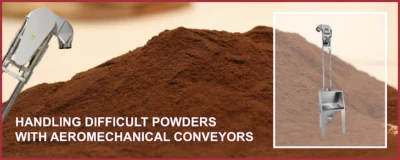
Handling Difficult Powders with Aeromechanical Conveyors
Learn how powder characteristics affect feeding and flow. The article discusses hopper design, controlled feeding, flow aids and material testing for difficult powders.
Let’s review your material and the transfer you need.
Tell us what you’re conveying, the capacity you need and where the material needs to go. Include the handling problem you want to solve and a layout or photo if available. Our team will help identify the next step.
Helpful application details:
Material name, physical form and SDS.
Required conveying rate.
Transfer distance, elevation and equipment connections.
Handling concerns such as dust, breakage, sticking or abrasion.
Product-contact, cleaning and installation requirements.