LIMIT UNNECESSARY TRANSFERS
Reduce opportunities for ingredients to follow different paths during drops and changes in direction.

Reduce unnecessary disturbance while protecting ingredient condition.
Different particle sizes, densities and shapes can respond differently during conveying. UniTrak selects the conveying method, feeding and discharge arrangements around the complete mixture. Reducing unnecessary transfers and mechanical disturbance helps protect the blend as it moves between process stages, with actual-material testing available to assess its behaviour.

Reduce opportunities for ingredients to follow different paths during drops and changes in direction.
Select movement and contact conditions that suit fragile pieces, fine powders and other sensitive components.
Review how material leaves the supply vessel and enters the next process, as well as its movement through the conveyor.
Many blended products contain ingredients with substantially different physical characteristics. The conveying system therefore has to accommodate the behavior of the mixture as a whole rather than optimize for only one component.
Common concerns: These products may combine fragile pieces, powders, granules and ingredients with very different densities.
Common concerns: The challenge may involve maintaining ingredient distribution while handling materials that differ in particle size, density or flow behavior.
Common concerns: Containment, dust control and consistent transfer can be as important as maintaining the blend itself.
Common concerns: Differences in particle size and density can influence how these components move through a handling system.
Common concerns: These applications may combine segregation concerns with abrasion, dust or high bulk density.
Select the conveying method around the complete blend and the condition required at the next process. Ingredient differences, transfers and product contact all influence the choice.
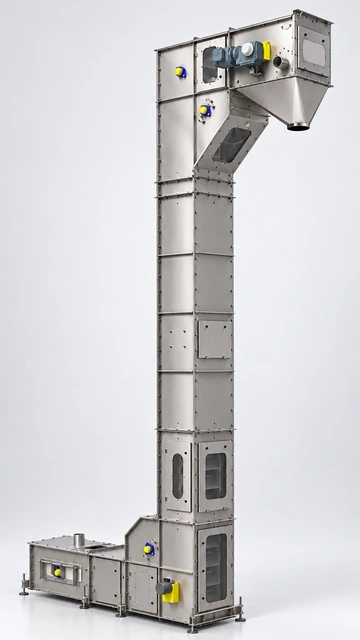
TipTrak carries blends in continuous, interlocking buckets with controlled movement. Horizontal and vertical conveying within one machine reduces intermediate transfers, while gentle handling protects fragile ingredients.
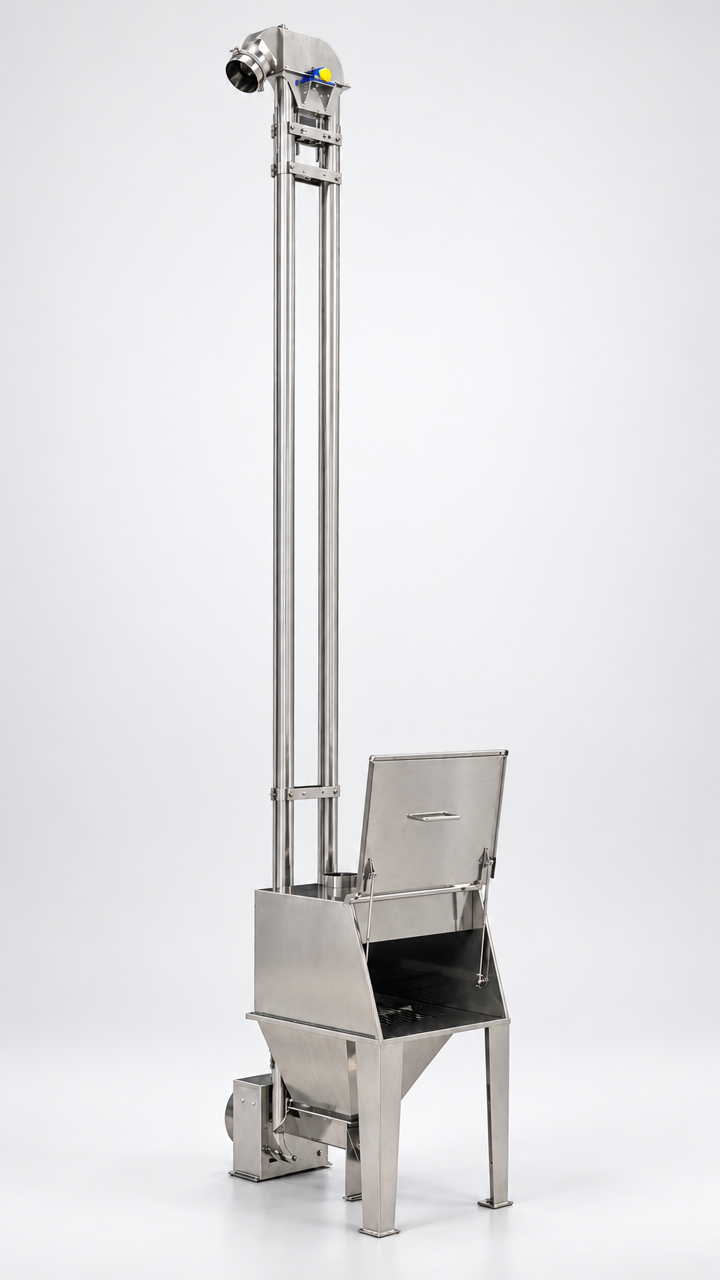
Powderflight provides enclosed aeromechanical conveying with low product retention. Its rope-and-disc assembly generates an air stream to transport compatible powders and granules. Evaluate the complete blend’s response to this conveying action.
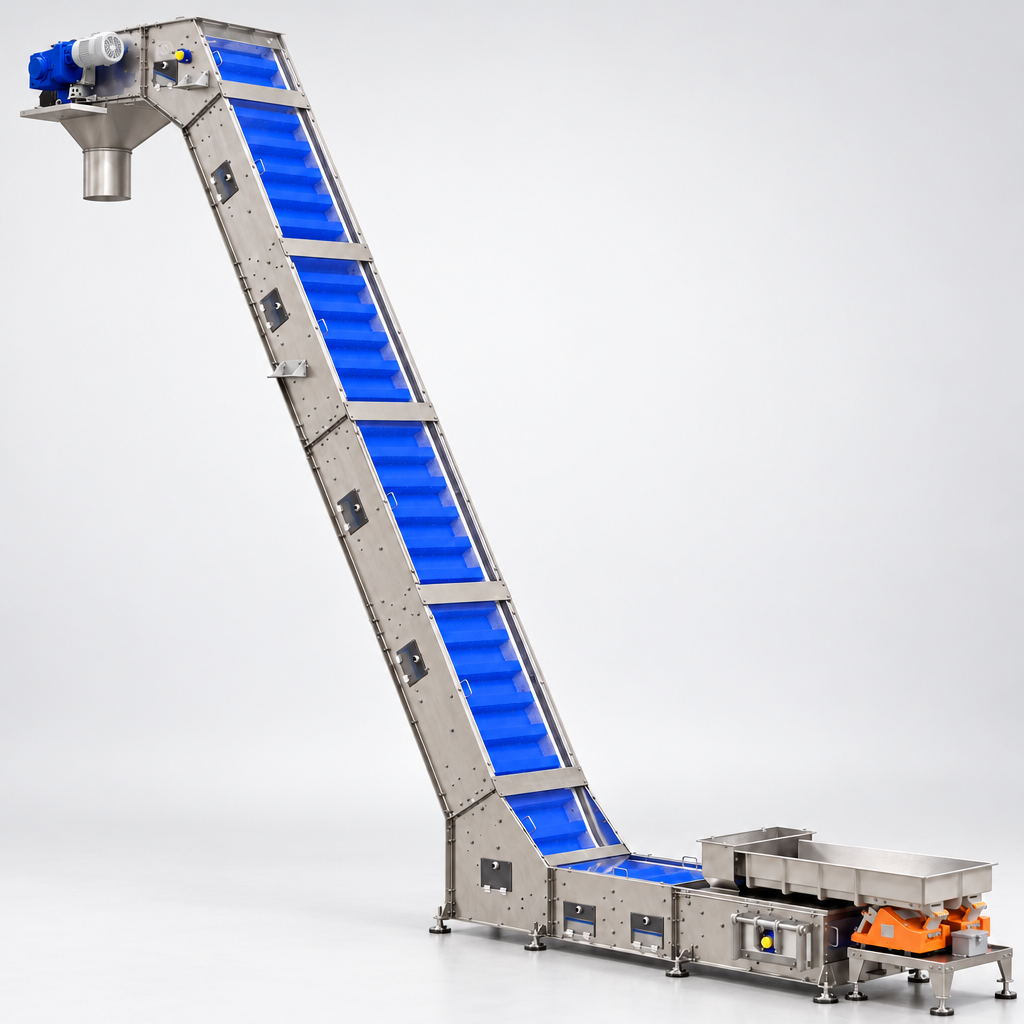
KleanTrak supports compatible mixtures on an accessible belt. Supported movement and direct cleaning access suit applications where ingredient condition and product changeovers are important.
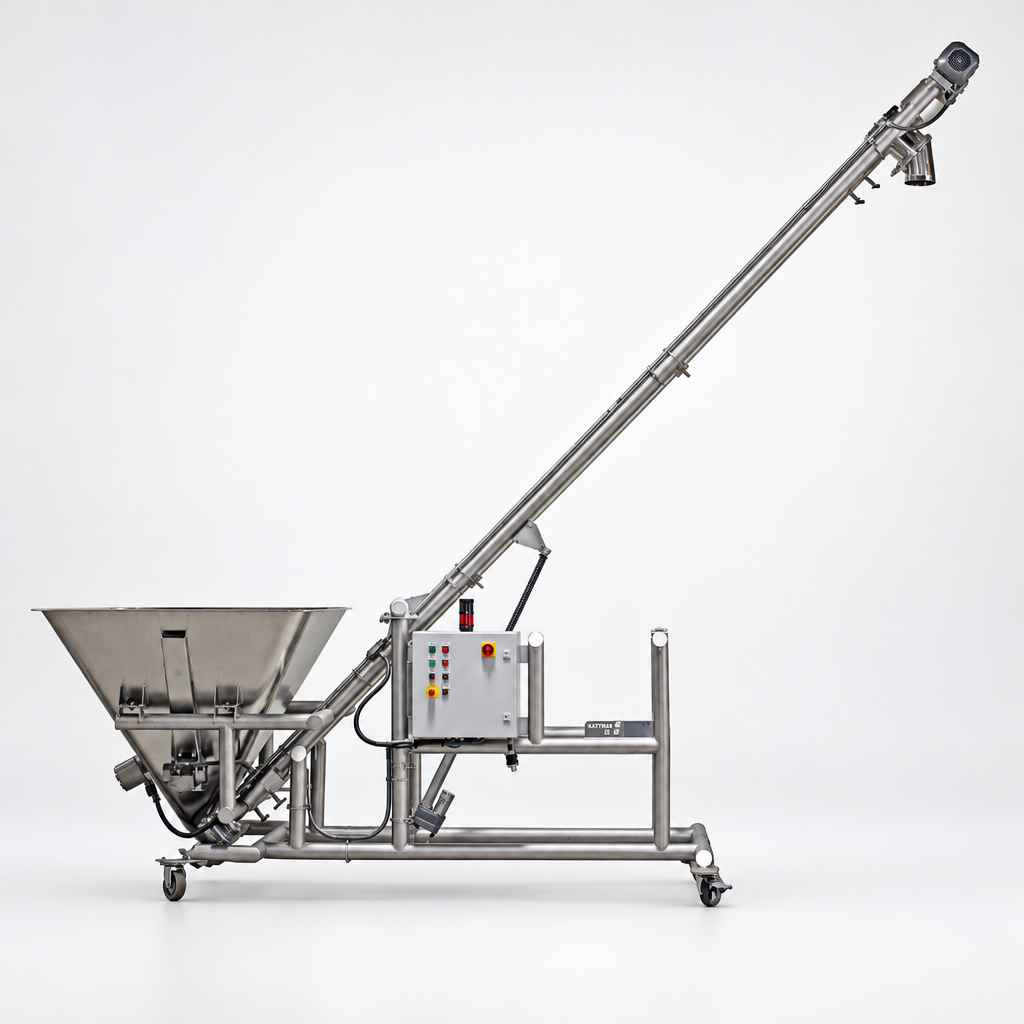
UniFlex provides compact enclosed transfer using a rotating flexible screw. Select it where the complete blend tolerates screw contact and meets the downstream process requirement after conveying.
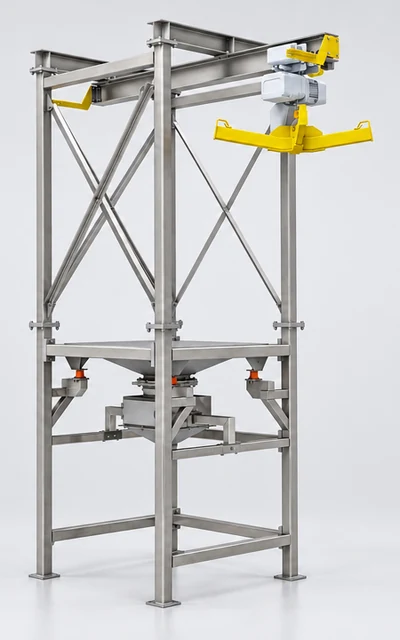
Bagstander connects bulk bag receiving with the selected conveyor. Match discharge and any flow assistance to the complete mixture so the supply arrangement supports consistent transfer.
For mixtures containing easily broken ingredients, explore our fragile and friable material conveying guidance.
Blend consistency is influenced by more than the conveyor itself. The way material is introduced, moved, transferred and discharged can all affect what reaches the next process.
Long free falls, abrupt changes in direction and uncontrolled discharge trajectories can allow ingredients with different sizes or densities to separate.
Discharge height, receiving hopper design and downstream flow behavior can all affect how the material redistributes after conveying.
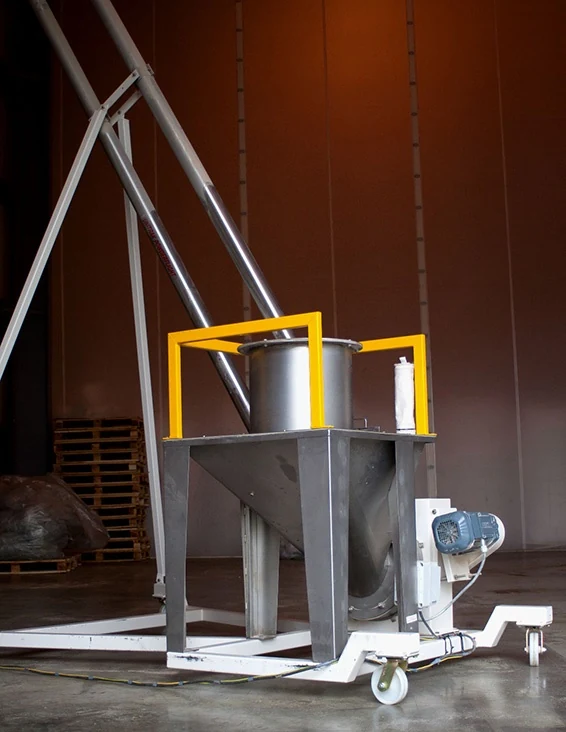
Potter Group selected an M100 Powderflight to move fine, sand-like corn cob grit from bulk bags into tanker trucks. Following material testing and infeed optimization, the published case reports minimal particle attrition and no separation of blended products.
READ THE POTTER GROUP CASE STUDY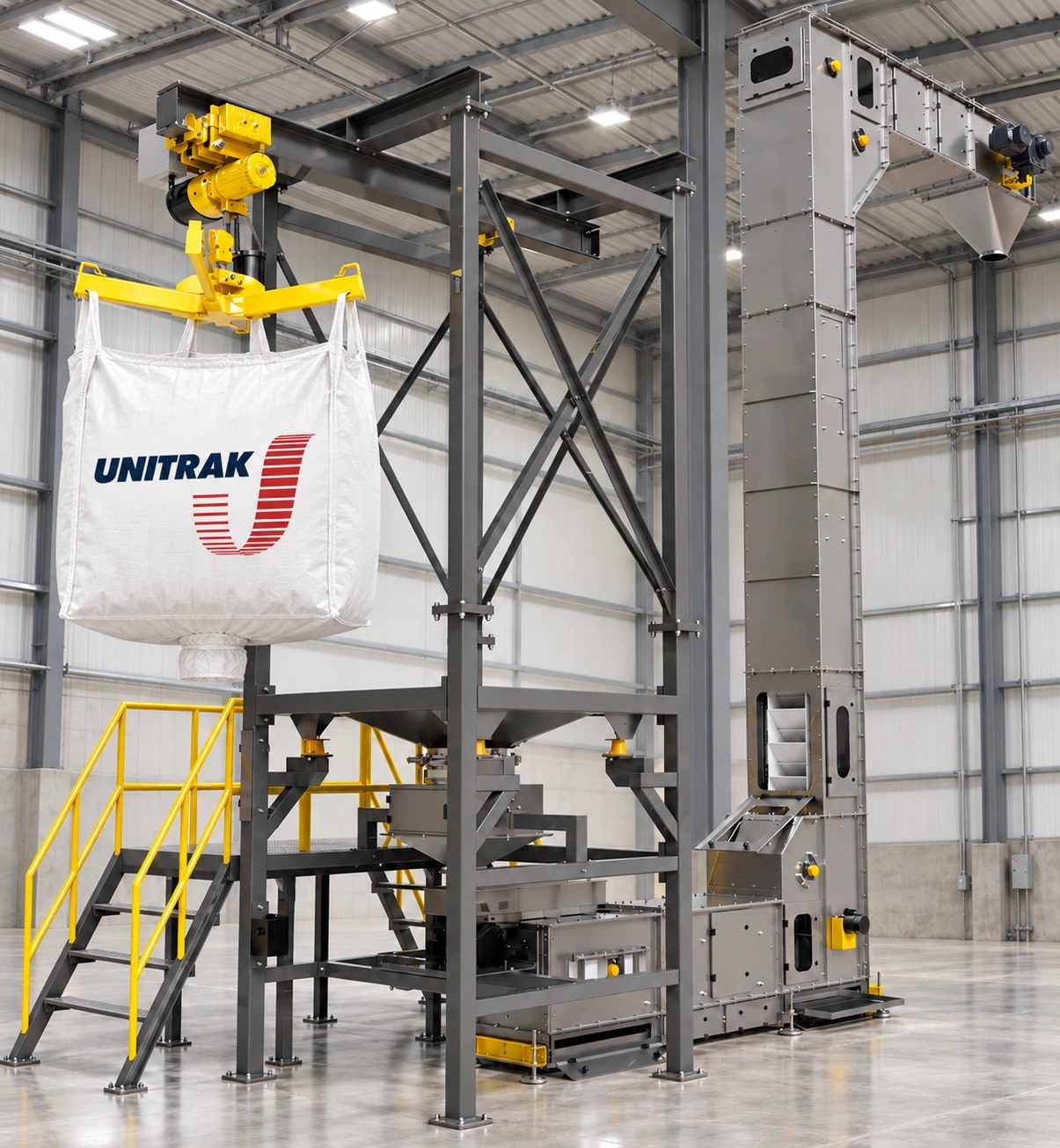
Ingredient distribution can change during feeding, conveying and discharge. Review hopper withdrawal, transfer heights and receiving arrangements together, reducing unnecessary disturbance across the complete material path.
EXPLORE INTEGRATED SYSTEMSUse the actual mixture to observe conveying, discharge and product condition in suitable available equipment. Share the ingredient differences and downstream requirements so the trial addresses the behaviour that matters to your process.
Ingredients with different particle sizes, densities, shapes or surface characteristics can respond differently to gravity, vibration, acceleration and air movement. Those differences can allow components to redistribute as the material is fed, conveyed, transferred or discharged.
No. Blend behavior depends on the material and the complete handling process. The goal is to select and configure a conveying approach that avoids unnecessary disturbance and reduces opportunities for separation while meeting the required process conditions.
Large differences in particle size, bulk density, shape, flow behavior or fragility can increase the likelihood that ingredients will behave differently during handling. Fine particles mixed with larger granules are one common example.
It can. Higher velocities, abrupt acceleration or unnecessary impact may influence how different particles behave. However, speed is only one factor. Conveyor type, transfers, feeding, discharge and material characteristics also matter.
At a transfer point, material may accelerate, fall or change direction. Components with different sizes or densities can follow different trajectories, creating another opportunity for segregation.
Yes. TipTrak carries compatible mixtures in interlocking buckets with controlled movement. Combining horizontal and vertical conveying reduces intermediate transfers, while the infeed and discharge arrangements are selected around the blend and downstream requirements.
No. TipTrak uses deep continuous buckets that carry substantial material volume. This allows high conveying rates to be achieved at relatively low belt speeds compared with systems that depend primarily on higher conveying velocity.
Yes. Powderflight provides enclosed conveying for compatible powder blends with low product retention. Assess the complete mixture’s response to the aeromechanical conveying action. UniTrak’s Potter Group case includes a source-reported result of no separation of blended products.
Yes, depending on the material and application. KleanTrak supports material on the belt and may be worth evaluating where gentle conveying, sanitation or product visibility are important.
UniFlex can convey many powders, granules and dry bulk materials. For blends where segregation or product integrity is particularly important, the effect of screw conveying on the specific material should be evaluated as part of equipment selection.
They can often be handled more gently by selecting a conveying method that limits unnecessary mechanical interaction, impact and free fall. The actual material should be evaluated because fragile ingredients can behave differently within a blend.
Dust may create both containment concerns and mixture-consistency concerns because fine particles can behave differently from larger ingredients. Enclosure, transfer design and the overall conveying approach should be considered together.
Testing can help evaluate how a specific material behaves in available UniTrak test equipment and may reveal separation, flow or discharge characteristics that are difficult to predict from specifications alone. It does not guarantee identical behavior in every full-scale process condition.
Where practical, the actual blend is generally more useful because the interaction between ingredients is part of what determines conveying behavior. Testing requirements and availability depend on the material and available equipment.
Useful information includes the material composition, bulk density, particle-size range, required conveying rate, conveying distance, vertical elevation, current handling method, downstream process requirements and the specific problem you are trying to solve.
Explore UniTrak technical information, case studies and testing resources relevant to difficult bulk-material applications.
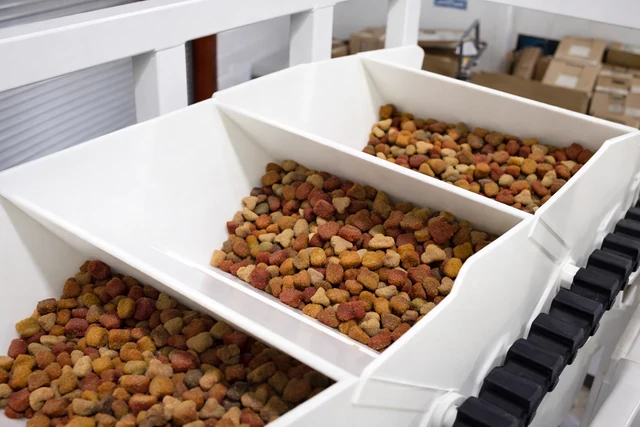
Technical article · Learn how actual-material evaluation can clarify flow, discharge, product degradation and equipment suitability before selection.
Read resource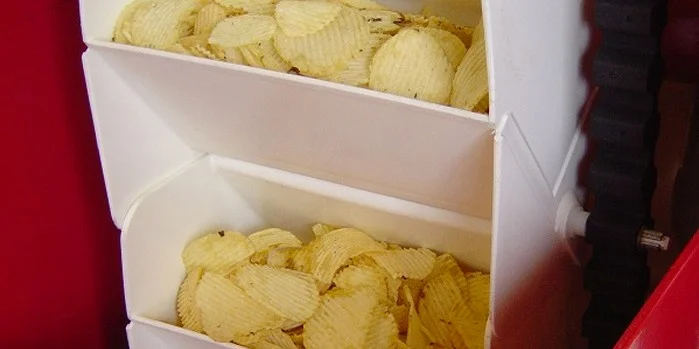
Technical article · Review bucket-conveyor design features intended to support fragile-product integrity and reduce unnecessary transfers.
Read resource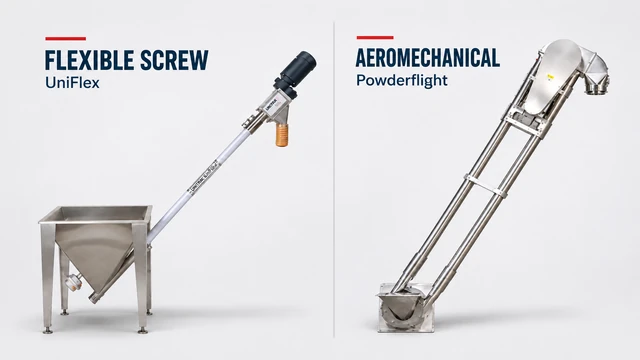
Technical article · Compare powder-conveying mechanisms and the role of material behavior and testing in equipment selection.
Read resource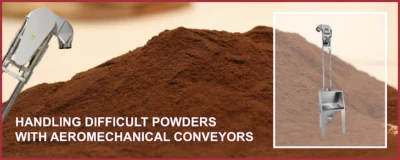
Explore powder-flow characteristics, hopper arrangements and material testing for enclosed aeromechanical transfer.
Read resource
Technical article · Consider particle size, density, fragility, segregation concerns, routing and downstream conditions when evaluating conveying equipment.
Read resourceTell us what the mixture contains, the required conveying rate and what must remain consistent at the next process. UniTrak will review the conveying route, ingredient characteristics and transfer arrangements.