RELEASE MATERIAL CONSISTENTLY
Match bulk bag discharge and hopper arrangements to the material’s flow behaviour.
Keep production supplied by addressing difficult discharge and conveying together.
Bridging, rat-holing and inconsistent discharge can interrupt production before material reaches the conveyor. UniTrak combines conveying equipment with application-specific bulk bag, hopper and feeding arrangements. We review the complete material path to establish a reliable supply into the conveyor and onward to your process.
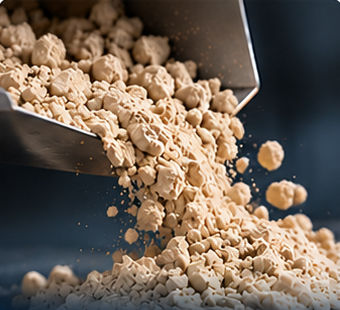
Match bulk bag discharge and hopper arrangements to the material’s flow behaviour.
Address surging and starvation at the source so the conveyor receives material consistently.
Coordinate receiving, flow assistance, conveying and downstream equipment around the required production rate.
Poor gravity flow can result from particle size, shape, cohesiveness, density or process condition.
These are representative material families only. Suitability requires application review.
Non-free-flowing materials primarily have poor gravity flow, bridging, rat-holing or inconsistent discharge from storage or feeding equipment. Sticky & Adhesive Materials primarily adhere to equipment surfaces. Packing, Caking & Smearing Materials undergo compaction, agglomeration or physical change caused by pressure, time or mechanical handling. A material may exhibit more than one characteristic; this page focuses on reliable introduction into and movement through the conveying process.
Fine powders may bridge over outlets, discharge intermittently or form stable flow channels within storage vessels.
Their behavior can be influenced by particle size, moisture, aeration and time under storage.
Common concerns: Bridging • Rat-Holing • Cohesion • Surging • Dust
Low-density products can be difficult to move from hoppers because their own weight provides relatively little force to overcome particle interaction.
Some may also aerate or become easily disturbed.
Common concerns: Poor Gravity Flow • Aeration • Bridging • Inconsistent Feed • Bulk Density
Flat, elongated, fibrous or irregular particles may interlock with one another, creating flow restrictions that would not occur with rounded granules.
These materials can be difficult to predict from bulk density alone.
Common concerns: Interlocking • Bridging • Hopper Discharge • Variable Flow • Feeding
Fine ingredients can become cohesive because of moisture, fat content, particle size or formulation.
The handling system must consider both reliable flow and the requirements of the surrounding process.
Common concerns: Cohesion • Bridging • Flow Consistency • Cleaning • Dust
Chemical and industrial materials may resist gravity flow because of fine particle size, irregular shape, electrostatic behavior or moisture sensitivity.
The specific product should be evaluated rather than assuming all powders will behave similarly.
Common concerns: Flow Reliability • Bridging • Dust • Material Compatibility • Testing
Recovered and recycled products may contain a broad mix of particle sizes, shapes and densities.
A material may flow acceptably in one batch and poorly in another if its composition changes.
Common concerns: Variability • Bridging • Particle Shape • Bulk Density • Testing
For non-free-flowing products, reliable material introduction is often just as important as conveyor capacity.
Reliable discharge and the right conveying method work together. Select the equipment around how your material leaves storage, enters the conveyor and reaches the next process.
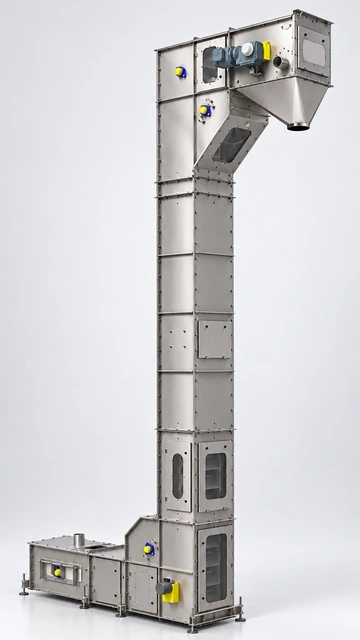
TipTrak carries material in continuous, interlocking buckets through horizontal and vertical sections. Controlled feeding loads the buckets consistently, while application-specific discharge arrangements address how the material leaves the conveyor.
EXPLORE TIPTRAK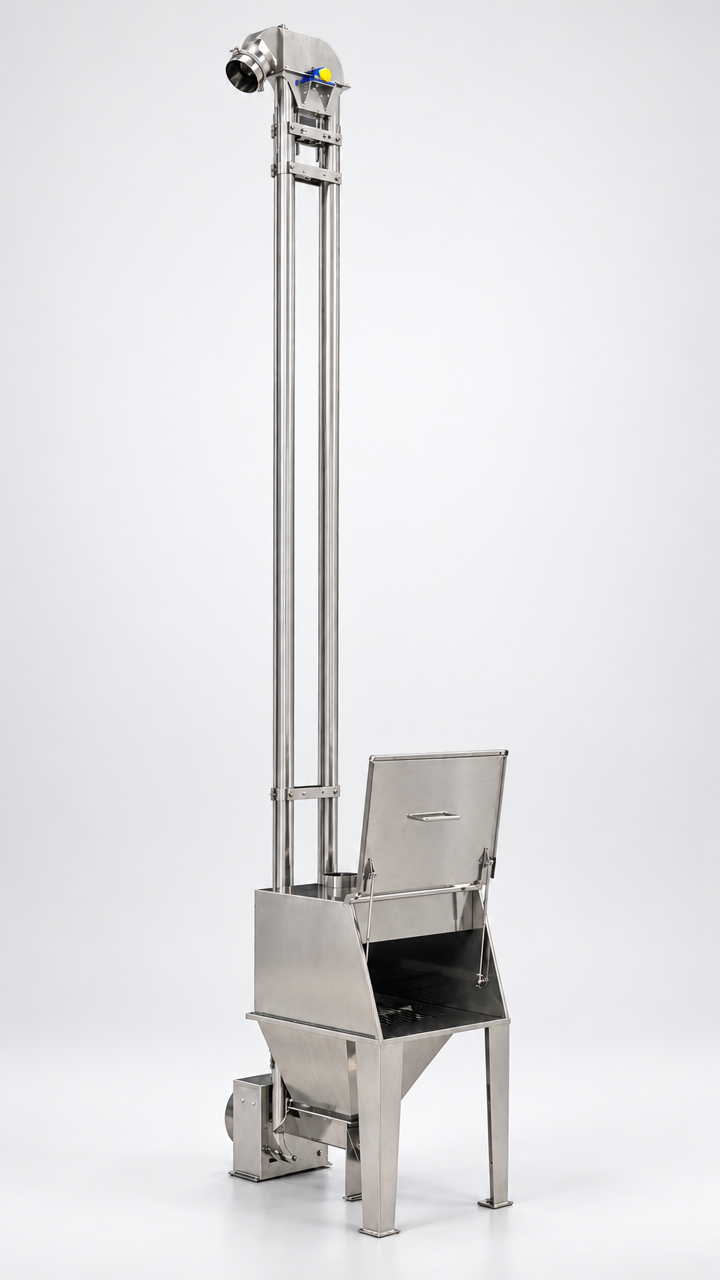
Powderflight’s rope-and-disc assembly creates an air stream that transports compatible powders through an enclosed tube. Match the infeed hopper and any required flow assistance to the material so it reaches the conveyor reliably.
EXPLORE POWDERFLIGHT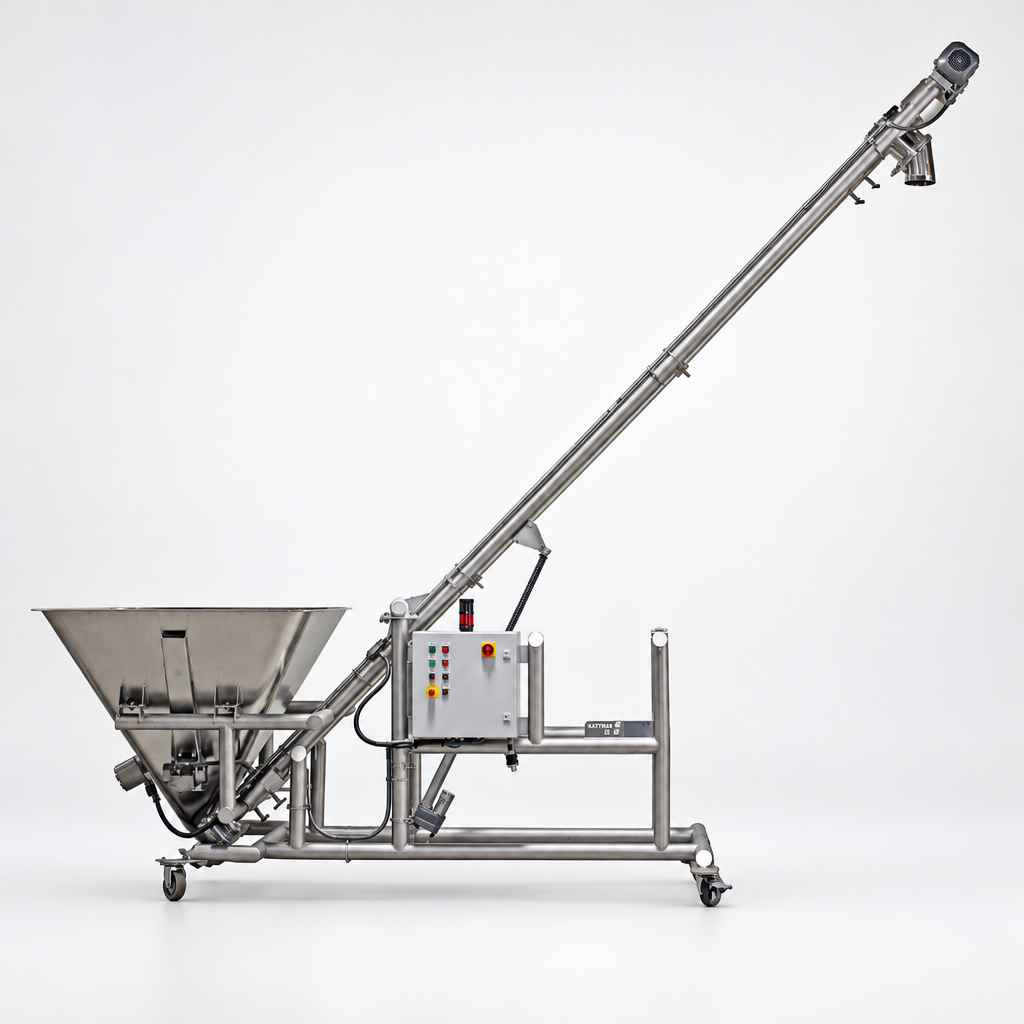
UniFlex draws material from a charged hopper using a rotating flexible screw. Select the hopper, flow assistance and screw arrangement around the powder’s behaviour and required conveying rate.
EXPLORE UNIFLEX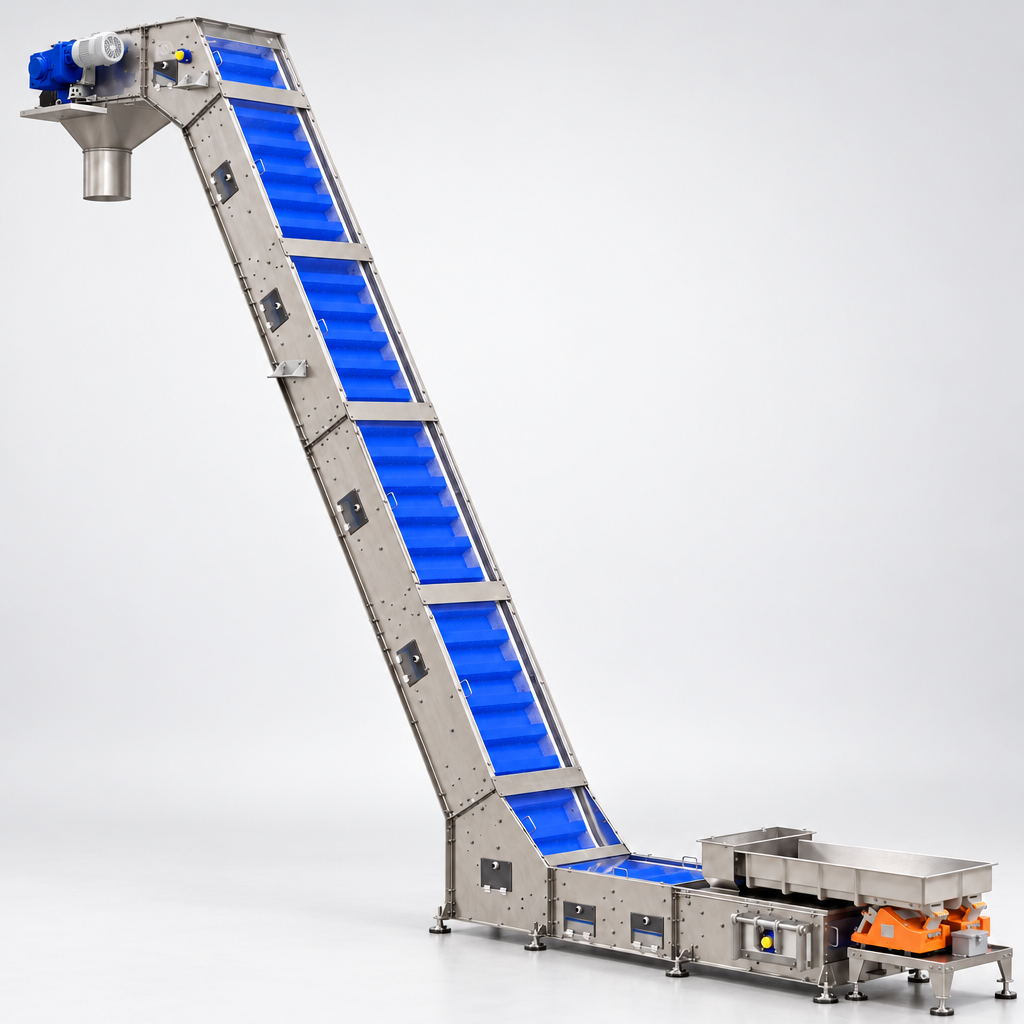
KleanTrak supports compatible materials on an accessible belt. Controlled feeding distributes material onto the belt, combining supported movement with direct access for inspection and cleaning.
EXPLORE KLEANTRAK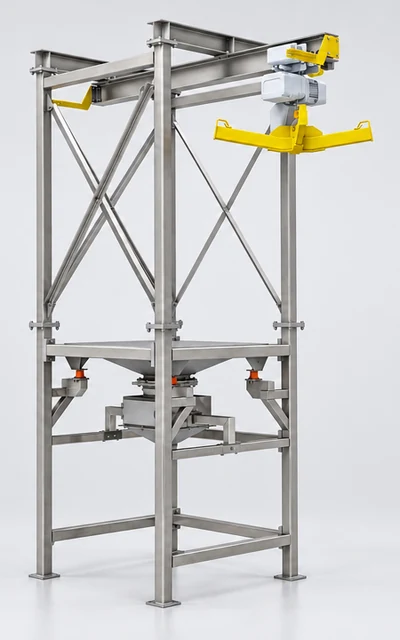
Bagstander connects bulk bag unloading with downstream conveying. Application-specific bag manipulation and hopper flow assistance help loosen compacted material and promote discharge into the process.
EXPLORE BAGSTANDERCoordinate receiving, hopper discharge and conveying through our integrated systems approach.
The biggest challenge is often getting a consistent supply of material into the conveyor.
Some materials compact during storage or transportation and resist leaving the bulk bag under gravity alone.
For suitable applications, Bagstander systems can use bag manipulators to compress the bag and help loosen the material, promoting more reliable discharge into downstream equipment.
If material bridges, rat-holes or settles poorly in a hopper, the downstream conveyor cannot maintain a consistent rate regardless of its available capacity.
Depending on the application, UniTrak hoppers can incorporate vibrators or fluidization pads to help promote material movement toward the outlet.
Hopper geometry, outlet configuration, storage conditions and actual material behavior should all be considered together.
Some products become harder to discharge after sitting in a hopper or bulk bag.
Time under load, moisture, temperature and aeration can all change flow characteristics.
The application should reflect actual production and storage conditions rather than only freshly sampled material.
Bulk bag unloading, storage, hopper discharge, flow assistance and conveying should be considered as one connected system.
Selecting a larger conveyor alone will not solve a material that never reaches the conveyor consistently.
For non-free-flowing materials, reliable performance depends on understanding how the material moves from storage or bulk bags into the conveying system.
UniTrak can combine conveying equipment with application-specific flow-assistance features such as bag manipulators, hopper vibrators and fluidization pads where appropriate to help create a more reliable material path.
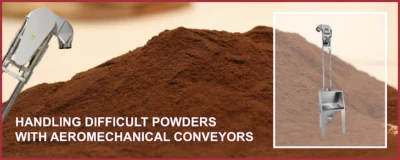
Fine powders can resist gravity flow because of cohesion, moisture and particle characteristics. Powderflight provides enclosed aeromechanical conveying for compatible materials, with the hopper and flow-assistance arrangement selected around reliable material supply.
Read Difficult-Powder Guidance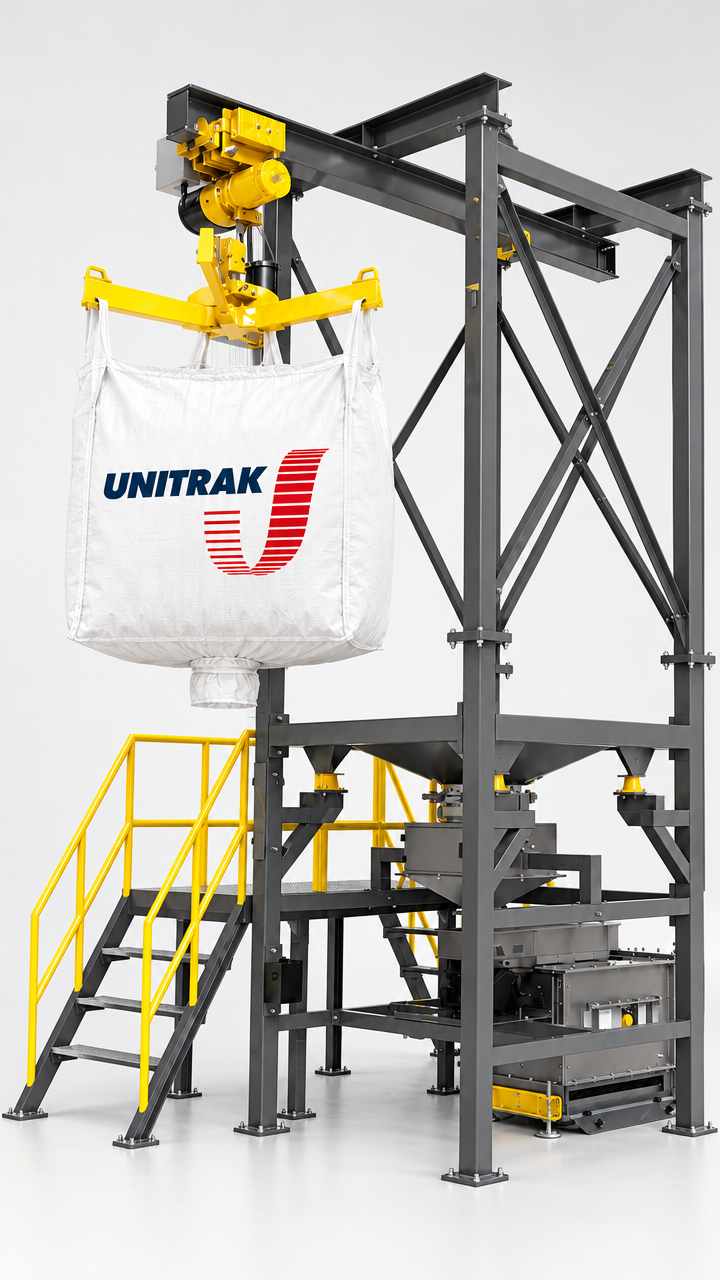
Reliable conveying starts with reliable material release. Review hopper geometry, outlet design, storage conditions and appropriate flow assistance alongside the conveyor to address bridging, rat-holing and inconsistent discharge.
Read Hopper-Flow GuidanceUse representative material to assess feeding, conveying and discharge in suitable available equipment. Share the storage conditions and existing flow problem so the trial addresses the behaviour affecting your process.
A non-free-flowing material does not move consistently under gravity. It may bridge above an outlet, form a narrow rat-hole through stored material, discharge intermittently or require additional assistance to move reliably into downstream equipment.
Flow behavior can be influenced by particle size, shape, cohesiveness, moisture, bulk density, surface texture, storage time, compaction and hopper geometry. Different materials can stop flowing for very different reasons.
Bridging occurs when material forms a stable arch across an outlet and supports itself rather than falling through the opening.
Rat-holing occurs when material flows through a narrow channel while a significant portion of the surrounding material remains stationary in the hopper or storage vessel.
A conveyor can only move the material that reaches it. Bridging, rat-holing or surging upstream can cause the conveyor to alternate between underloading and sudden material surges even when the machine has sufficient capacity.
Yes. TipTrak carries compatible non-free-flowing materials in buckets once they are introduced consistently. The hopper, controlled feeding and discharge arrangements are selected around the material’s behaviour and required throughput.
No. TipTrak uses deep buckets to carry substantial material volume while maintaining controlled movement, allowing high conveying rates without requiring high belt speed.
Powderflight conveys compatible difficult powders through an enclosed tube using an air stream generated by its rope-and-disc assembly. Reliable hopper discharge is important. Flow assistance is selected for the application; a separate metering feeder is not inherently required.
UniFlex can be considered for many compatible powders and bulk solids. Suitability depends on the material's behavior and its response to flexible screw conveying. Maintaining a reliable supply of material in the hopper around the screw inlet remains important.
KleanTrak can be considered for compatible materials that can be presented consistently onto the belt. Supported belt conveying may be useful for some irregular or difficult products because the material is carried through the conveying path.
Yes. For suitable applications, Bagstander systems can incorporate bag manipulators that compress the bulk bag to help loosen the material and promote discharge.
Yes. Depending on the application, UniTrak hoppers can incorporate vibrators or fluidization pads to help promote material movement toward the outlet.
No. A non-free-flowing material primarily has difficulty moving under gravity. A sticky material primarily adheres to itself or equipment surfaces. Some products exhibit both characteristics.
Yes. Suitable customer materials can be evaluated by UniTrak using available test equipment. Testing can provide useful information about material behavior and conveying suitability before the final solution is selected.
Provide the material name, SDS where available, particle size and shape, bulk density, required conveying rate, conveying distance and elevation, description of current bridging or flow problems, bulk bag or hopper arrangement, storage conditions, material temperature, upstream equipment, downstream equipment and any current operator interventions or flow aids.
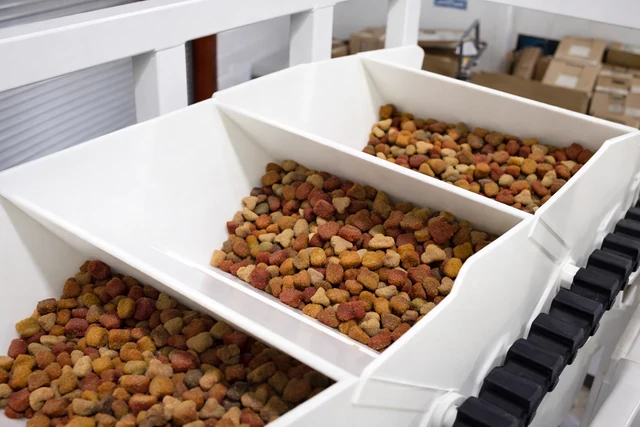
Review how actual-material evaluation can reveal flow, discharge and equipment-suitability issues before selection.
Read resource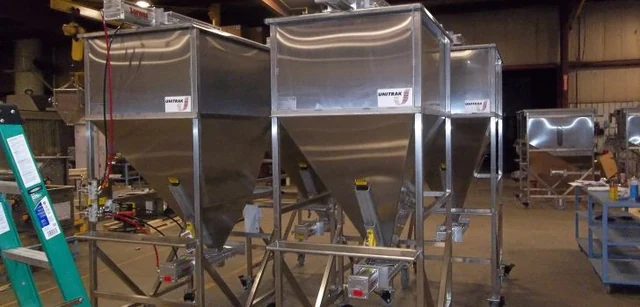
Explore cohesive materials, gravity flow, bridging, rat-holing and the interaction between hopper discharge and downstream equipment.
Read resourceConsider poor-flowing powder characteristics, controlled infeed, appropriate hopper flow assistance and actual-material testing for Powderflight.
Read resource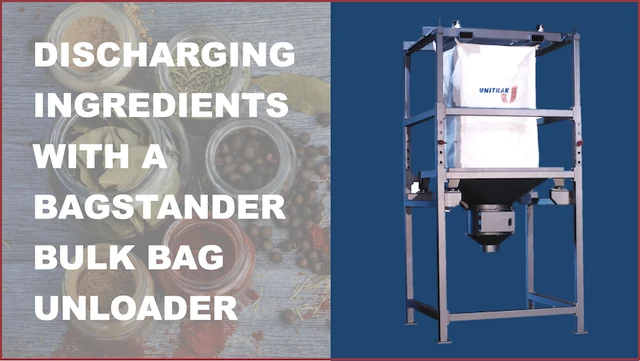
Review bulk-bag receiving, controlled ingredient discharge and integration with downstream conveying equipment.
Read resource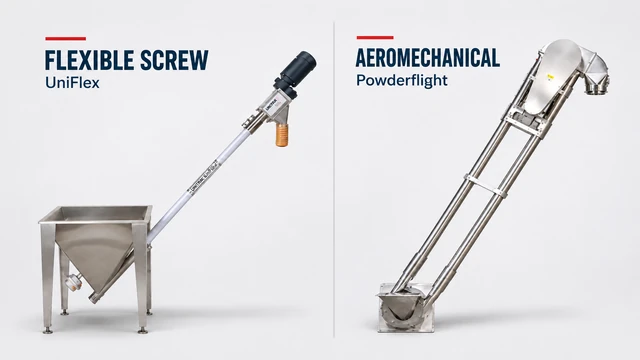
Compare UniFlex and Powderflight suitability for powder behavior, hopper feeding and the role of testing in selection.
Read resourceTell us what you are conveying, where the flow stops and the rate your process needs. Include the receiving arrangement and conveying route so UniTrak can review the material path and recommend the right equipment.