Move food ingredients and finished products between processes while reducing breakage, spillage and unnecessary cleanup. UniTrak selects conveying and bulk bag handling equipment around your product, throughput, cleaning requirements and production layout, with application engineering and material testing to guide the right approach.
The product needs to arrive in the condition your process requires.
PRODUCT BREAKAGE & DEGRADATION
Protect the quality you have already created.
Cereal flakes, cookies, snack foods, nuts and other fragile products can lose value when conveying introduces unnecessary impact or agitation.
Equipment selection should consider the entire transfer path, including feeding, elevation, changes in direction and discharge into downstream equipment.
Gentle conveying and appropriately designed connections can help reduce breakage, fines and rejected product.
Product escaping from a conveyor affects more than housekeeping. It reduces usable yield, creates cleanup work and can disrupt the surrounding operation.
The conveying path, feed rate, inlet geometry and discharge arrangement must work together to help contain the product throughout transfer.
CLEANING & CHANGEOVERS
Make access part of the equipment selection.
Regular sanitation and ingredient changeovers require access to the areas where product contacts or accumulates inside equipment.
The appropriate construction depends on the product and cleaning method. Open access, removable components, cleanout provisions and suitable product-contact materials can help simplify the cleaning routine.
Cleaning requirements should be established before the conveying arrangement is finalized.
Residual material can affect ingredient yield, batch quantities and changeovers.
Conveyor selection should consider how the product discharges, where it may collect and how remaining material will be removed.
Low-retention conveying can support efficient transfer, while cleaning procedures remain essential when changing between products or allergens.
STICKING, BUILDUP & INCONSISTENT FLOW
Understand how the product behaves under actual conditions.
Warm, moist, coated or cohesive food products may stick, cake or resist consistent feeding.
Temperature, moisture, surface characteristics and time in the equipment can all influence performance.
Application review and material testing can help establish the appropriate conveying approach and identify where feeding or discharge assistance may be needed.
Explore the requirements that influence conveying selection.
Preserve texture and product appearance.
Cereal flakes, granola clusters, potato chips and other snacks can be sensitive to breakage. Coatings and warm ingredients may also create sticking or buildup.
The conveying arrangement should protect the product while providing controlled feeding into the next process.
Products include:
Cereal flakes and breakfast cereals
Granola and granola clusters
Toasted oats and crisp rice
Potato chips and other snack foods
Cookies and baked products
Nuts and peanuts
Common concerns: Breakage • Fines • Sticking • Spillage • Cleaning • Packaging Infeed
Control ingredient transfer between receiving and production.
Dry food ingredients vary in flowability, particle size and bulk density. Some generate dust, while others compact or remain inside conveying equipment.
The appropriate approach depends on the ingredient, required quantity, transfer distance and cleaning requirements.
Common concerns: Dust • Product Retention • Flow Consistency • Ingredient Loss • Changeovers • Batch Transfer
Match the conveying approach to the form of the product.
Whole beans, ground coffee, soluble granules and beverage powders have different handling requirements.
Fragile products may need gentle movement, while fine powders require attention to containment, retention and equipment connections.
Products include:
Whole coffee beans
Ground coffee
Soluble and freeze-dried coffee
Cocoa ingredients
Dry beverage powders
Blended beverage ingredients
Common concerns: Product Degradation • Dust • Retention • Spillage • Cleaning • Process Integration
Handle finished products without unnecessary damage.
Candy, gum and other confectionery products can be fragile, coated or prone to sticking. Product temperature and surface characteristics can affect feeding and discharge behavior.
Conveying equipment should be reviewed around the product’s condition at the point of transfer.
Tell us what you need to convey and where the handling problems occur. These examples are a starting point; equipment suitability depends on your actual material and process.
Different equipment solves different food-handling problems.
TIPTRAK® BUCKET ELEVATOR
Protect fragile products through elevation and transfer.
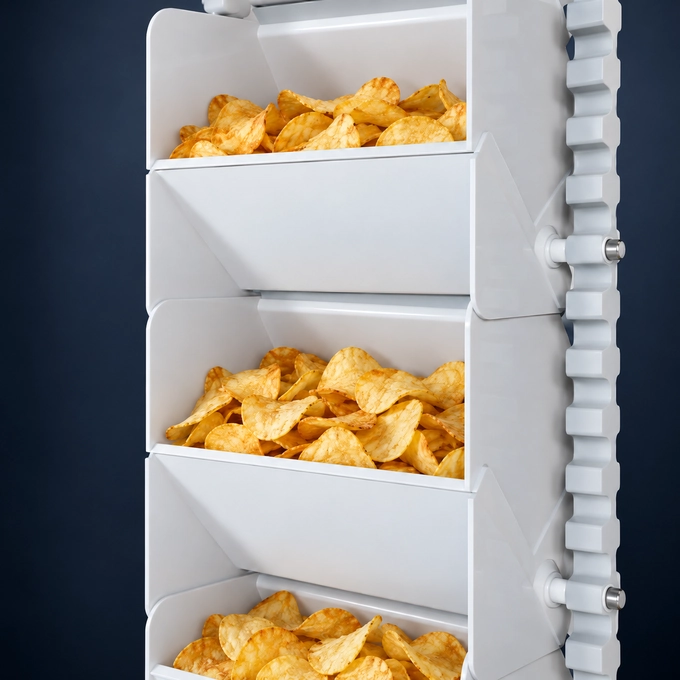
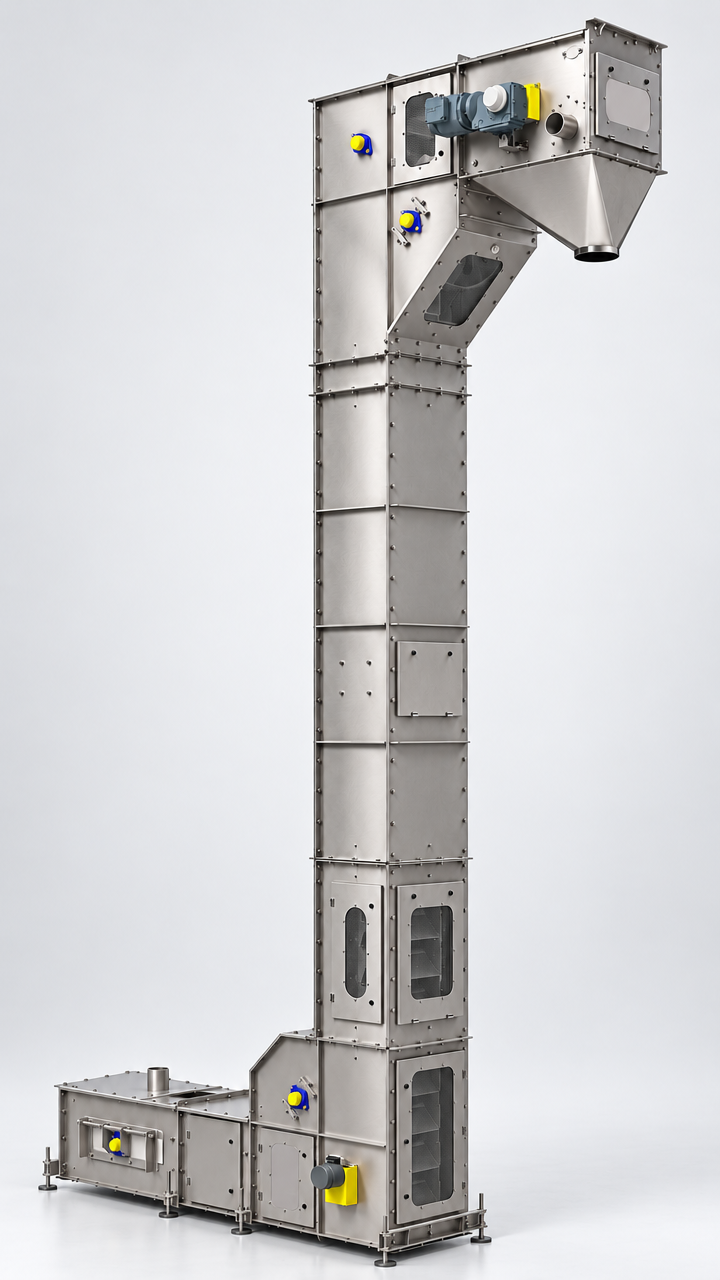
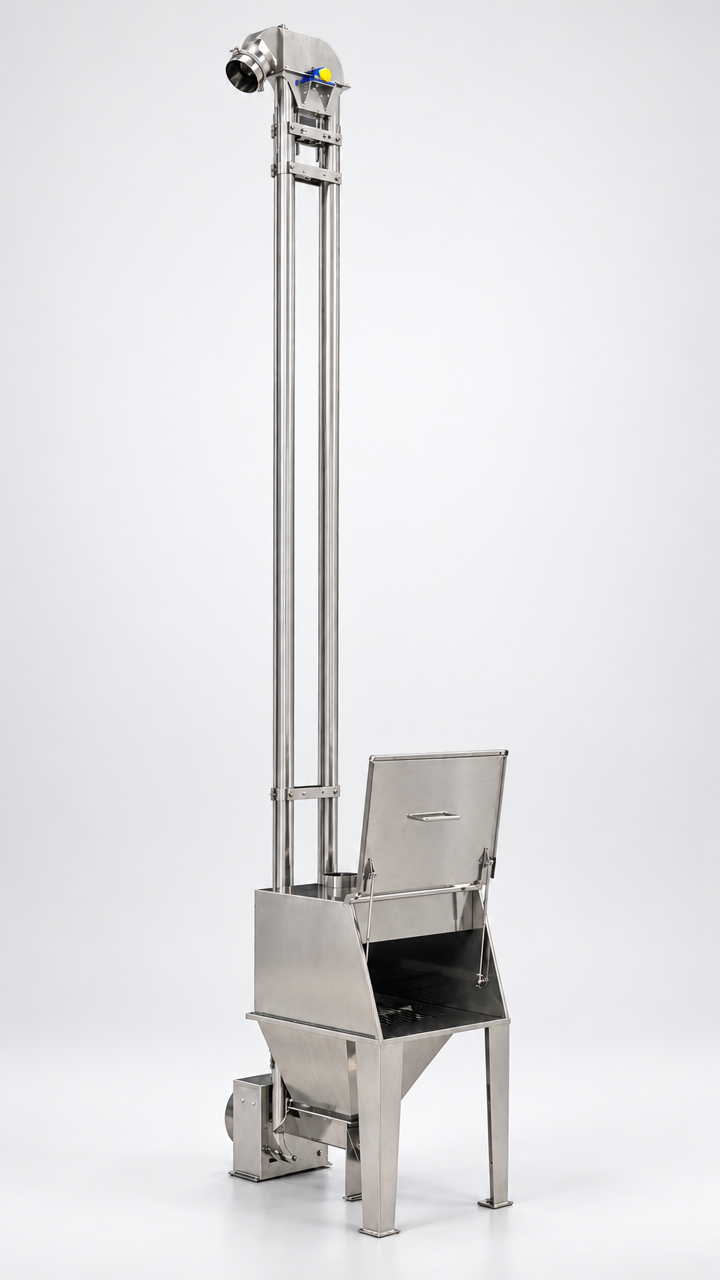
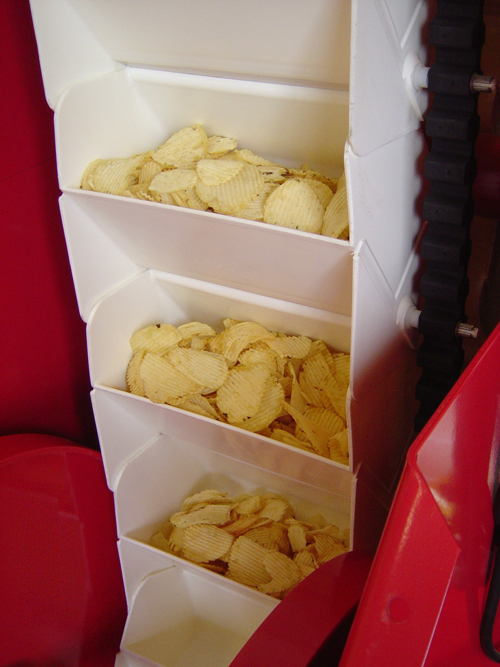
TipTrak carries food products in continuous, interlocking buckets through horizontal and vertical sections. Gentle handling and spill-free conveying protect product quality and reduce material loss, while combined conveying paths reduce intermediate transfer points. Construction and cleaning options are selected around your process.
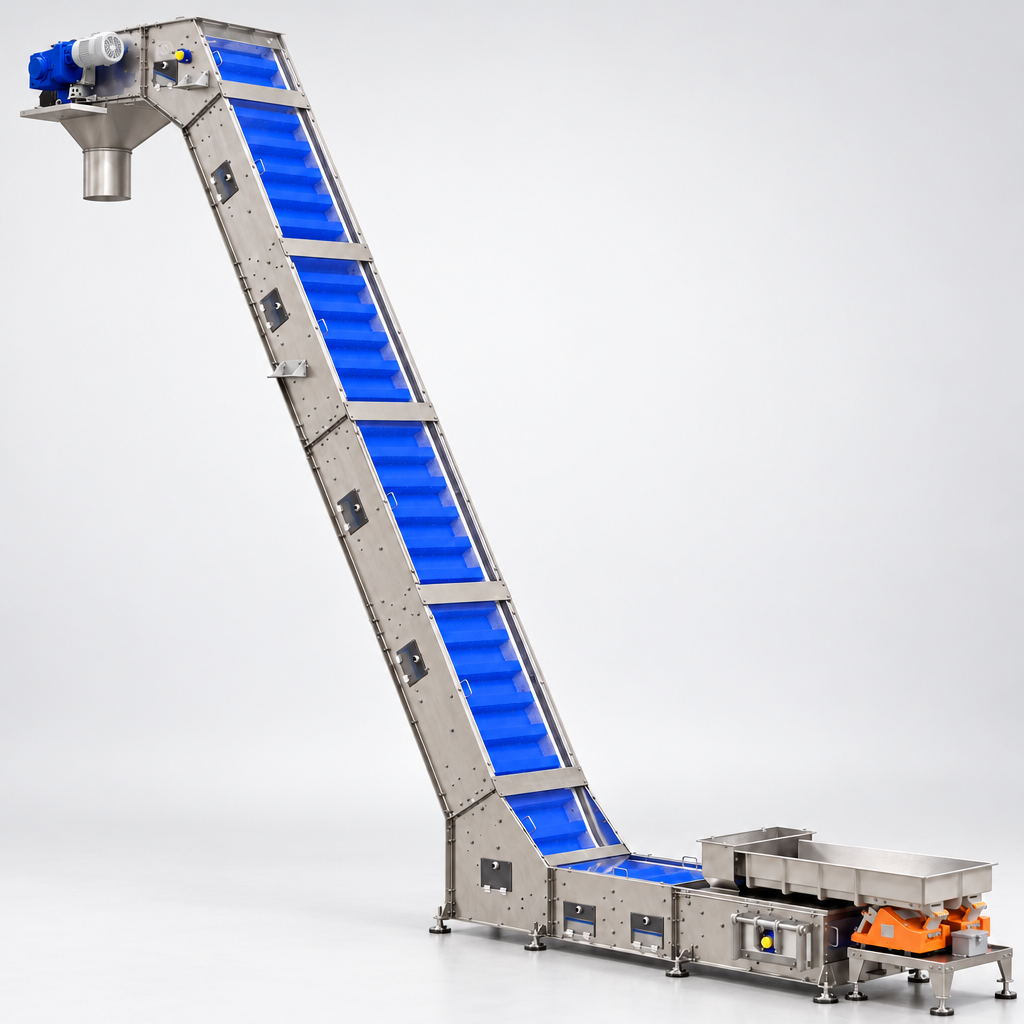
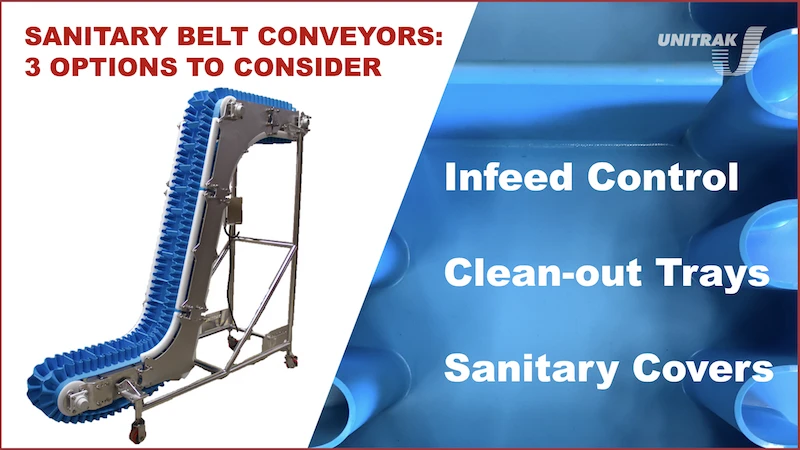
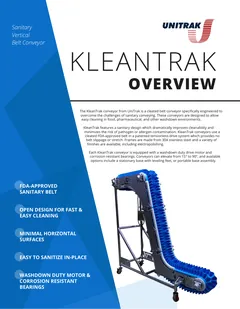
KleanTrak combines open stainless steel construction with accessible product-contact areas and removable components. Its sanitary design supports efficient cleaning, while belt surfaces and conveying arrangements are selected around the product, handling requirements and production layout.
Transfer dry ingredients with minimal product retention.
Powderflight uses a rope-and-disc assembly to generate an air stream inside an enclosed conveying tube. Its conveying action supports ingredient recovery and batch transfer, with the arrangement selected around your material, required throughput and equipment connections.
Consider for: Powder Transfer • Enclosed Conveying • Batch Transfer • Low Product Retention
Fit straightforward ingredient transfer into limited space.
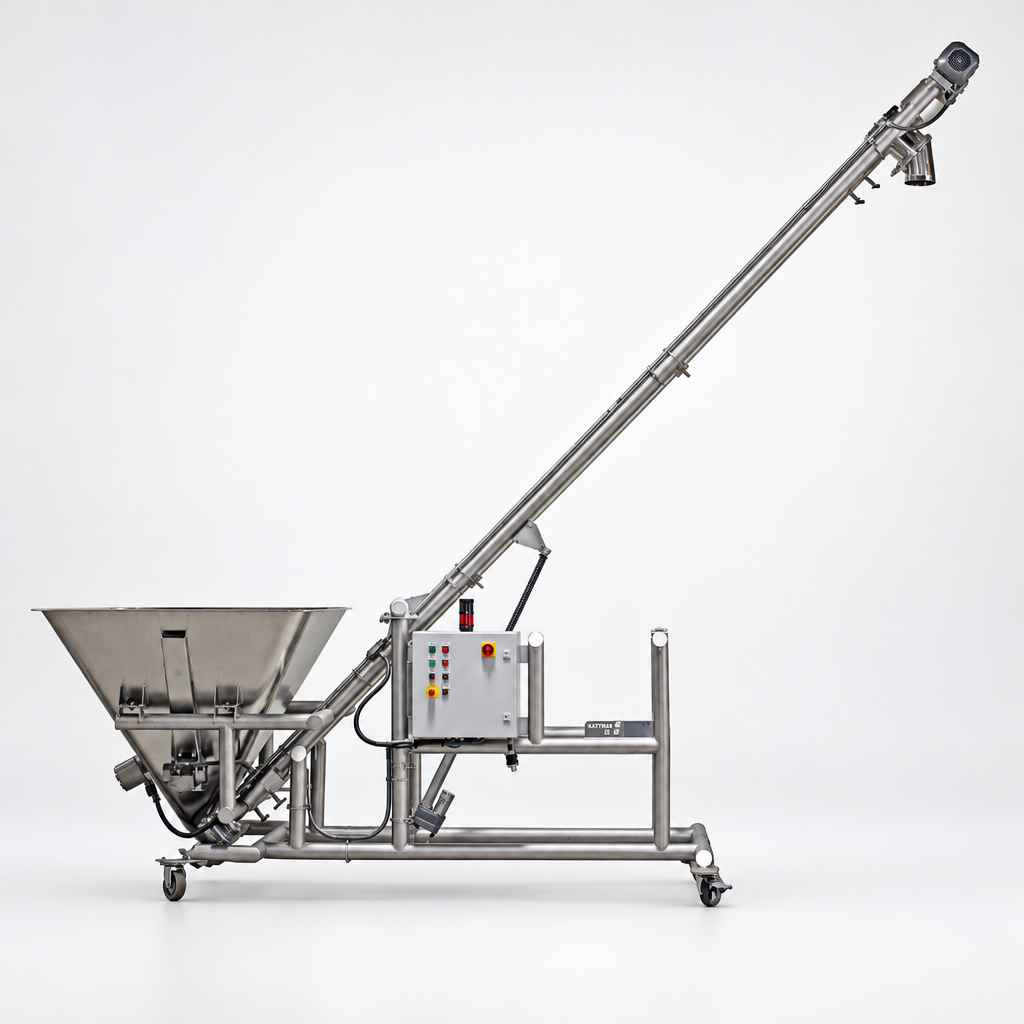
UniFlex moves powders, granules and small pellets through a compact conveying tube. Standard and Easy Clean versions provide different cleaning-access options for batch and intermittent applications. Material selection accounts for the rotating screw’s effect on fragile or abrasion-sensitive products.
Consider for: Short-Distance Transfer • Batch Operation • Limited Space • Economical Ingredient Handling
Connect bulk ingredients with your production process.
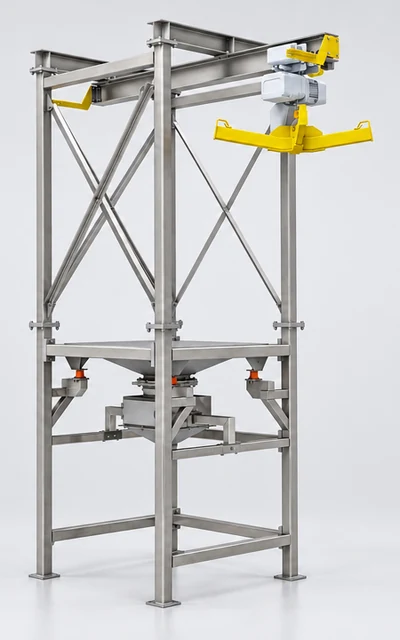
Bagstander unloading and filling configurations are engineered around your bag dimensions, filled weight and loading method. Receiving hoppers, discharge options and conveying connections bring bulk bag handling into the surrounding process.
Consider for: Bulk Bag Unloading • Bulk Bag Filling • Ingredient Receiving • Process Integration
Equipment selection considers your actual product, required throughput, cleaning method and transfer route.
BRING RECEIVING, FEEDING & CONVEYING TOGETHER
A reliable conveyor needs the right equipment around it.
Some food applications require ingredients to be unloaded, screened, weighed or metered before they reach the next process.
UniTrak can combine its conveying and bulk bag handling equipment with selected ancillary components to create a coordinated material-handling arrangement. Feeders are selected according to the conveyor and process.
Potential arrangements include:
Bulk bag unloading through a controlled feeder into a TipTrak
Enclosed powder transfer from a receiving hopper to downstream equipment
Screening or sifting before conveying
Weighed bulk bag discharge with suitable valves, feeders and batching controls
Gentle product elevation into weighing or packaging equipment
Multiple conveying stages connected through appropriate transitions and controls
UniTrak manufactures its core equipment. Ancillary components may be sourced from specialist suppliers and incorporated into the agreed material-handling package.
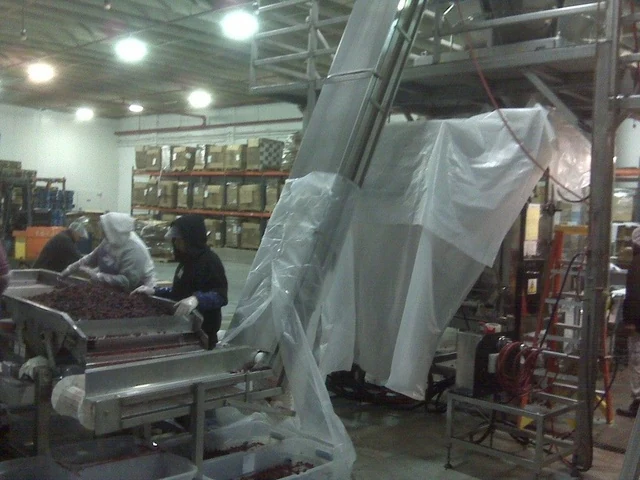
A frozen-fruit producer was losing product while elevating it from a sorting line into a bin feeding the packaging process. Replacing the existing conveyor with a TipTrak eliminated the reported spillage and improved usable product throughput.
A manufacturer needed to elevate warm granola products from an oven without material adhering to the conveyor. Material testing guided the selection of an S5 TipTrak, which conveyed the products without adhesion to its buckets in the documented application.
TEST THE PRODUCT BEFORE COMMITTING TO THE EQUIPMENT
Evaluate product condition, feeding, discharge and residual material before selecting equipment. UniTrak can test your material and use the findings alongside your throughput, cleaning and layout requirements to guide the conveying approach.
Depending on the application, testing can examine:
Product breakage and generation of fines
Feeding and discharge behavior
Sticking or buildup
Product retention
Achievable conveying performance under the test conditions
Our team can review the product, proposed transfer arrangement and operating requirements to determine an appropriate test.
Start with the handling requirement. TipTrak provides gentle elevation and spill-free transfer; KleanTrak prioritises cleaning access; Powderflight provides enclosed dry-ingredient transfer with low product retention; and UniFlex offers compact batch or intermittent conveying. UniTrak selects the equipment around your product, throughput, layout and cleaning requirements.
Yes. TipTrak provides gentle conveying for fragile food products, and KleanTrak offers belt-handling arrangements selected around the product. Infeed and discharge design also protect product condition. Material testing can help evaluate breakage and fines before equipment selection.
Cleaning provisions vary by equipment and configuration. KleanTrak provides open access and tool-less disassembly, while other equipment offers application-specific cleaning and cleanout arrangements. Tell us how the equipment needs to be cleaned and which products it will handle.
UniTrak can review equipment access, product-contact areas and material-retention concerns around your changeover requirements. The proposed equipment and cleaning procedure must be evaluated against your plant’s allergen-control requirements.
Some sticky or warm products can be handled successfully, but suitability depends on temperature, moisture, surface characteristics and how the product interacts with the equipment. Application review and testing are particularly useful for these materials.
Yes. Inlet and discharge connections, feed rates and controls can be developed around compatible downstream equipment. The interface requirements should be reviewed with the customer or equipment supplier.
Bagstander bulk bag handling equipment can be combined with receiving hoppers, feeders and conveyors. Selected arrangements can also incorporate weighing equipment and batching controls.
FOOD CONVEYING RESOURCES
CONVEYORS FOR CEREAL PROCESSING
Explore handling considerations for cereal products, including product protection, cleaning, bulk bag handling and equipment selection.
Start with the product and the problem you need to solve.
Tell us what you’re conveying, where it needs to go and what happens during the existing transfer process.
Our team can review your required throughput, product characteristics, equipment layout and cleaning requirements to help determine an appropriate conveying arrangement.
Whether you are developing a new production line or replacing equipment that damages product, spills ingredients or makes cleaning difficult, we can help assess the next step.