Forklift-Loaded
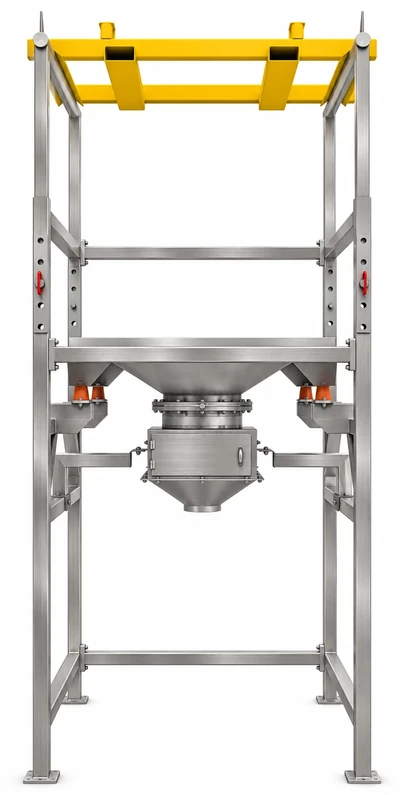
Use your existing forklift to position filled bulk bags within the support frame. A detachable lifting frame and receiving arrangement connect bag unloading with downstream equipment.
Unload ingredients into production or fill bulk bags for storage and shipment. Bagstander combines secure bag support, practical loading arrangements and material-transfer connections in equipment built around your bags, material and process. Choose forklift-loaded or integrated-hoist unloading, or a dedicated filling arrangement.
TALK TO A CONVEYING SPECIALIST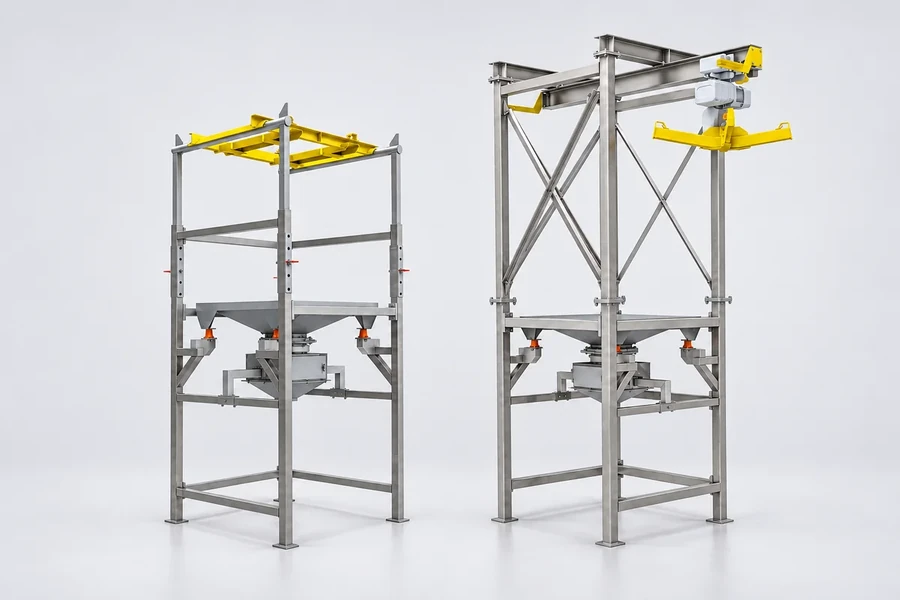
Bagstander includes separate unloading and filling configurations. Select the arrangement around your bags, material and process.
Use your existing forklift to position filled bulk bags within the support frame. A detachable lifting frame and receiving arrangement connect bag unloading with downstream equipment.
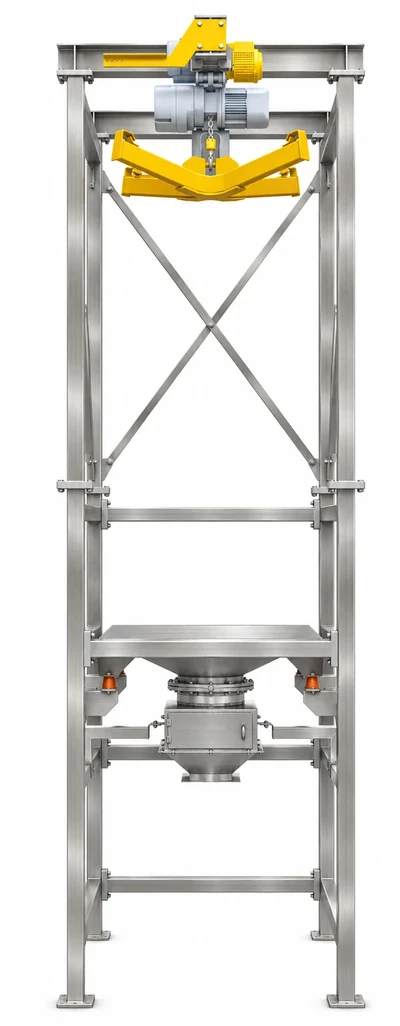
Lift and position bulk bags using an integrated hoist and support structure. The arrangement is engineered around the bag weight, loading access and available space.
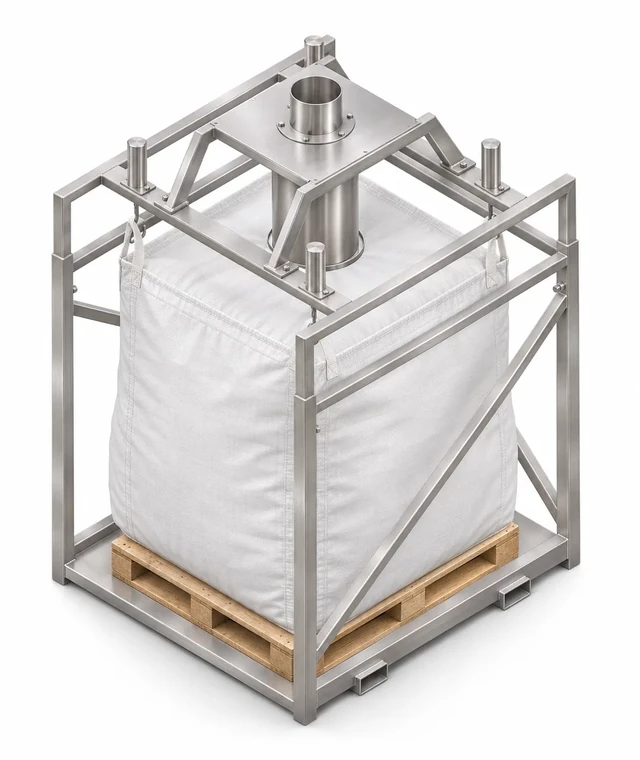
Position empty bulk bags beneath the material supply using a filling arrangement that can be relocated by forklift.
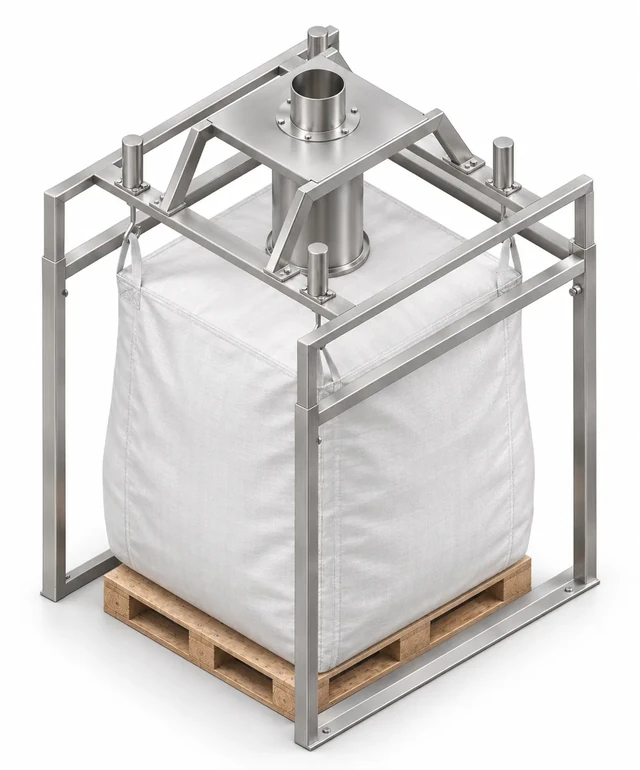
Provide a dedicated filling position with adjustable bag support, a ventilated filling collar and space for a pallet or optional platform scale.
Tell us about your bulk bags, material characteristics and production process. We'll help determine the appropriate equipment arrangement.
Built around your bag dimensions, filled weight and material-transfer requirements.
Moving and positioning filled bulk bags requires equipment designed to support substantial loads.
Bagstander uses a heavy-duty frame and purpose-designed bag-support arrangements to help maintain secure positioning during filling and discharging.
For discharging applications, the lifting frame incorporates hooked-loop retainers that help keep bag lifting loops correctly positioned.
Once installed, the bulk bag is supported within the equipment frame, reducing the need for operators to manually manage a suspended bag during discharge.
Bagstander frames use heavy-gauge steel tubing and structural supports designed for bulk bag handling.
The equipment provides a stable platform for positioning and supporting bags during filling or discharging operations.
With relatively straightforward construction and application-specific components, Bagstander can be integrated into production environments requiring dependable bulk material handling.
Opening, emptying and filling bulk bags can release dust and create material spillage when the process is not properly controlled.
Bagstander incorporates features that help contain material during transfer.
Discharging arrangements can use an iris valve and receiving hopper to manage the flow of material from the bag.
Filling arrangements can incorporate a ventilated collar and exhaust connection to help manage displaced air during filling.
These features help support cleaner operation when properly connected to the surrounding dust-control and material-handling systems.
Bagstander can be configured around the available material-handling equipment and the surrounding production layout.
Forklift-operated arrangements provide a practical solution where suitable lifting equipment is already available.
Integrated hoist arrangements offer another method of positioning bulk bags.
Filling equipment can be configured for stationary operation or movement between production locations.
Bagstander can also be integrated with downstream conveyors, feeders and other processing equipment.
Bulk bags are widely used to store, transport and handle powders, granules, pellets and other dry bulk materials.
Bagstander provides a controlled interface between these bulk bags and the surrounding production process.
Whether discharging ingredients into a conveyor or filling bags from upstream equipment, the appropriate arrangement depends on material characteristics, bag construction, handling requirements and production conditions.
Food manufacturers frequently receive dry ingredients in bulk bags that must be transferred into mixers, blenders, hoppers and other processing equipment.
Bagstander provides a secure method of positioning bulk bags above the receiving equipment, allowing material to be discharged into the next stage of production.
For operations filling bulk bags, Bagstander can provide a controlled interface between upstream equipment and the receiving bag.
Dust-control connections and appropriate product-contact construction can be considered where required.
Chemical manufacturers frequently handle dry materials in bulk bags to simplify transportation, storage and movement between processing stages.
Discharging these materials into mixers, reactors, conveyors or other equipment requires consideration of dust generation, material compatibility and operator exposure.
Bagstander can provide a controlled bulk bag handling arrangement, with discharge connections and supporting equipment selected around the application.
Hazardous materials and combustible dust applications require a specific safety and equipment review.
Explore Chemical ManufacturingPlastics manufacturers commonly receive and transfer polymer pellets, powdered resins and additives in bulk bags.
Bagstander can support the discharge of these materials into conveying equipment, blending systems and other processing machinery.
Filling arrangements can also be considered for transferring finished or intermediate materials into bulk bags.
Agricultural processing and animal nutrition operations frequently use bulk bags for dry ingredients, supplements and granular products.
Bagstander can provide a practical method of transferring these materials into receiving hoppers, mixers and conveying systems.
Its heavy-duty construction and available bag-handling arrangements allow the equipment to be considered for a range of bulk material handling operations.
Pharmaceutical and nutraceutical manufacturers may receive ingredients in bulk bags for transfer into blending, processing and packaging equipment.
These applications can involve demanding requirements for containment, cleaning, material compatibility and contamination prevention.
Bagstander can be evaluated as part of a bulk bag handling system, with construction and surrounding equipment selected according to the process requirements.
Suitability for regulated applications must be established through an application-specific review.
Explore Pharmaceutical & NutraceuticalMineral processing and industrial manufacturing often involve dense powders and granular materials delivered in bulk bags.
These products can create challenges related to weight, dust, abrasion and material flow.
Bagstander provides a structural arrangement for supporting bulk bags during material transfer, with equipment selection based on the bag weight and handling requirements.
Environmental and energy-related processes may use bulk bags to store and transfer dry additives, treatment materials and other bulk products.
Bagstander can provide an interface between bulk bag storage and downstream conveying, feeding or processing equipment.
Bulk bags are used across many manufacturing sectors for products that do not fit neatly into a single industry.
The key requirements are often similar: securely position the bag, manage the transfer of material and connect the operation to surrounding equipment.
Bagstander can be configured around these requirements, with additional attention given to difficult-flowing, dusty, abrasive or otherwise challenging materials.
Bulk bag handling equipment is only one part of the solution. UniTrak can review the complete transfer process, including the receiving hopper, discharge arrangement and downstream conveying equipment.
Bagstander provides separate configurations for unloading filled bags and filling empty bags. Connections to the surrounding process are selected with the material, bag arrangement and operating requirements.
Bag support, loading access, receiving arrangements and filling connections are selected around the application. Flow-assistance equipment can be incorporated where the material requires it.
Receiving hoppers, discharge connections and filling connections can be configured around the material-transfer process.
The receiving and discharge arrangements are selected around the material characteristics, required flow rate and surrounding equipment.
Explore UniFlex Flexible Screw Conveyors
Explore Powderflight Aeromechanical Conveyors
Share your bag dimensions, filled weight, material details and equipment layout. We'll help determine the appropriate Bagstander configuration.
Explore unloading and filling configurations.
Compare bag support, loading access and material-transfer requirements when selecting bulk bag handling equipment.
| Consideration | Bagstander | Alternative Options |
|---|---|---|
| Bag Loading | Forklift-loaded and integrated-hoist unloading arrangements. | Loading methods vary; other purpose-built systems also offer forklift and hoist arrangements. |
| Bag Support | Support structure engineered around bag dimensions and filled weight. | Support and load ratings depend on the selected equipment. |
| Material Discharge | Bag connections, receiving hoppers and discharge-assistance options selected around the material. | Flow-control and discharge-assistance capabilities vary by design. |
| Dust Management | Discharge connections and ventilated filling collars can connect with the surrounding dust-control system. | Containment depends on bag connections, equipment construction and extraction provisions. |
| Filling & Weighing | Dedicated filling configurations with optional weighing equipment. | Filling, weighing and automation capabilities vary by system. |
| Process Integration | Connections configured around upstream and downstream equipment. | Integration requirements depend on the equipment and project scope. |
Bagstander is particularly worth considering when:
Bagstander is engineered around your bag dimensions, maximum filled weight, loading method and material-transfer requirements. Tell us whether you need unloading or filling, how material reaches the equipment and where it needs to go. UniTrak will review the support arrangement, discharge or filling connections and integration with your process.
Request an Application ReviewBagstander is UniTrak's bulk bag handling equipment for filling and discharging Flexible Intermediate Bulk Containers (FIBCs), commonly called bulk bags or super sacks.
The equipment provides a structural frame for supporting bags during material transfer and can be configured around different bag sizes, loading methods and process requirements.
A bulk bag discharger supports a filled bag while material is emptied into receiving or processing equipment.
A bulk bag filler supports an empty bag while material is transferred into it from upstream equipment.
Bagstander offers configurations for both operations.
Bagstander is engineered around your bulk bag dimensions, filled weight and loading method. Adjustable support arrangements accommodate the bags specified for your process.
Load capacity is engineered for the application. UniTrak selects the frame, lifting arrangement and bag-support components around your maximum filled bag weight.
Not necessarily.
The Fork Truck discharger uses a forklift to position the bulk bag within the equipment.
The Tower/Hoist configuration incorporates an integrated hoist for bag positioning.
Bulk bag filling arrangements are also available in stationary and forklift-portable configurations.
Bagstander can incorporate features that help control dust and material spillage during filling and discharging.
Discharging arrangements can include an iris valve and receiving hopper.
Filling arrangements can incorporate a ventilated collar and exhaust connection to manage displaced air.
The effectiveness of dust control depends on the complete installation, including the bag connection and any associated dust-collection equipment.
Yes.
Bagstander can be integrated with suitable conveying and feeding equipment, including flexible screw conveyors, aeromechanical conveyors, bucket elevators and other material-handling systems.
The appropriate connection depends on the material characteristics, required flow rate and surrounding equipment.
Yes. Bagstander handles bulk bags containing powders, granules, pellets and blends. The receiving hopper, product-contact materials and discharge options are selected around the material’s flow and handling characteristics.
Yes.
Bagstander equipment can be configured around different bag dimensions, frame heights, lifting arrangements and process connections.
Customized designs may be appropriate where standard equipment does not fit the bag size, production layout or material-handling requirements.
Yes.
Bagstander filling arrangements support bulk bags beneath an upstream material supply.
Available configurations include Fork Truck and Floor Model arrangements.
The filling equipment incorporates a ventilated collar and displaced-air exhaust connection, and a platform scale is available as an option.
Applications involving combustible dust require a review of the material, operating environment and applicable safety requirements.
Explosion-proof hoist options are available for certain configurations, but this does not automatically make the complete Bagstander system suitable for every hazardous location.
The equipment and associated systems must be evaluated for the specific application.
The main considerations include:
UniTrak can review these details and recommend an appropriate equipment arrangement.
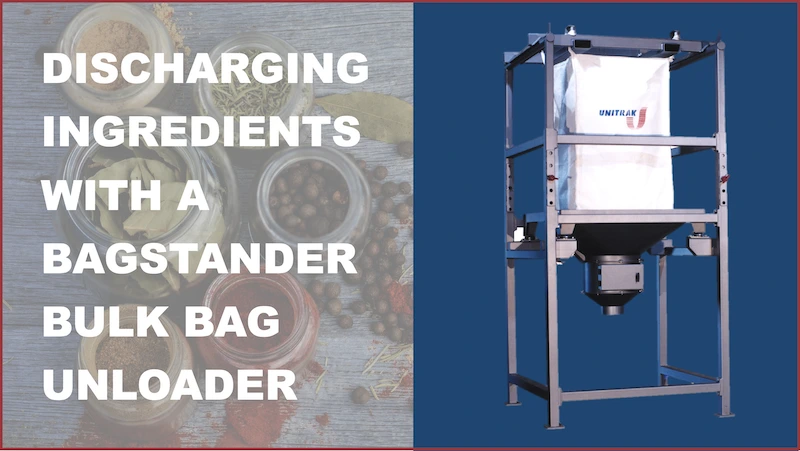
Explore how bulk bag discharging equipment can be integrated with downstream conveying and processing systems.
VIEW RESOURCE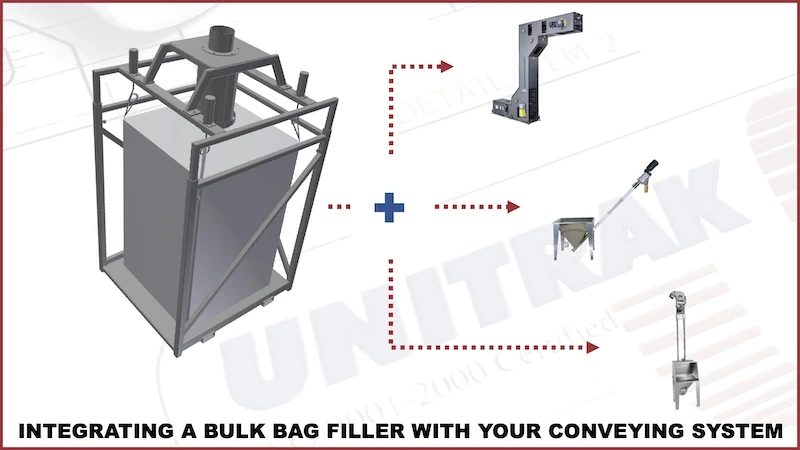
Learn about equipment arrangements for filling bulk bags and integrating filling operations with upstream material supply systems.
VIEW RESOURCE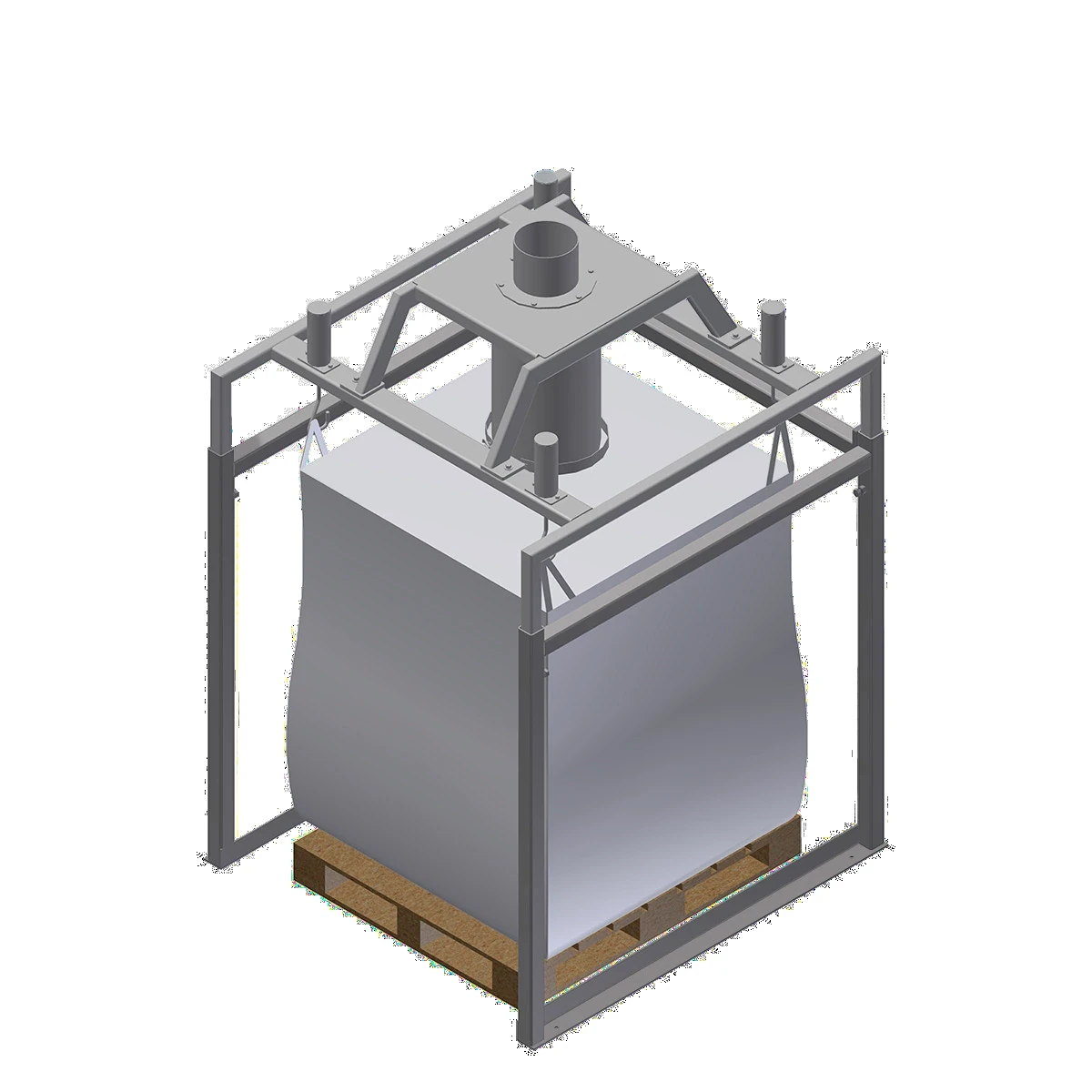
Explore related UniTrak conveying equipment and how it can be integrated with bulk bag handling operations.
VIEW RELATED EQUIPMENT Bagstander BrochurePDF · 2 pages · 1.82 MBDownload brochure
Whether you're filling bulk bags, discharging raw materials into production or integrating bulk bag handling with an existing conveying system, UniTrak can help determine the appropriate equipment arrangement.
Tell us about your material, bulk bag dimensions, maximum bag weight, available lifting equipment and how the equipment needs to connect with your process.
Our team can review your operating requirements, available space and material-handling challenges to recommend a Bagstander configuration suited to your application.