CONSIDER VOLUME AND MASS
Use bulk density alongside the required conveying rate to establish the material load.
Meet the required throughput with equipment sized around the actual material load.
Dense materials require conveyor selection based on both volume and mass. UniTrak matches the conveying technology, loading and configuration to your material, required rate and process route. The design also accounts for flow behaviour, abrasiveness and containment where these characteristics influence the application.
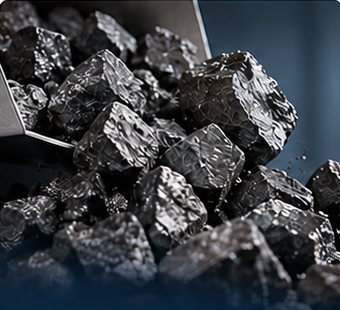
Use bulk density alongside the required conveying rate to establish the material load.
Account for elevation, distance and operating conditions when selecting the conveyor configuration.
Review abrasion, dust and flow behaviour separately from density so each requirement is addressed.
Dense materials appear across many industrial processes.
Bulk density varies substantially between products, and materials within the same general category can behave very differently.
Dense metal products can place significant loads on conveying equipment and may also introduce abrasion, dust or hazardous-material considerations.
Some fine metal powders may also present combustible-dust hazards. Hazard characteristics should be determined from appropriate material data rather than assumed.
Mineral and ceramic products often combine high bulk density with abrasive characteristics.
Many specialty powders and granular products can be significantly denser than their appearance suggests.
Battery-material and advanced-material processes can involve dense, valuable powders where both conveying load and product containment matter.
Actual bulk density, particle characteristics and hazard information should be confirmed for the specific product.
Match the conveying method and configuration to both the volume and mass being moved. Material behaviour and the process route complete the selection.
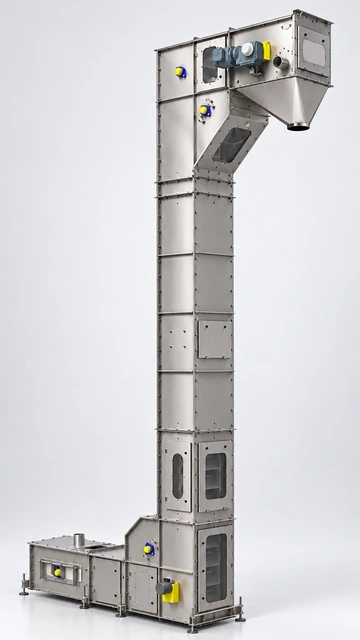
TipTrak provides bucket conveying for application-engineered material loads. Twin configurations offer additional capacity, while three-beltchain Twin arrangements provide additional strength for heavier loads, larger capacities and higher elevations.
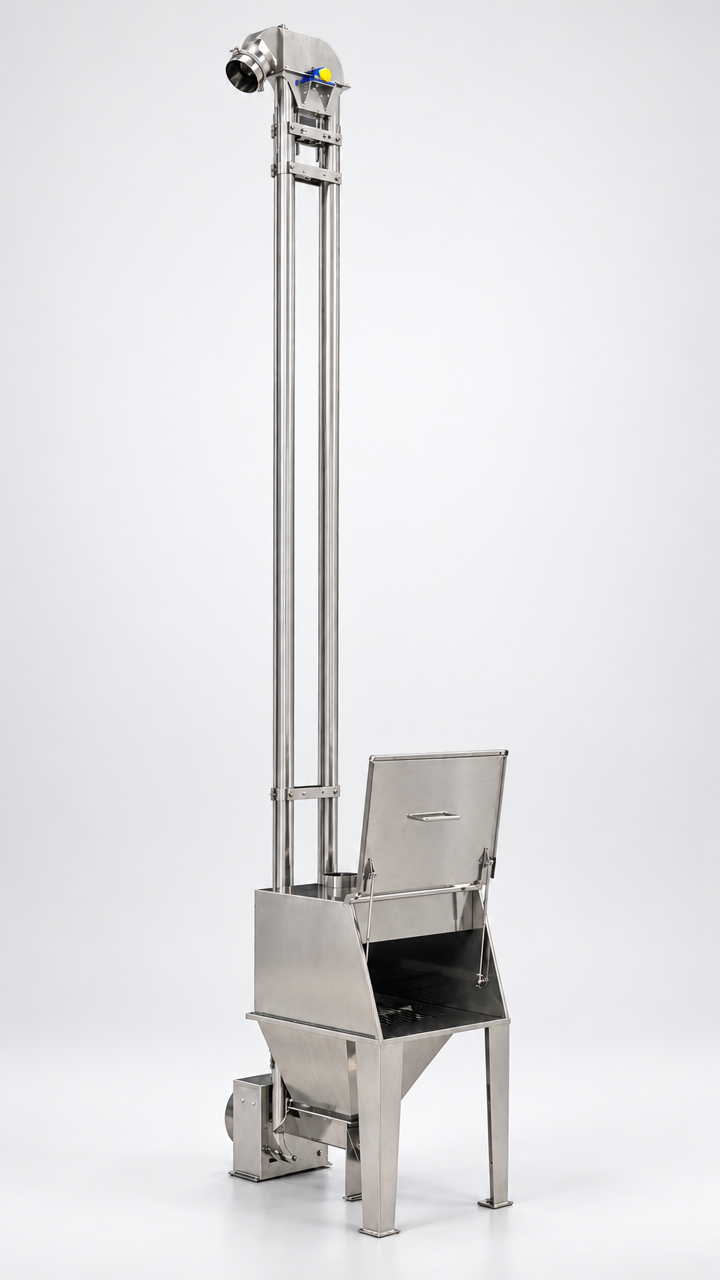
Powderflight provides enclosed aeromechanical transfer for compatible dense powders and granules. Select the model and configuration around bulk density, required rate and conveying geometry.
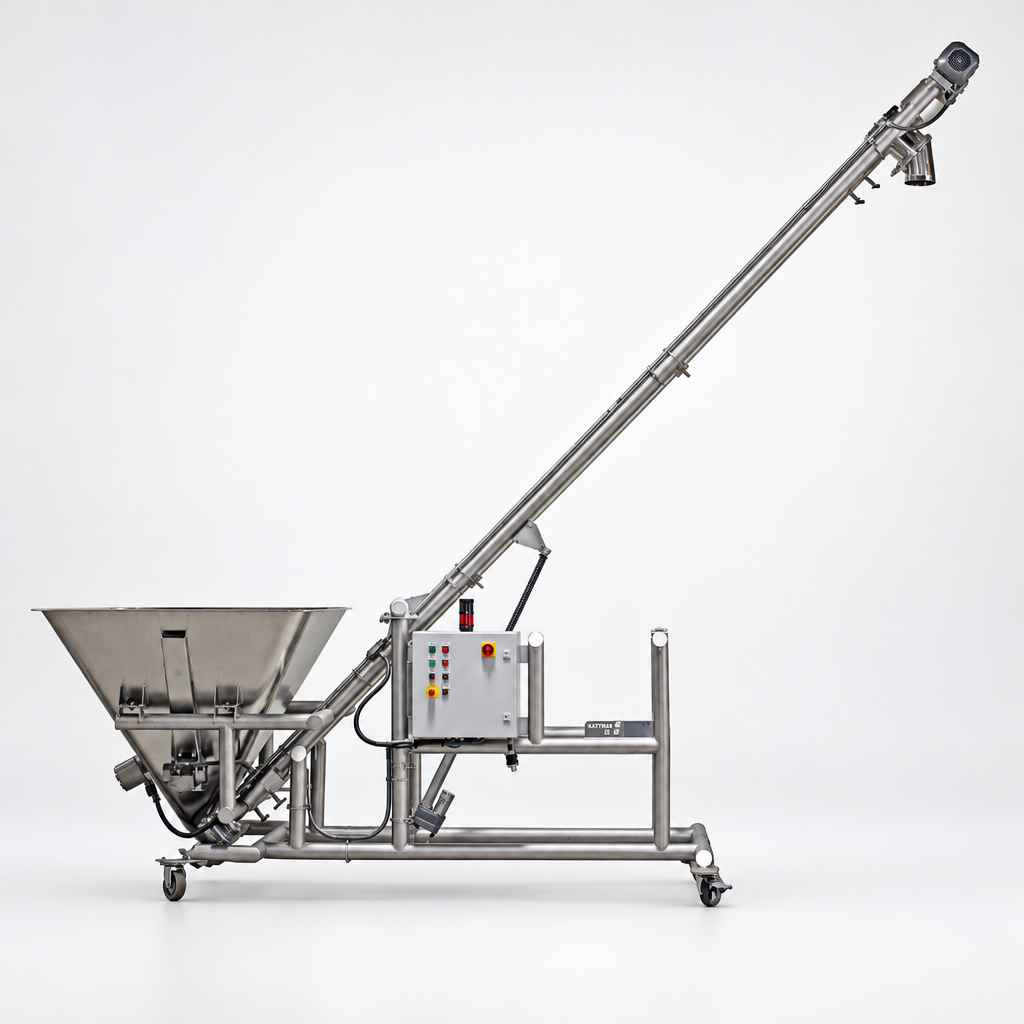
UniFlex draws compatible material from a charged hopper through an enclosed tube. Match the screw, conveying length, incline and drive arrangement to the required duty.
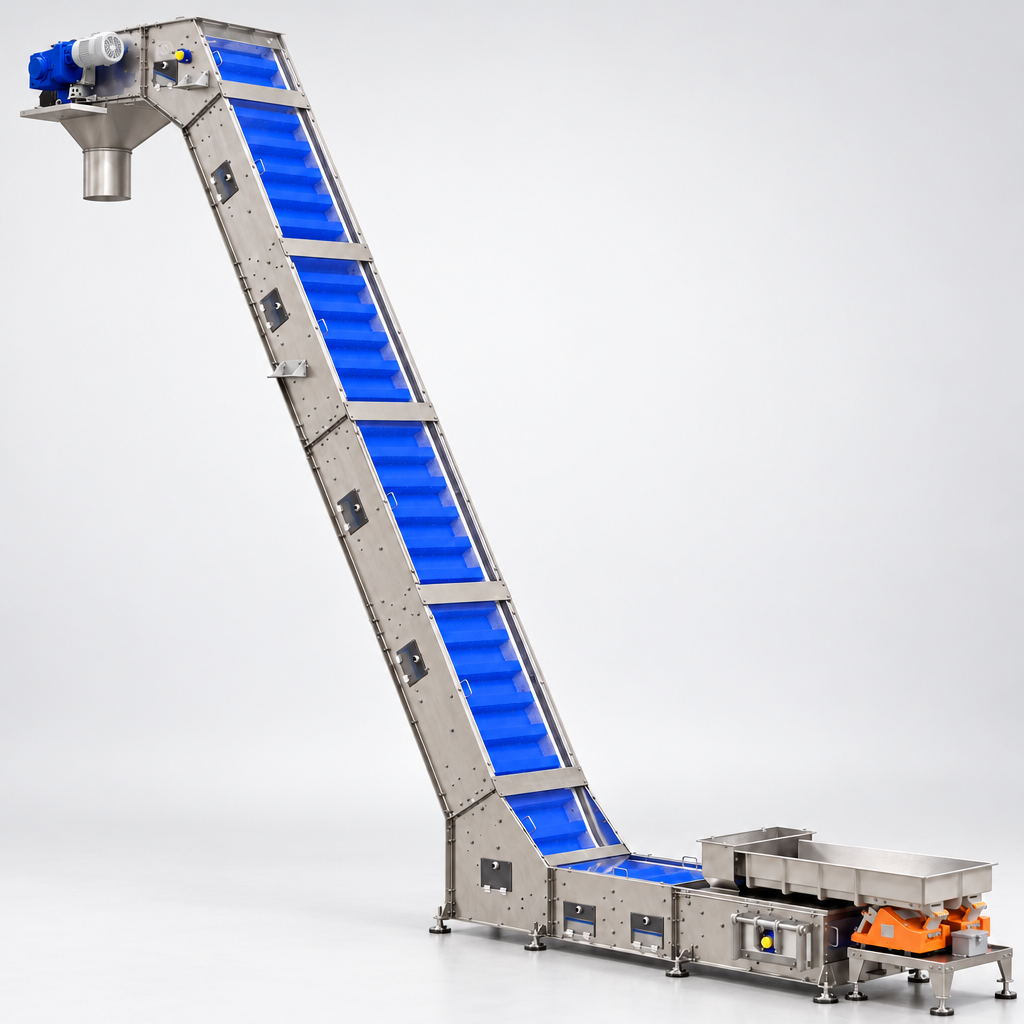
KleanTrak provides supported belt conveying where product compatibility and cleaning access are priorities. Belt loading, incline and structure are selected around the material and conveying rate.
For materials that combine density with wear concerns, explore our abrasive material conveying guidance.
Bulk density connects the volume being conveyed with the load placed on the equipment. UniTrak considers both mass and volumetric throughput alongside the conveying distance, elevation and operating duty.
TipTrak and KleanTrak require controlled feeding. Powderflight can be flood fed from a suitable hopper, while UniFlex draws material from a charged hopper. The receiving and feeding arrangement is developed around the material and required transfer rate.
Density, abrasion and flow behaviour influence different parts of the design. UniTrak selects the conveying configuration, product-contact components, drive and supports around those requirements and the surrounding process.
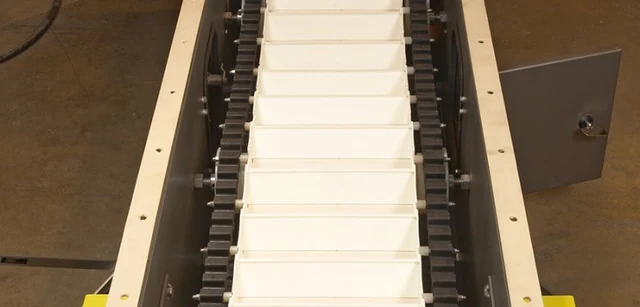
Understand how bucket size, conveyor speed and bulk density influence capacity, and what information is needed when reviewing your application.
Read conveyor capacity guidance
Density and abrasion are different characteristics. Where both apply, review material loading alongside contact surfaces, infeed and discharge conditions.
READ ABRASIVE-MATERIAL GUIDANCEMaterial trials help assess flow, filling, discharge, buildup and product retention in suitable available equipment. Combine these observations with bulk density and the required operating duty when developing the conveying configuration.
There is no single bulk-density threshold that defines every heavy-material application. A material becomes significant from a conveying standpoint when its mass creates additional demands on the conveyor, drive, support structure, feed system or components at the required throughput.
Volumetric capacity describes how much space the material occupies, while bulk density determines how much that volume weighs. A conveyor may have sufficient physical volume for the product but still be limited by the resulting mechanical load.
Both can be important. Volumetric rate helps determine how much conveying space is required, while mass rate determines the load imposed on the equipment. UniTrak considers both when evaluating dense-material applications.
Yes. TipTrak can be engineered for a range of dense materials. Conveyor size, bucket loading, operating speed, drive requirements and configuration are selected around the specific product and required throughput.
Twin TipTrak configurations can provide increased capacity while allowing lower operating speeds. Three-beltchain Twin configurations are also available where additional strength is required for heavier materials, larger capacities or more demanding conveyor geometries.
Potentially. Suitability depends on the specific material, bulk density, particle characteristics, required throughput, conveying distance and system configuration. The application should be reviewed before equipment selection.
Some dense powders and granules are suitable for UniFlex flexible screw conveying. The material, screw size, length, incline, required rate, torque and wear characteristics must all be considered.
Not necessarily. Density and abrasion are different characteristics. However, many mineral, ceramic and metal products are both dense and abrasive, which can increase wear at product-contact and transfer areas.
Often, higher material mass increases drive requirements, but motor sizing depends on the complete conveyor configuration, including throughput, geometry, elevation, starting conditions and material behavior.
Where appropriate, UniTrak can evaluate suitable customer materials using available test equipment. An SDS is required and the material is subject to safety review before testing.
Review infeed and discharge wear, material impact and application-specific bucket-conveyor design considerations for abrasive products.
Read resource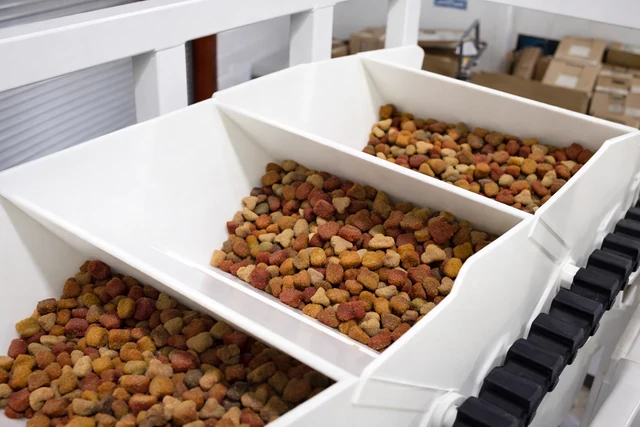
Learn how testing can reduce uncertainty around material behavior before final equipment selection.
Read resourceTell us the material, bulk density, required rate and conveying route. Provide mass or volumetric throughput in the units you use; UniTrak will review the equipment configuration around the application.