SUPPORT EFFECTIVE CHANGEOVERS
Accessible product-contact areas and suitable cleaning arrangements help manage retained material between products.
Match cleanability, product-contact materials and containment to your process.
Contamination-sensitive products need more than an enclosed conveyor. UniTrak brings together accessible sanitary designs, low-retention conveying and application-specific enclosure options. We select the equipment around your product, cleaning method and changeover requirements, helping protect material quality throughout the transfer.
Accessible product-contact areas and suitable cleaning arrangements help manage retained material between products.
Choose open, covered or sealed construction around the risk of external contamination and the required cleaning access.
Match buckets, belts and other contact components to the product, operating temperature and cleaning procedure.
Contamination sensitivity occurs across many industries.
The issue is often less about the material itself and more about what the process requires before, during and after conveying.
Applications where allergen control, sanitation, product retention and changeover procedures influence conveyor design.
Facilities handling multiple recipes, colors, grades or formulations on common equipment.
Processes where even small amounts of retained or foreign material can affect product value or downstream performance.
Applications where material must be protected from the surrounding plant environment or from other processes.
Not every application requires the same level of sanitation or containment. The conveyor should be configured around the actual process risk.
Match the conveying method to the contamination risk.
Different conveying technologies address contamination-sensitive applications in different ways. The right choice depends on whether the priority is cleaning access, enclosure, product retention, washdown, material protection or a combination of these factors.
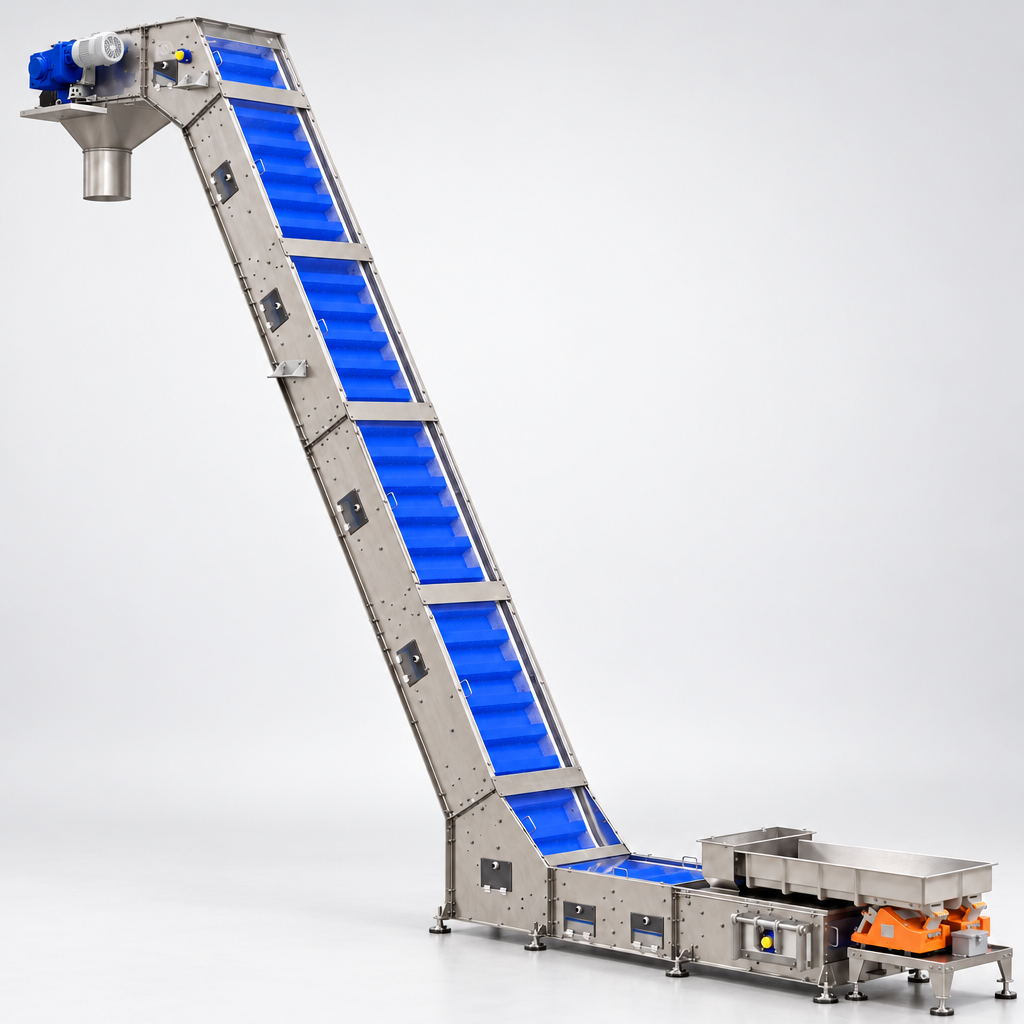
KleanTrak combines an open stainless steel frame, accessible belt and tool-less access for regular cleaning. Optional covers protect the product while retaining access; they do not create a sealed dust-tight enclosure.
EXPLORE KLEANTRAK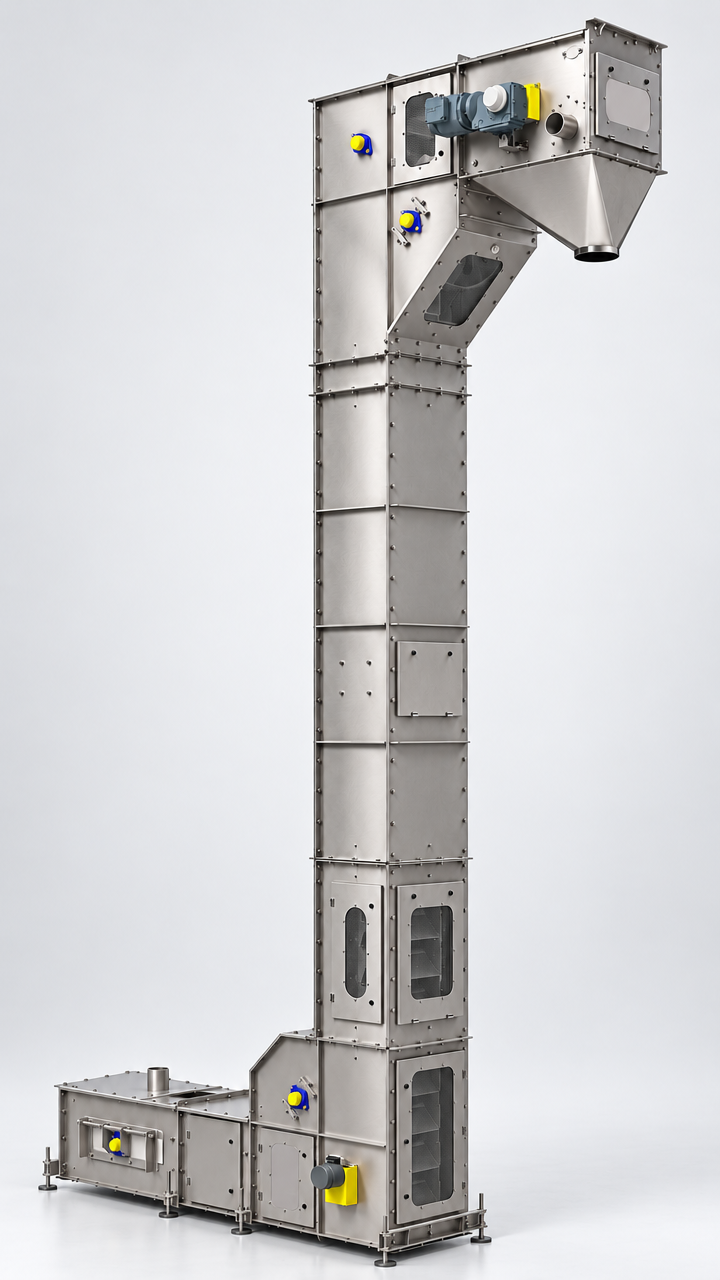
TipTrak combines gentle bucket conveying with food-contact material options, a lubrication-free beltchain and application-specific cleaning features. Clean-In-Place, washdown, cleanout and enclosed or sealed configurations are available around the process requirements.
EXPLORE TIPTRAK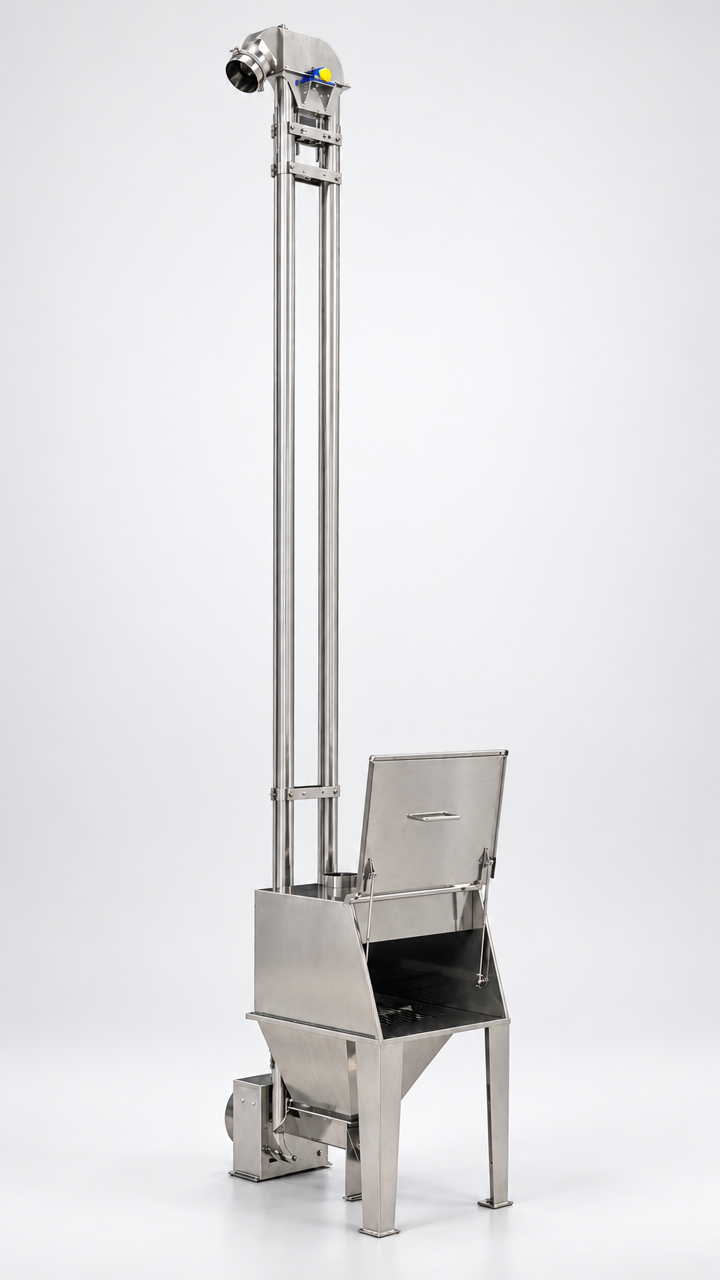
Powderflight provides enclosed aeromechanical conveying with low product retention. Select product-contact construction and cleaning arrangements around the material and required changeover procedure.
EXPLORE POWDERFLIGHT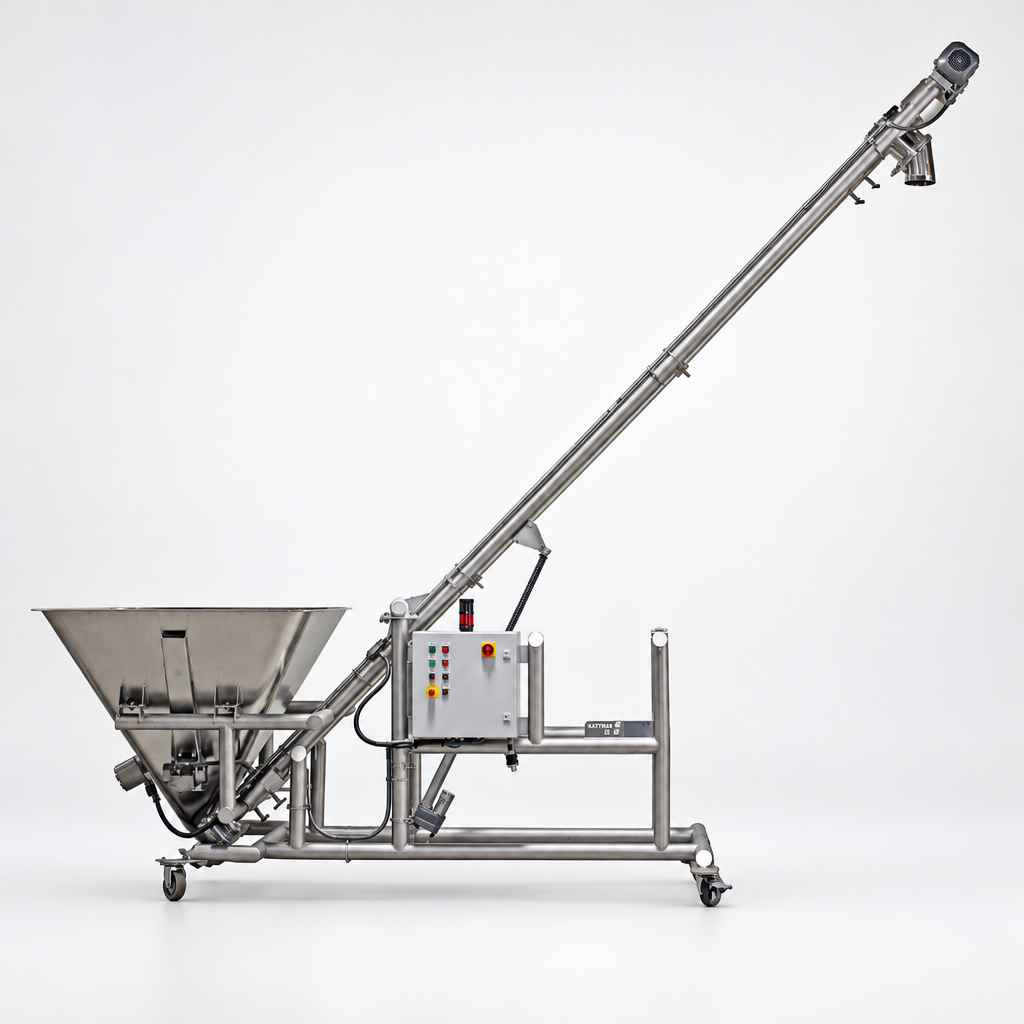
UniFlex provides compact enclosed transfer for compatible powders and granules. Review product retention, contact materials and cleaning access against the process requirements.
EXPLORE UNIFLEXThe contamination risk determines the conveyor design.
Material remaining inside conveying equipment can carry into the next batch or product.
Where carryover matters, conveyor selection should consider:
Low retention can be particularly important where batches, colors, allergens or formulations change frequently.
The equipment must match the cleaning procedure used by the facility.
Depending on the process, this may include:
The most sophisticated cleaning system is not automatically the best solution. The correct method depends on the product, process and sanitation requirements.
Bucket, belt, chute, hopper and conveyor-contact materials should be selected around the product and process.
Considerations may include:
Material compatibility should be confirmed for the specific application.
In some applications, the primary concern is preventing contaminants from entering the product rather than cleaning between products.
Enclosed or sealed conveying can help isolate material from:
The required level of enclosure should be determined by the process rather than assumed.
Wear components can themselves become a contamination concern.
Equipment selection should consider:
The goal is to select a conveying system that can be maintained without introducing unnecessary contamination risks.
Cleaning access, product retention and protection from the surrounding environment require different design choices. Explore the UniTrak options that address these priorities.
An open frame and accessible belt simplify access to product-contact areas during regular cleaning.
Explore KleanTrakFood-contact bucket materials, cleanout access and optional Clean-In-Place arrangements support application-specific cleaning requirements.
Explore TipTrak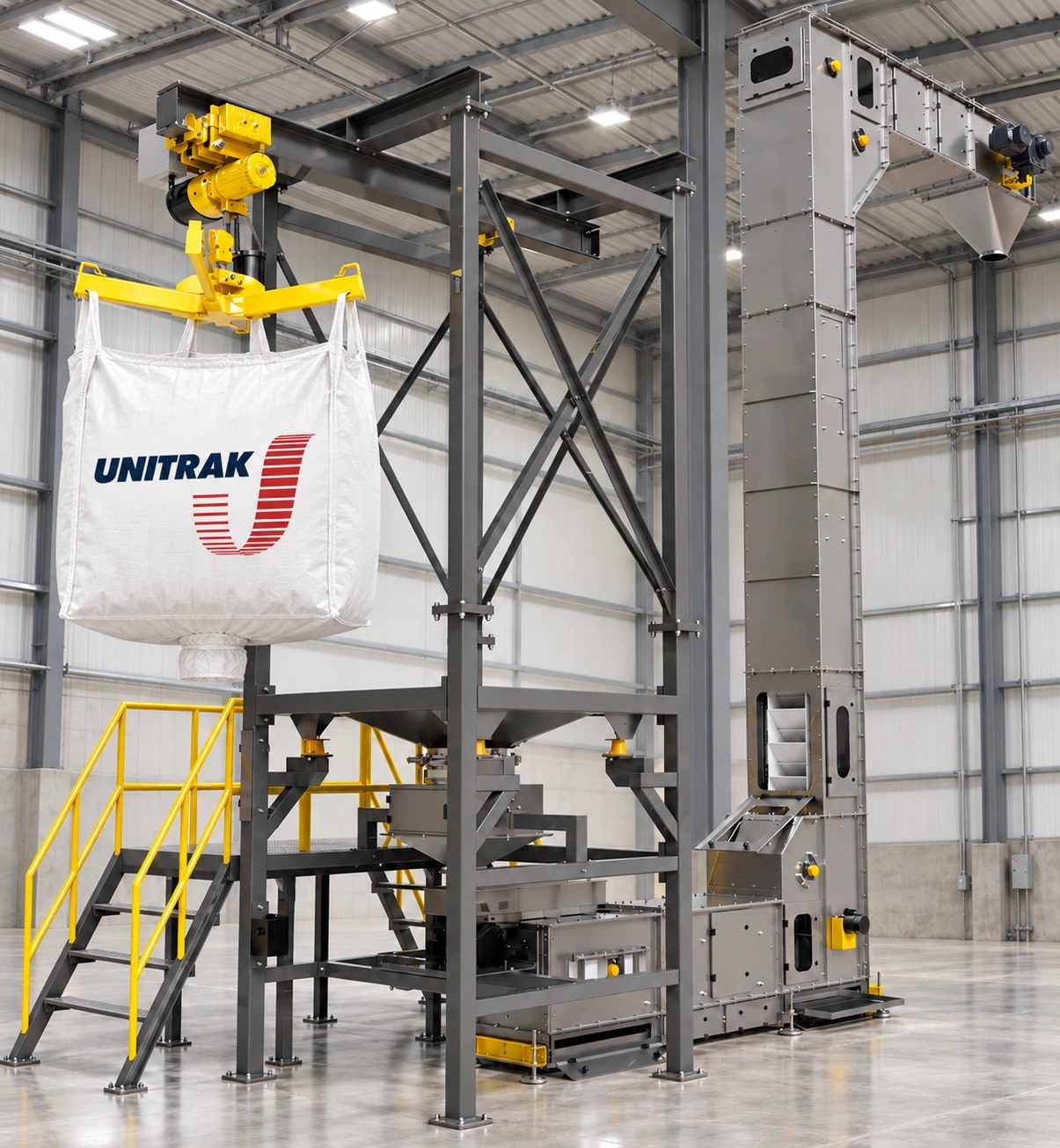
Coordinate receiving, conveying, discharge and equipment connections around the product and cleaning procedure.
Explore Integrated SystemsUse material trials to observe conveying behaviour, discharge and retained product. Review the findings alongside your cleaning procedure and product-change requirements.
A material may be considered contamination-sensitive when foreign material, retained product, allergens, wear debris, moisture, environmental exposure or material from a previous batch could affect its quality, safety or downstream performance. The required level of contamination control depends on the process.
There is no single best conveyor for every contamination-sensitive application. KleanTrak is often considered where frequent washdown and direct cleaning access are priorities. TipTrak offers low product retention, sanitary options and multiple containment configurations. Powderflight and UniFlex provide enclosed conveying for suitable applications. Final selection should be based on the material and process requirements.
Yes. Integral Clean-In-Place systems are available for suitable TipTrak applications. TipTrak can also be configured with washdown-duty components, drain pans, clean-out access and sanitary bucket options depending on the process.
KleanTrak is an open, accessible sanitary belt conveyor. Optional covers protect the product while preserving cleaning access. They do not provide a sealed dust-tight enclosure. Where sealed conveying is required, UniTrak can review a different construction or conveying technology.
Enclosed conveying can reduce exposure to the surrounding environment, but enclosure alone does not eliminate contamination risk. Product retention, cleaning, seals, interfaces, upstream and downstream equipment and operating procedures must also be considered.
Yes. Stainless steel construction is available across appropriate UniTrak equipment and applications. The required grade and product-contact construction should be selected around the material, cleaning requirements and process environment.
Food-contact component options are available for appropriate applications, including multiple TipTrak bucket materials and sanitary belt options. The exact materials and documentation required should be confirmed for the specific project.
Potentially, but the suitability depends on the products involved, contamination risk, cleaning procedure and acceptable carryover. Multi-product applications should be reviewed carefully before equipment selection.
Where appropriate, UniTrak can evaluate suitable customer materials using available test equipment. An SDS is required and the material is subject to safety review before testing.
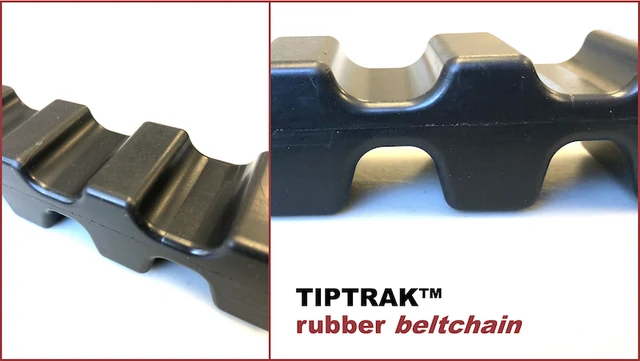
Explore TipTrak rubber beltchain cleaning, washing in place and lubrication-related design considerations.
Read resource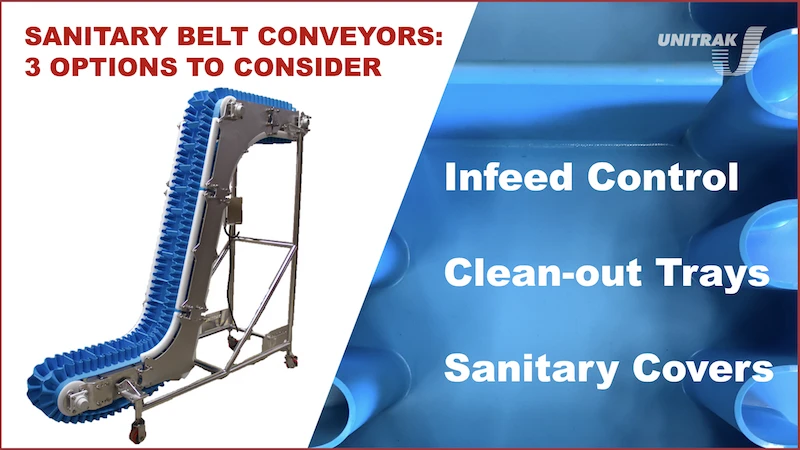
Learn how conveyor design, containment and cleaning access can affect sanitary belt conveyor performance.
Read resource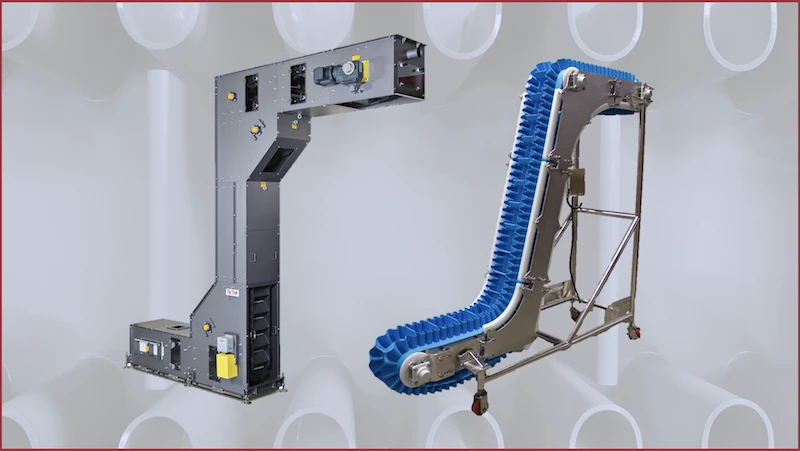
Explore how Clean-In-Place design can support regular sanitation and product changeovers.
Read resource
Learn how testing can help identify material behavior and application considerations before final equipment selection.
Read resourceShare your material, required conveying rate, route and current handling problem. UniTrak will review the application and recommend equipment and configuration options around your process.