REDUCE AVOIDABLE IMPACT
Loading height, direction changes and discharge conditions influence wear. Control how abrasive particles enter, travel through and leave the conveyor.
Protect uptime by matching material movement and component selection to the duty.
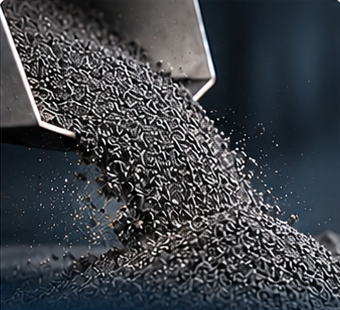
Abrasive materials demand attention to particle contact, impact and operating duty. UniTrak selects the conveying method and application-specific components around those conditions. Controlled material movement, suitable contact surfaces and well-designed loading and discharge arrangements help reduce avoidable wear while meeting the required conveying rate.
Loading height, direction changes and discharge conditions influence wear. Control how abrasive particles enter, travel through and leave the conveyor.
Particle hardness, shape, bulk density and operating hours inform product-contact material and component selection.
Select a conveying arrangement that meets throughput requirements while keeping inspection and access practical.
Hardness, particle shape and process conditions determine how aggressively a material wears equipment.
These are representative material families only. Suitability requires application review.
Abrasive materials are characterized by the wear they can create through impact, sliding contact or mechanical interaction. Heavy and dense materials primarily create equipment-loading demands. A product may be both abrasive and dense; the two characteristics should be assessed separately.
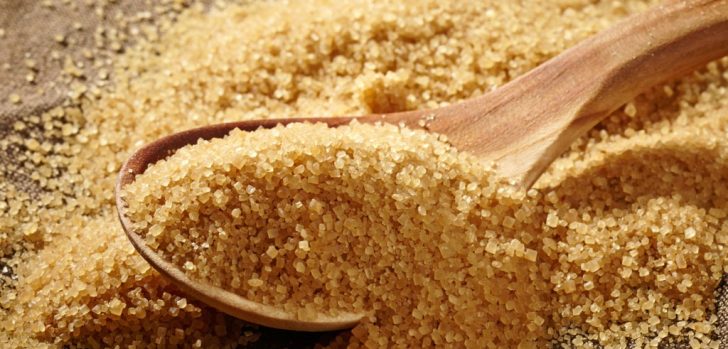
Sand and similar mineral products may flow easily but can be highly abrasive to conveying components.
Particle size, shape, hardness and conveying velocity should all be considered when selecting equipment.
Common concerns: Wear • Impact • Dust • Component Life • Maintenance
Products such as silicon carbide can create substantial wear when repeatedly contacting conveying surfaces.
The conveying method should minimize unnecessary velocity, impact and mechanical interaction while still meeting the required conveying rate.
Common concerns: High Abrasion • Component Wear • Impact • Maintenance • Material Testing
Processed mineral and ore products may create wear through both particle hardness and the mass of material being moved.
Where materials are both abrasive and dense, equipment selection should consider the combined effect rather than treating either characteristic in isolation.
Common concerns: Abrasion • Bulk Density • Impact • Dust • Equipment Loading
Certain metal powders, granules and metal-containing materials may be abrasive as well as dense, dusty or combustible.
Where additional hazards exist, those requirements must be considered separately from abrasion.
Common concerns: Abrasion • Density • Dust • Material Value • Application Hazards
Some fertilizer granules, salts and crystalline materials can be abrasive because of particle hardness or angular shape.
They may also present corrosion, moisture or caking considerations depending on the product.
Common concerns: Abrasion • Particle Integrity • Moisture • Corrosion Considerations • Maintenance
Recycled or recovered materials may contain particles of different hardness, shape and density.
That variability can create inconsistent wear patterns and make actual material evaluation especially useful.
Common concerns: Variable Abrasion • Particle Shape • Density • Contamination • Testing
The best solution is not simply the conveyor that can move the material — it is the one that manages the application without creating unnecessary wear.
UniTrak manufactures multiple conveying technologies, allowing us to consider how abrasive material interacts with each system.
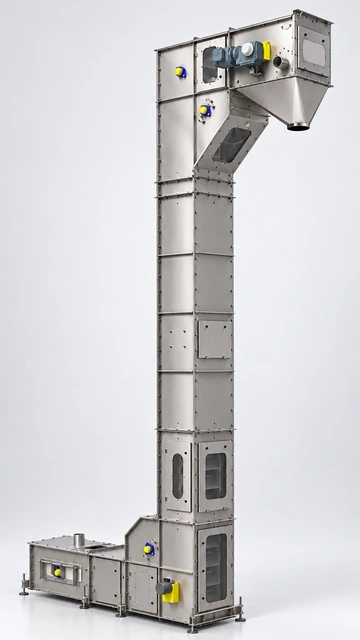
TipTrak carries material in buckets at low speed, reducing high-velocity impacts. Wear-resistant bucket and drive-component options address abrasive applications, while controlled feeding and discharge help limit concentrated wear.
EXPLORE TIPTRAK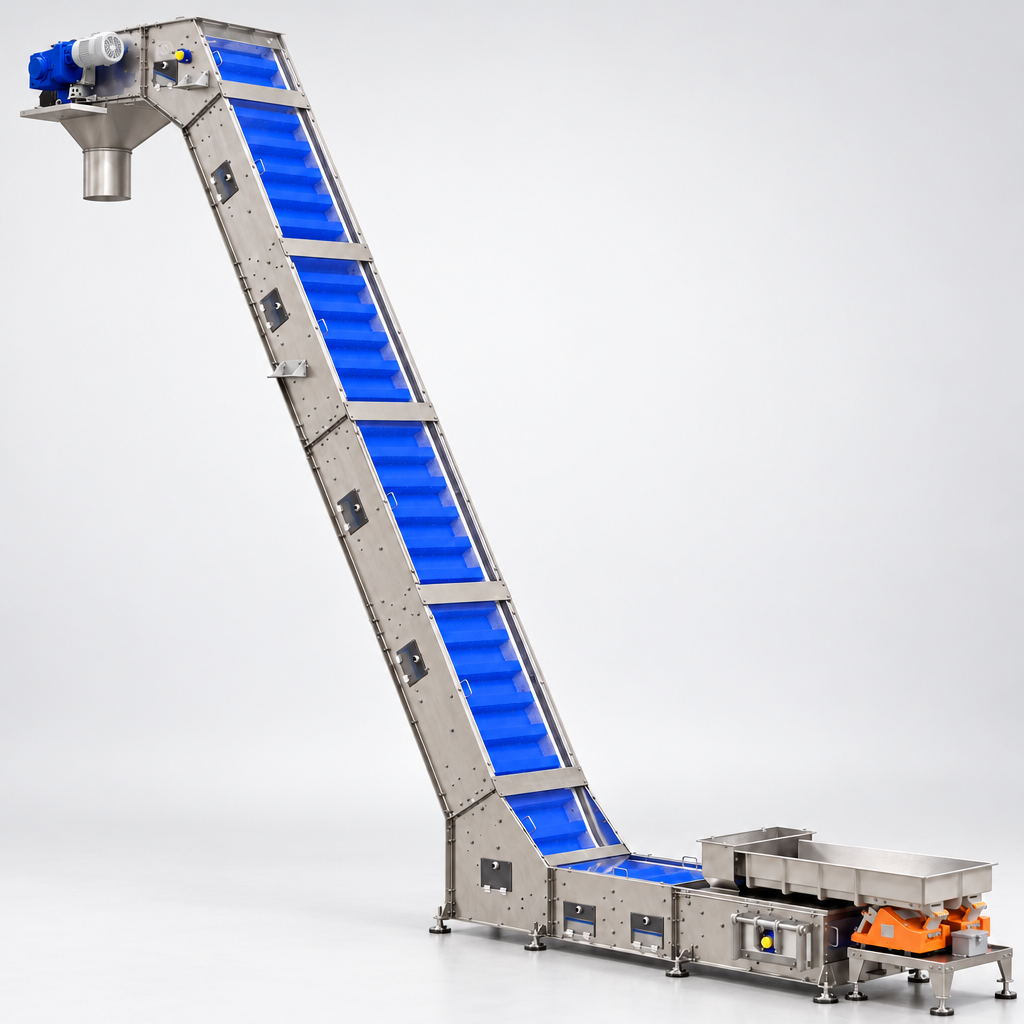
KleanTrak supports material on an accessible belt. For compatible abrasive products, review belt selection and loading and discharge conditions against the required operating duty.
EXPLORE KLEANTRAK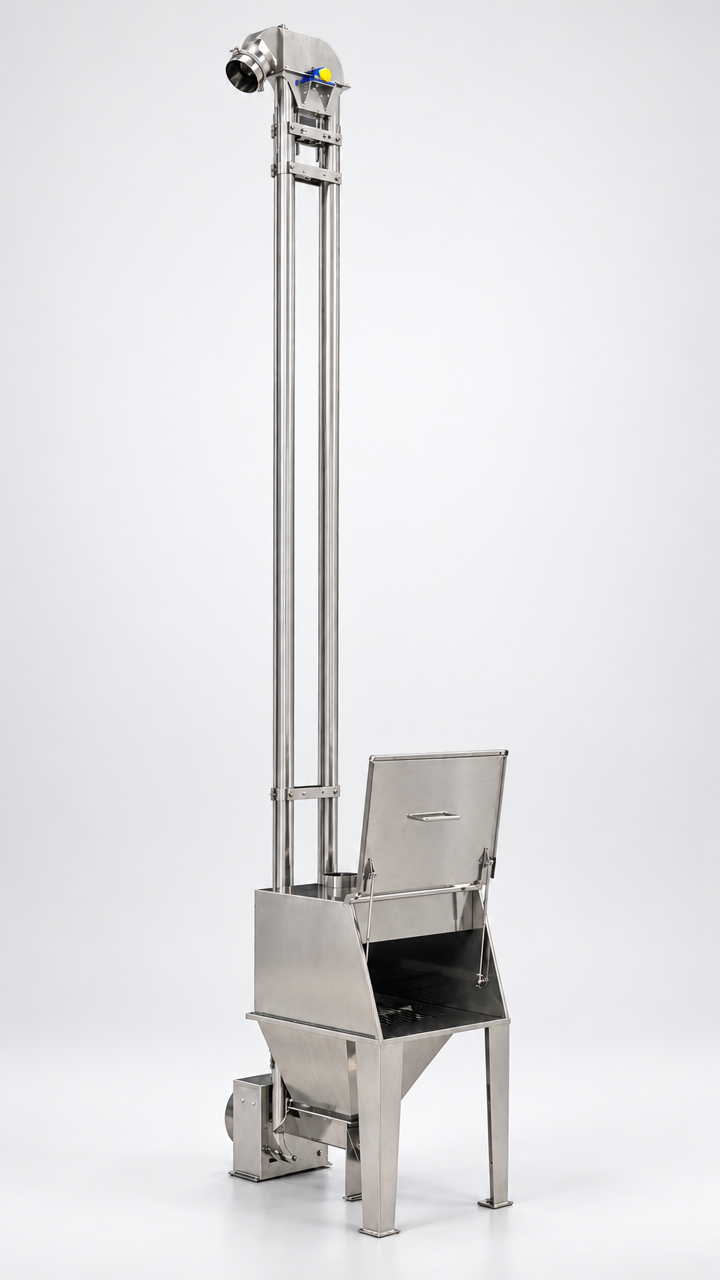
Powderflight provides enclosed aeromechanical transfer for compatible powders and granules. Abrasive contact with the discs and conveying tube makes material characteristics and operating duty important selection factors.
EXPLORE POWDERFLIGHT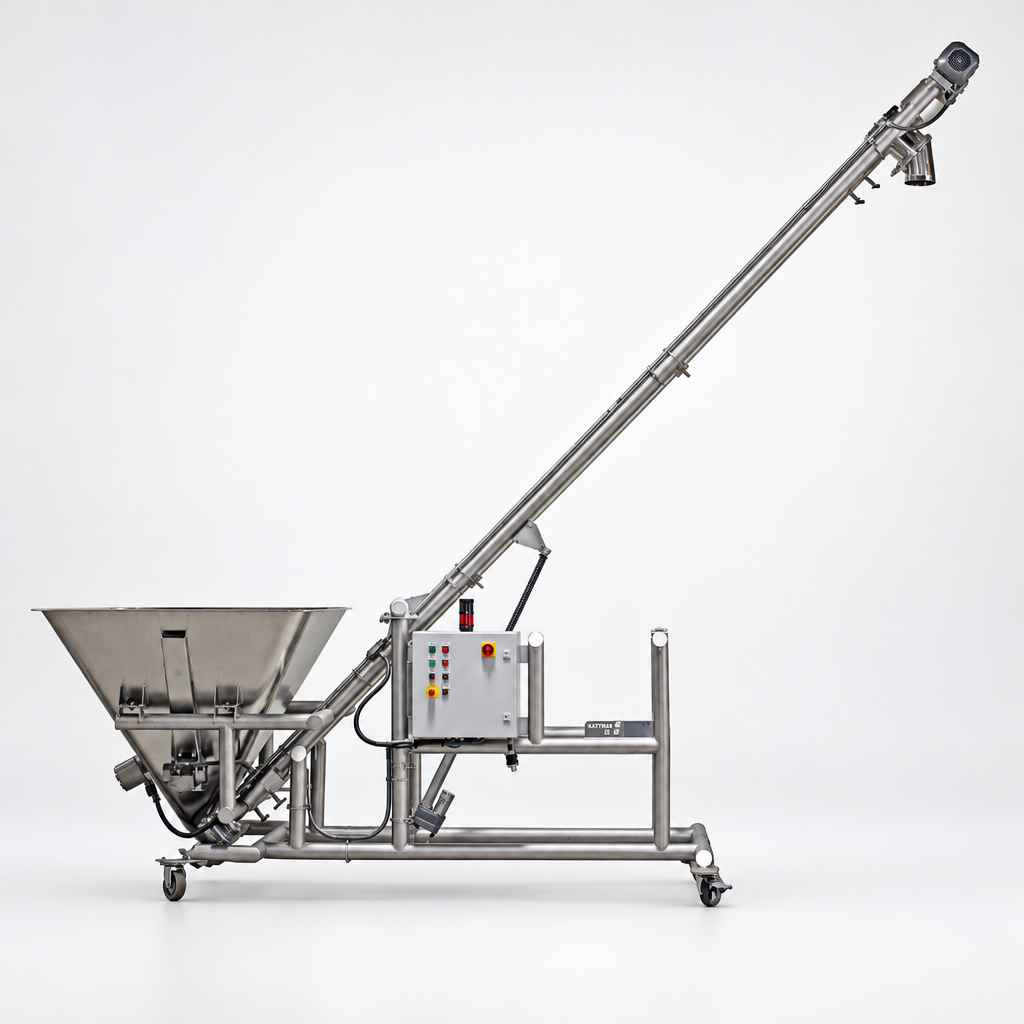
UniFlex provides compact screw conveying for compatible materials. Abrasiveness and operating duty determine whether continuous contact with the screw and tube is appropriate.
EXPLORE UNIFLEX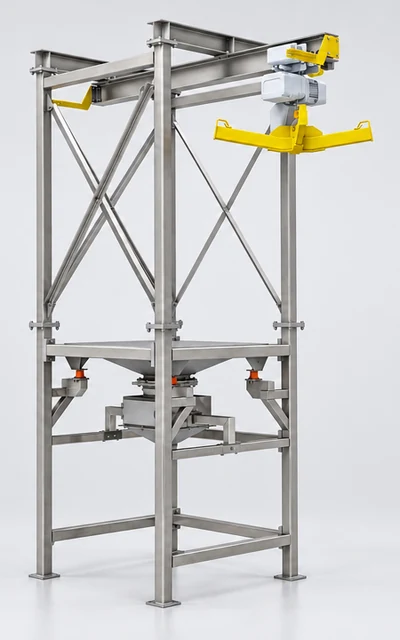
Bagstander connects bulk bag receiving with the conveying process. Select hopper, outlet and transfer components around the material’s abrasiveness, density and discharge behaviour.
EXPLORE BAGSTANDERWhere product purity is also a priority, explore our contamination-sensitive material conveying guidance.
Wear is rarely distributed evenly through a system.
The same material may create very different equipment life depending on how it moves through the system.
Controlling unnecessary particle velocity and impact can help reduce aggressive wear while still achieving the required conveying rate.
The objective is controlled movement, not reduced production capacity.
Whenever abrasive material changes direction, particles may strike surfaces rather than simply travel with the conveying path.
These locations can become predictable wear points and should be considered during layout development.
A conveying technology that repeatedly drags, screws or propels abrasive particles against equipment surfaces can create a different wear mechanism from one that primarily carries the material.
Understanding how the product contacts the machine is therefore central to equipment selection.
Abrasive applications should be evaluated with maintenance in mind.
Accessibility, inspection points, replaceable wear components where applicable and expected maintenance requirements can all influence the practical lifecycle of the system.
Abrasive products cannot always be made non-abrasive.
The opportunity is to understand where wear will occur and avoid creating more abrasion than the process requires.
UniTrak evaluates the material, conveying method, layout and operating duty together to determine the most appropriate approach.
UniTrak’s abrasive-material guidance explains how loading, operating speed, spillage control and wear-resistant components influence bucket-conveyor performance. It describes TipTrak experience with refractory materials, metal powders and other abrasive products.
READ ABRASIVE CONVEYING GUIDANCE
Battery ingredients can combine abrasion with high material value and contamination concerns. Review particle characteristics, conveying contact and product-contact materials together when selecting the equipment.
READ BATTERY MATERIAL GUIDANCEMaterial trials help assess conveying behaviour, discharge and equipment fit. Combine these observations with abrasiveness, operating duty and component selection when developing the conveying solution.
An abrasive bulk material contains particles that can wear equipment surfaces through impact, sliding contact or repeated mechanical interaction. Particle hardness, shape, size, density and surface texture can all influence abrasion.
A material may move easily while gradually wearing the equipment handling it. This can shorten component life, increase maintenance and eventually cause unexpected downtime or loss of containment.
TipTrak is a strong option where low-speed bucket conveying and wear-resistant components suit the application. Loading and discharge design are important alongside particle hardness, shape, density and operating duty. Other conveying methods remain options where their material-contact characteristics match the product.
Yes. TipTrak can be considered for suitable abrasive materials. Its deep, continuous buckets carry material with controlled movement at a relatively low belt speed, which can reduce some of the high-velocity impact associated with more aggressive conveying methods. The deep bucket design also allows high conveying rates without requiring high belt speed. Actual suitability depends on the material and application.
Abrasion can become more severe when hard particles repeatedly strike equipment surfaces at higher velocity. Carrying material with controlled movement can reduce unnecessary impact while still achieving the required conveying rate. The objective is not simply to slow the process down, but to move the required volume without creating more aggressive particle interaction than necessary.
KleanTrak can be considered for compatible abrasive products where supported belt conveying is appropriate. Abrasive material can still wear the belt and other components, so the actual material and operating conditions should be evaluated.
Potentially. Powderflight can convey compatible powders and granules, but highly abrasive material may increase wear on internal components. Application review and testing may be appropriate where abrasion is significant.
Some abrasive materials can be conveyed by flexible screw equipment, but continuous contact between the material, screw and tube can increase wear. Suitability depends on the severity of the material and expected duty cycle.
Yes. Angular or sharp particles can create different wear characteristics from smooth or rounded particles, even when the materials have similar hardness.
Yes. Higher-density material can increase the mass being moved and the forces involved during conveying and impact. A material can therefore be both abrasive and mechanically demanding.
Wear is often concentrated where material changes direction, accelerates, impacts a surface or repeatedly contacts moving components. The exact pattern depends on the conveying technology and layout.
Not always. Any material contacting equipment can create some level of wear. The objective is to select and configure the conveying system so unnecessary wear is minimized and maintenance remains manageable.
No. Abrasion varies significantly by mineral composition, hardness, particle size, particle shape and process conditions. The actual material should be evaluated.
Yes. Suitable customer materials can be evaluated by UniTrak using available test equipment. Testing can help assess conveying behavior and equipment suitability before the final solution is selected.
Provide the material name, SDS where available, particle size and shape, bulk density, required conveying rate, conveying distance and elevation, operating hours, known abrasion concerns, current equipment problems and relevant upstream and downstream process information.
Review infeed and discharge wear, drop height, impact, spillage and application-specific bucket-conveyor design options.
Read resource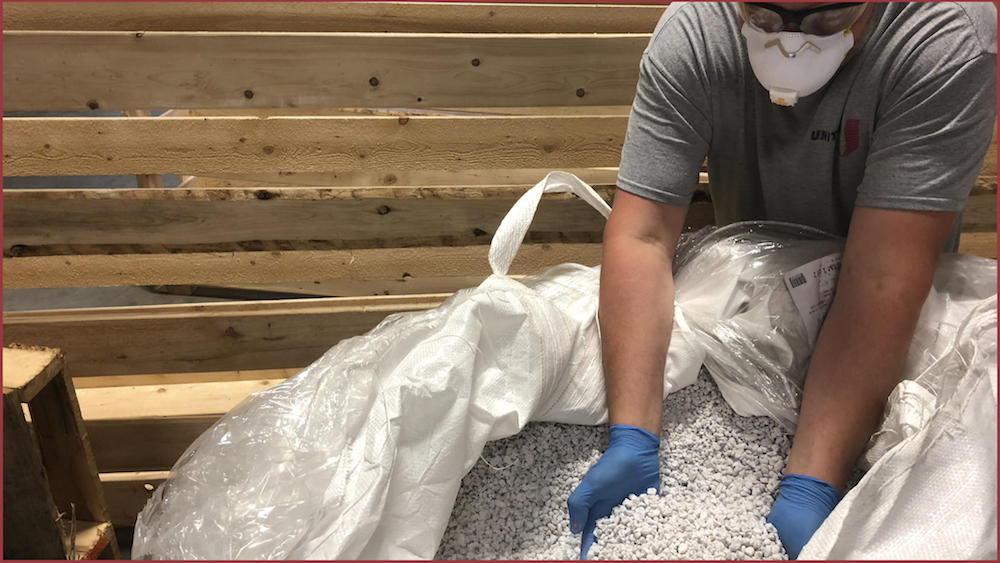
Understand why actual material properties and operating conditions should be evaluated before final equipment selection.
Read resourceReview abrasive battery-material handling and the bucket, beltchain and containment considerations discussed for TipTrak.
Read resourceExplore documented abrasive material examples, conveying options and application-specific wear-resistant components.
Read resource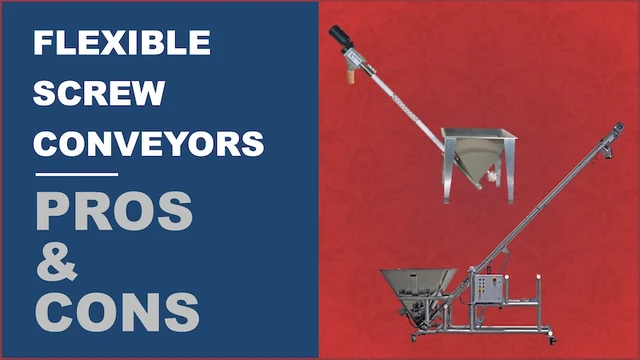
Consider flexible-screw material compatibility and the potential for accelerated component wear with coarse abrasive products.
Read resourceShare your material, required conveying rate, route and current handling problem. UniTrak will review the application and recommend equipment and configuration options around your process.