RETAIN VALUABLE MATERIAL
Dust escaping at loading, transfer and discharge points represents lost product. Review containment across the complete conveying path.

Control dust escape, protect material yield and reduce cleanup.
Fine powders need containment across the complete transfer path. UniTrak matches the conveying technology, enclosure and inlet and discharge connections to your material and process. The result is a coordinated approach to powder transfer, with material testing available to assess handling behaviour before equipment selection.
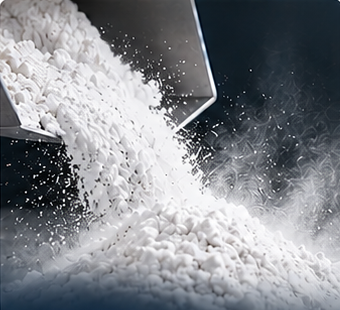
Dust escaping at loading, transfer and discharge points represents lost product. Review containment across the complete conveying path.
Hoppers, seals, vents and receiving equipment influence dust escape. Coordinate conveyor connections with the surrounding process.
Particle size, bulk density, moisture and air retention affect flow and discharge. Select equipment using the actual material characteristics.
Similar-looking powders can behave very differently once they start moving.
These are representative material families only. Suitability requires application review.
Dusty and fine materials are characterized by particle behavior and opportunities for dust escape. Combustibility is a separate material characteristic; a fine or dusty material is not automatically combustible.
Many food ingredients are handled as powders that can become airborne during loading, conveying and discharge.
Cleaning requirements, material value and contamination concerns may be just as important as dust containment.
Common concerns: Dust • Product Loss • Cleaning • Contamination • Flow Behavior
Chemical powders can range from relatively free-flowing materials to highly cohesive products.
Their handling requirements may include containment, corrosion considerations, product protection or hazardous-area requirements depending on the material.
Common concerns: Containment • Dust • Material Compatibility • Product Loss • Flow
Ground minerals and industrial powders may generate significant airborne dust while also introducing wear or loading concerns.
Equipment selection should consider all of the material's characteristics rather than treating dust as the only challenge.
Common concerns: Dust • Abrasion • Density • Containment • Wear
Powdered resins and other plastic materials can create dust during receiving, feeding and conveying.
Depending on the material, static behavior and flow characteristics may also influence the application.
Common concerns: Dust • Static • Flow • Product Loss • Containment
Certain metal-containing and battery-material powders may be fine, dusty, dense, abrasive or combustible depending on the specific material.
Containment can be particularly important where material value is high or product loss must be minimized.
Common concerns: Dust • Material Value • Contamination • Density • Application Hazards
Recovered materials may contain a broad particle-size distribution, including fine fractions that behave differently from the larger bulk material.
Material variability can make testing particularly useful.
Common concerns: Variable Particle Size • Dust • Flow • Contamination • Testing
Fine material should remain under control from the moment it enters the system until it reaches the next process stage.
UniTrak manufactures multiple conveying technologies, allowing us to match the conveying approach to the powder, required rate, process layout, containment needs and other application requirements.
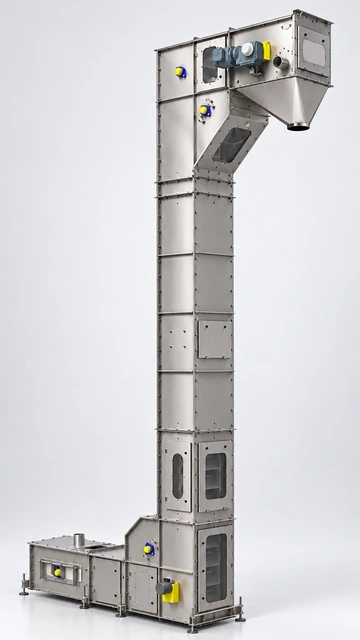
TipTrak carries powders in interlocking buckets, combining horizontal and vertical movement with fewer transfer points. Monocoque construction provides a sealed, dust-tight enclosure where the application requires it. Deep buckets provide capacity without relying on high belt speed.
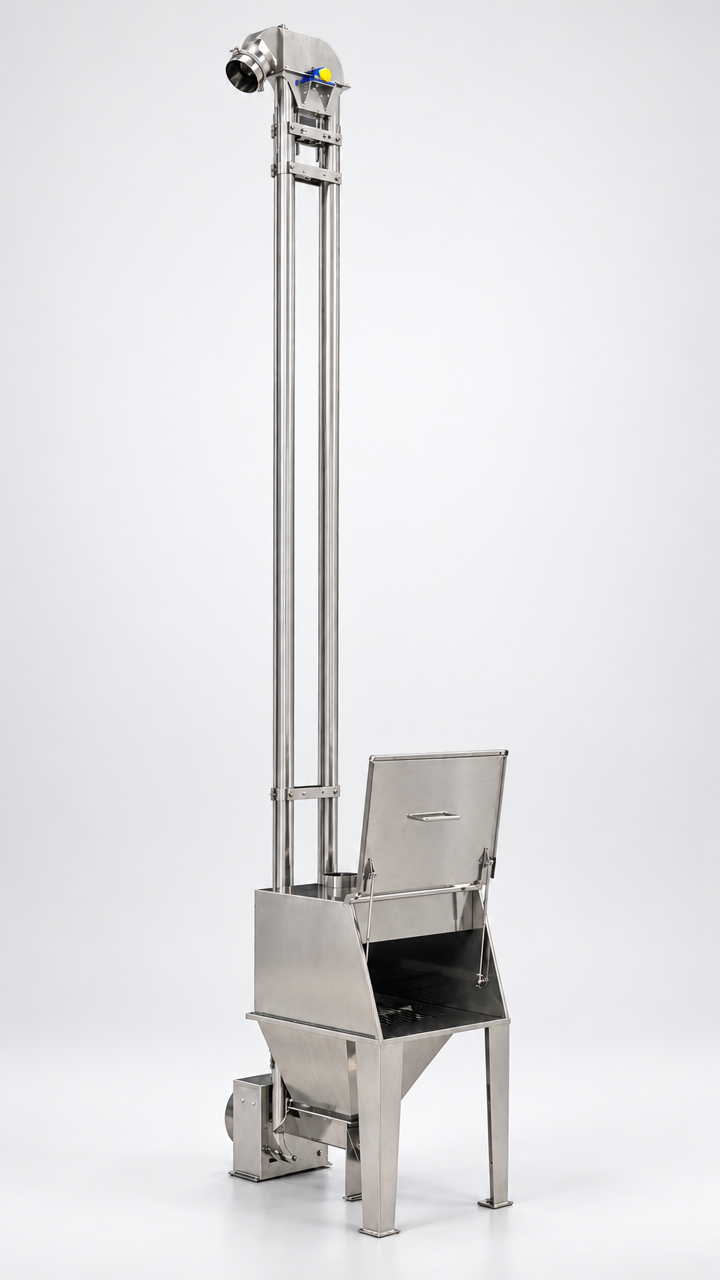
Powderflight’s rope-and-disc assembly generates an air stream that transports powders through an enclosed tube. Its compact arrangement and self-emptying conveying action support efficient transfer with low product retention.
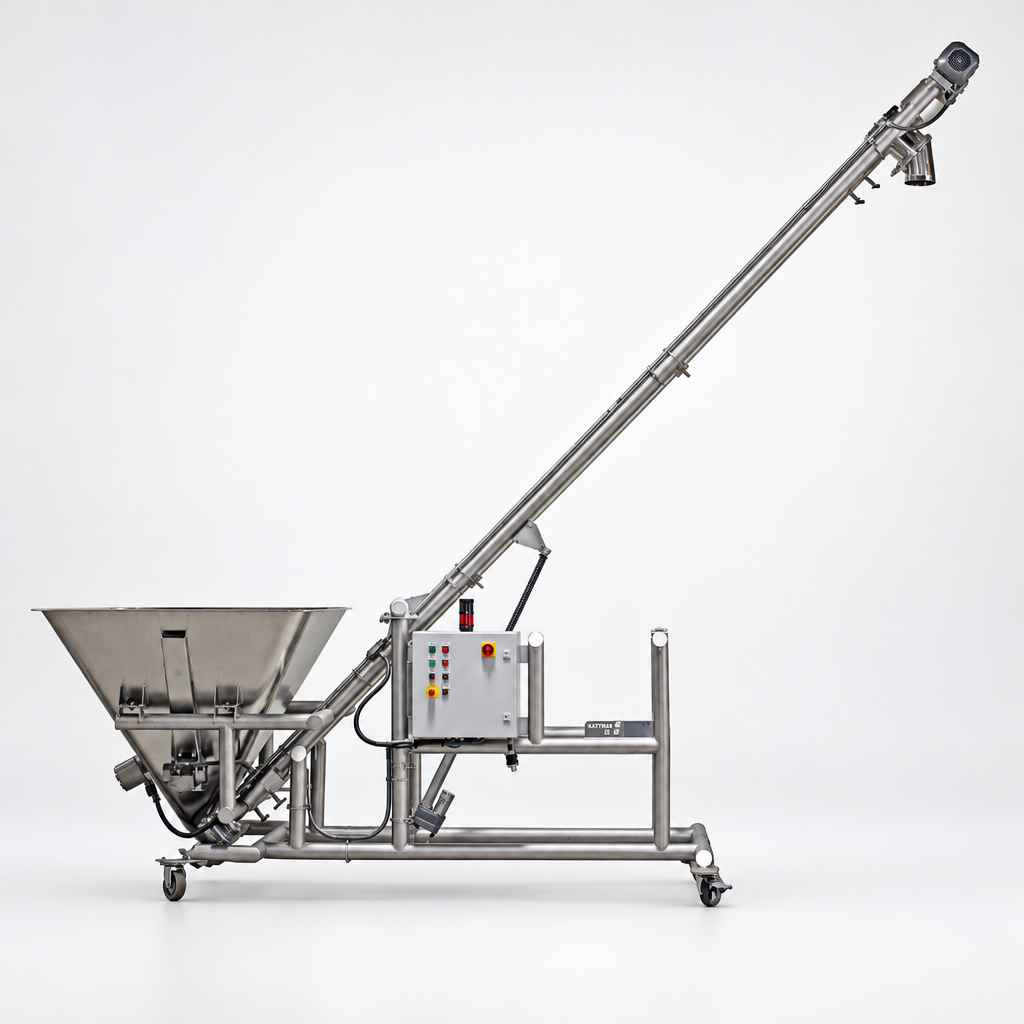
UniFlex transfers compatible powders through an enclosed tube using a rotating flexible screw. Match the screw, tube, hopper and discharge arrangement to the powder’s flow behaviour and process requirements.
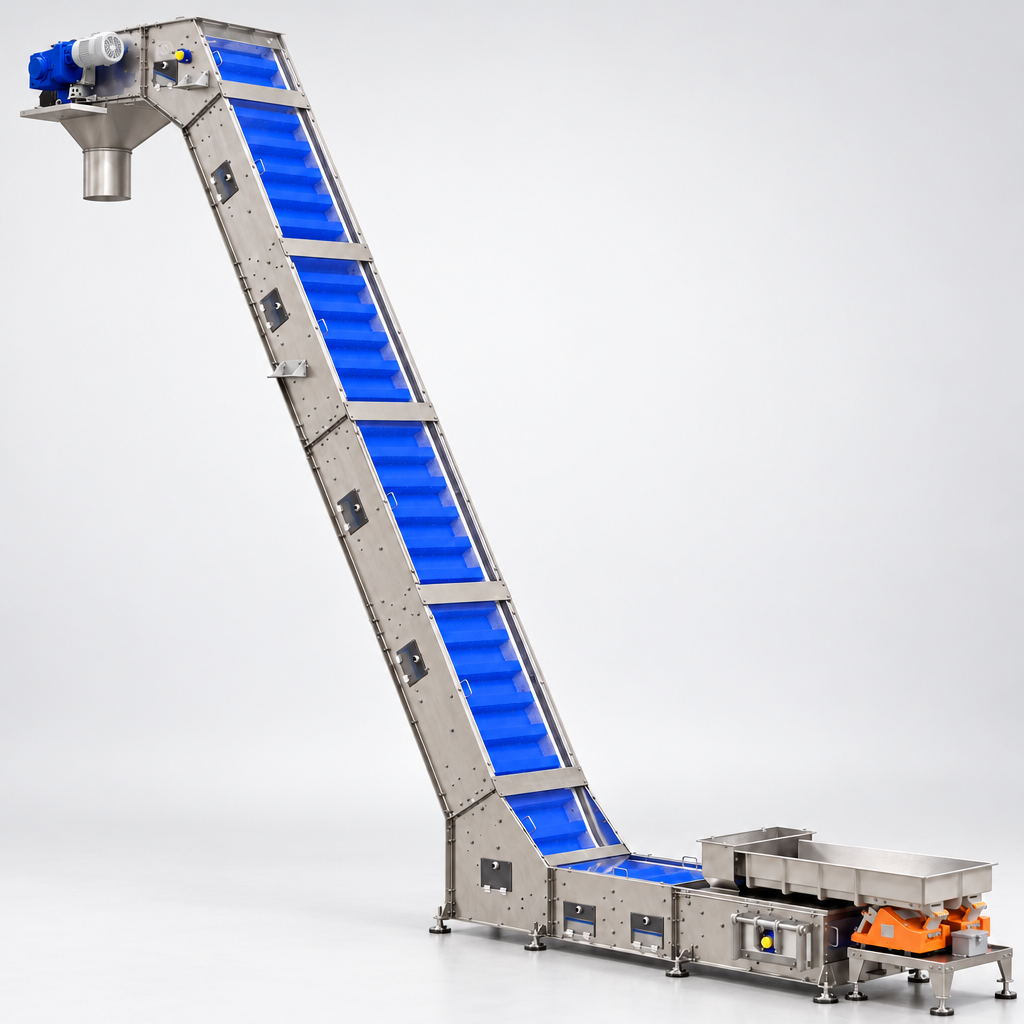
KleanTrak provides accessible belt conveying where cleaning access and supported product movement are priorities. Optional covers protect the product, but do not provide the sealed dust-tight containment of a Monocoque enclosure.
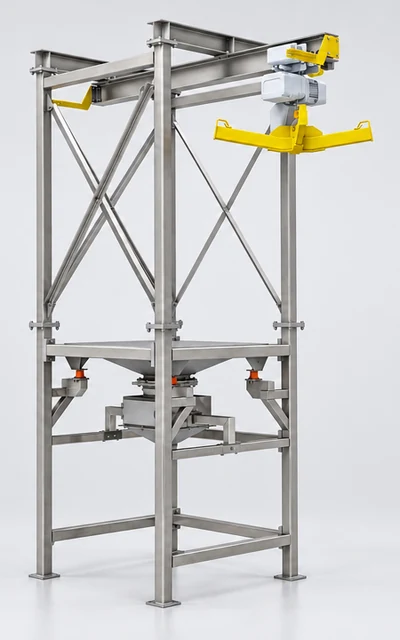
Bagstander connects bulk bag unloading with downstream conveying. Configure the bag outlet, receiving hopper and dust-control interfaces together to manage powder release during discharge.
Where a powder also presents a combustible-dust hazard, explore our combustible and hazardous material conveying guidance.
Fine powders are often hardest to contain when they move from one piece of equipment to another.
Opening bulk bags, emptying sacks, discharging bins or transferring material from upstream equipment can release fine particles before conveying begins.
The receiving arrangement should be treated as part of the complete handling system.
Dust can become airborne where material falls from one machine into another, particularly when there is significant drop height or displaced air.
Reducing unnecessary transfers and keeping connections controlled can improve containment.
Sealed or covered conveying arrangements can help keep fine material separated from the surrounding environment.
The appropriate level of enclosure depends on the product and process.
For applications requiring particularly strong dust containment, equipment configurations such as TipTrak Monocoque's sealed, dust-tight enclosure can provide an important advantage.
Other technologies, including covered belt conveying and enclosed pipeline or tube conveying, may also be appropriate depending on the material and application.
Material entering a mixer, hopper, bin or packaging system displaces air.
If that transfer is not considered properly, fine particles can escape at the final discharge even when the conveying path itself is enclosed.
A dusty-material problem is rarely solved by focusing on a single machine.
UniTrak evaluates how the powder is received, conveyed, transferred and discharged so that opportunities for product loss and dust escape can be addressed across the application.
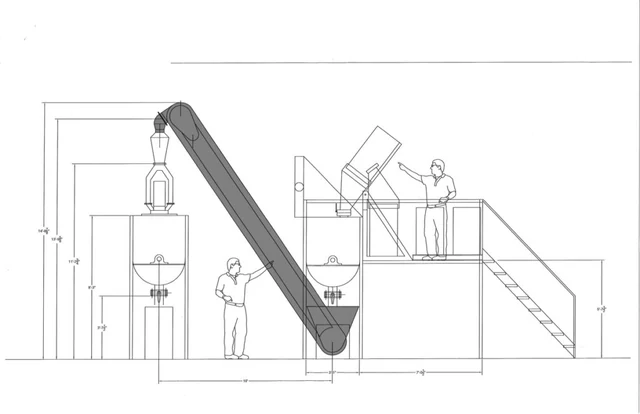
PBI-Gordon needed to transfer a dry, free-flowing chemical powder with a particle size of 10–15 microns between blending and milling stages. UniTrak supplied an M75 Powderflight. The published account reports successful operation from startup.
READ PBI-GORDON APPLICATION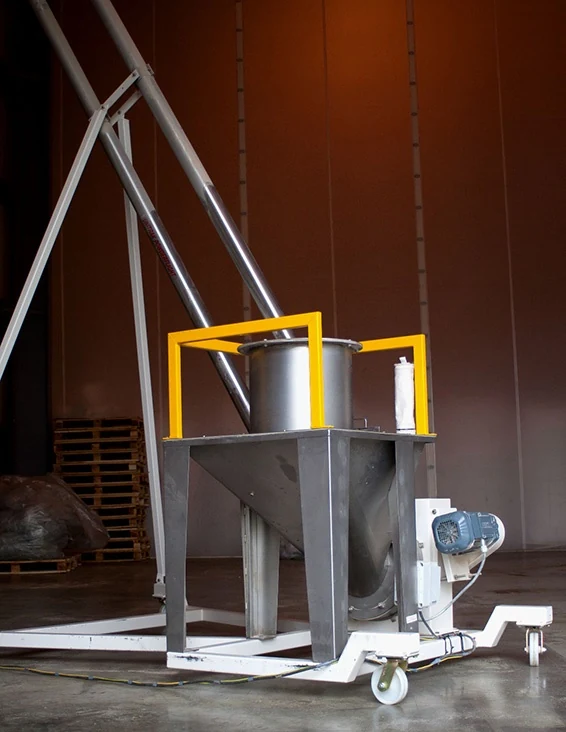
Potter Group needed to move fine, sand-like corn cob grit from bulk bags into tanker trucks. Testing established the infeed arrangement for an M100 Powderflight. The case reports dust-tight conveying, minimal particle attrition and no separation of the blended product.
VIEW CORN COB GRIT CASE STUDY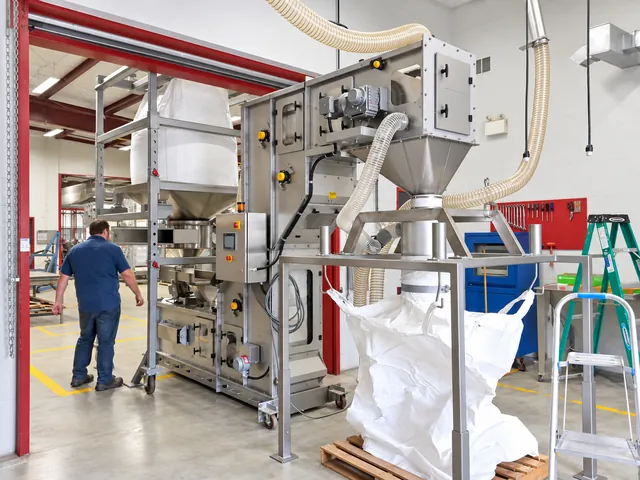
TipTrak Monocoque provides a sealed enclosure for applications requiring dust-tight conveying. Coordinate inlet, discharge and dust-control connections with the surrounding process to maintain the required containment.
READ DUST-CONTAINMENT GUIDANCEEvaluate conveying behaviour, discharge and product retention using your actual powder. Use the findings to select the conveying method and identify important process interfaces.
A material is generally considered dusty when fine particles readily become airborne during loading, conveying, transfer or discharge. Particle size, density, moisture, cohesiveness and air movement can all influence dust behavior.
Fine powders may escape at transfer points, retain air, behave unpredictably during feeding or discharge, accumulate in equipment or create significant housekeeping requirements.
TipTrak Monocoque provides sealed, dust-tight bucket conveying where containment and horizontal-plus-vertical routing are priorities. Powderflight and UniFlex provide enclosed tubular transfer for compatible powders. Selection also depends on flow behaviour, throughput and the inlet and discharge connections.
Yes. TipTrak can be considered for suitable dusty powders and bulk solids. Material is carried in deep, continuous, interlocking buckets, providing controlled movement while allowing horizontal and vertical conveying within the same machine. For applications where containment is particularly important, TipTrak Monocoque provides a sealed, dust-tight enclosure around the conveying system.
No. TipTrak's deep buckets carry substantial material volume while operating at a relatively low belt speed. This allows high conveying rates while maintaining controlled product movement.
TipTrak Monocoque is a TipTrak configuration that uses a sealed, dust-tight enclosure around the conveying system. It can be particularly relevant to suitable fine-powder applications where containment is an important part of the equipment selection.
Powderflight can be particularly well suited to many compatible powders because the material travels through an enclosed pipeline. Suitability still depends on the specific material and application.
Yes. UniFlex can convey many compatible powders through an enclosed tube. Suitability depends on the powder's flow characteristics and how it responds to flexible screw conveying.
KleanTrak provides accessible belt conveying where cleaning access and supported product movement are priorities. Optional covers protect the product, but do not provide a sealed dust-tight enclosure. Where sealed containment is required, UniTrak can review TipTrak Monocoque or another suitable conveying approach.
Common locations include loading points, equipment connections, transfer points and final discharge locations. Fine material can also become airborne when it enters a receiving vessel and displaces air.
No conveying system should automatically be described as providing zero dust. Enclosed or dust-tight equipment can significantly improve containment, but the complete application — including receiving, transfers, connections and discharge — must still be considered.
Yes. Larger drops can increase particle velocity and disturb more air when material enters receiving equipment, which may increase airborne dust for some products.
No. Combustibility depends on the specific material and its characteristics. A dusty material should not automatically be assumed to be combustible, although combustible-dust requirements must be addressed where applicable.
Yes. Suitable customer materials can be evaluated by UniTrak using available test equipment. Testing can help assess flow, dust behavior, conveying performance and overall equipment suitability.
Provide the material name, SDS where available, particle-size information, bulk density, required rate, conveying distance and elevation, current dust problem, flow characteristics, receiving method, upstream and downstream equipment and any applicable process or hazardous-area requirements.
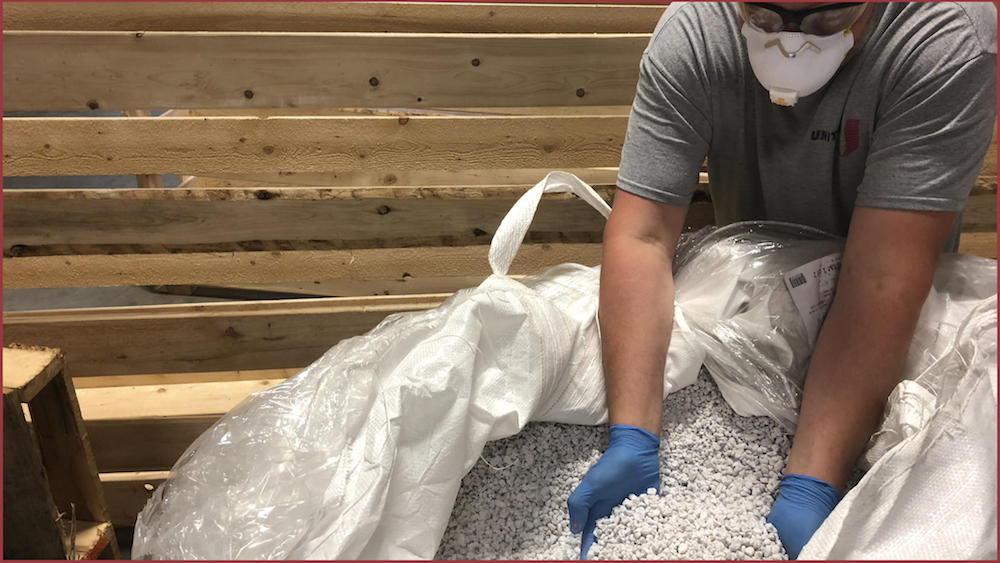
Learn how actual-product evaluation can reveal flow, dust generation, discharge and equipment-suitability issues before selection.
Read resourceReview chemical-powder dust containment, TipTrak PEC and Monocoque enclosure options, gasketing and application-specific dust collection.
Read resource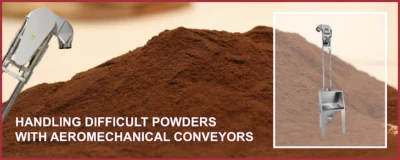
Explore powder behavior, controlled feeding, hopper design, suitable flow aids and actual-material testing for Powderflight applications.
Read resource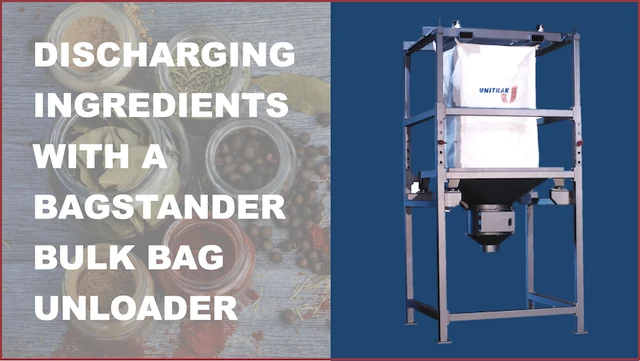
Consider bulk-bag receiving, controlled discharge and integration with downstream conveyors as part of the complete material path.
Read resource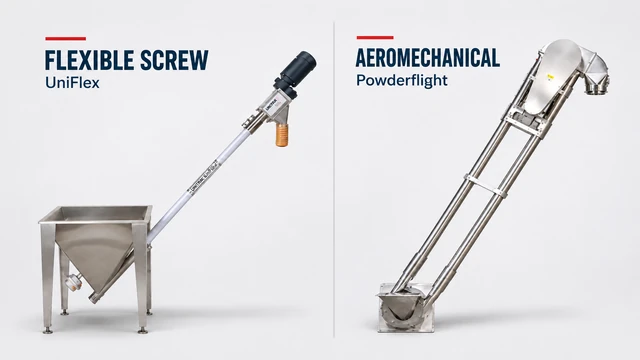
Compare UniFlex and Powderflight material interactions, powder characteristics and the role of testing in equipment selection.
Read resource Powderflight BrochurePDF · 2 pages · 1.85 MBDownload brochure
Share your material, required conveying rate, route and current handling problem. UniTrak will review the application and recommend equipment and configuration options around your process.