Conveying Equipment for Battery Materials

Protect valuable powders. Reduce material loss.

Move battery powders, precursors, granules and additives between process stages with conveying equipment selected around the material. UniTrak helps address dust, product retention, particle damage and process connections, with product-contact materials and equipment configurations developed around your production requirements.

Discuss Your Battery Material Application
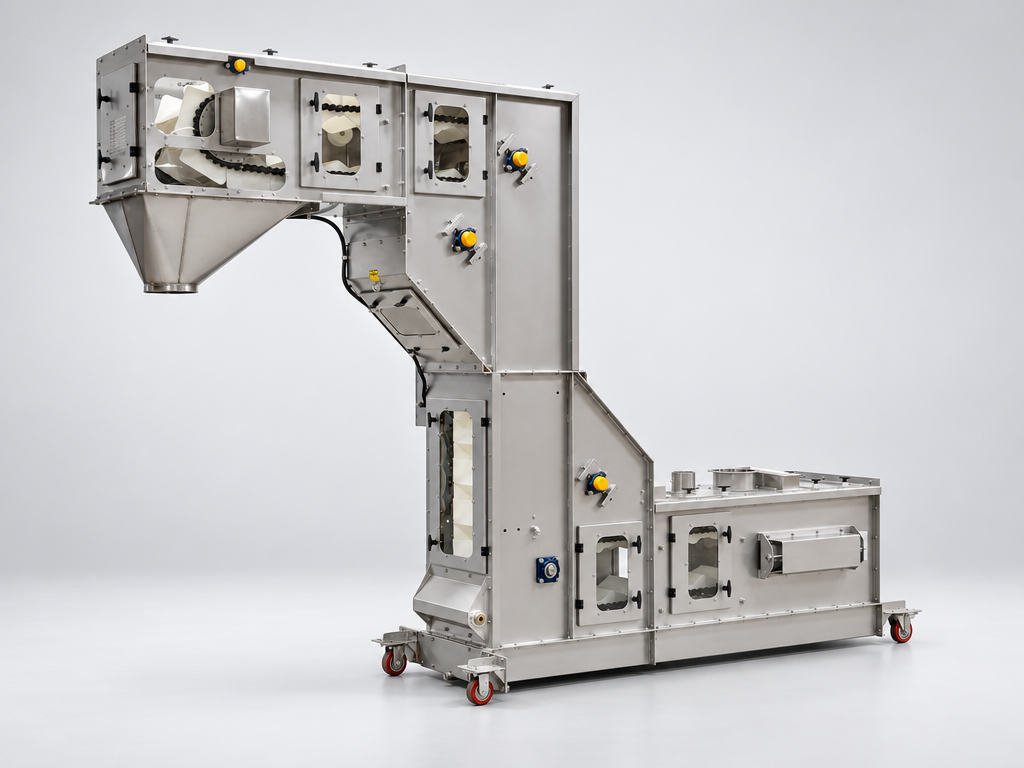
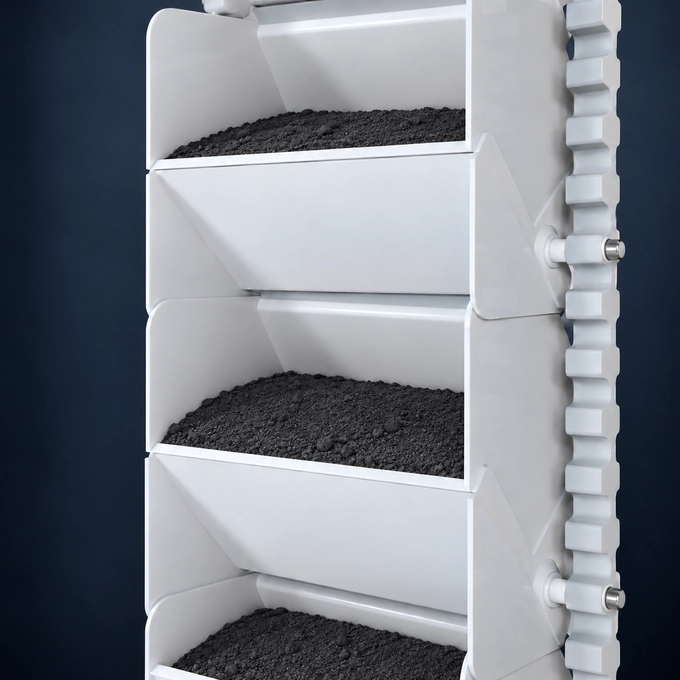
TipTrak bucket conveyor illustration carrying graphite powder

BATTERY MATERIALS LEAVE LITTLE ROOM FOR POOR MATERIAL HANDLING

The conveyor connects process steps — but how it handles the material can affect everything downstream.

MATERIAL VALUE & PRODUCT LOSS

Keep more valuable material in the process.

Battery ingredients can represent significant value, making material lost through spillage, dust escape or unnecessary retention more than a housekeeping issue.

Conveyor selection should consider the complete material path — receiving, feeding, conveying and discharge — with the goal of moving material efficiently while reducing opportunities for unnecessary loss.
FINE POWDERS & DUST

Control fine materials throughout the transfer, not just inside the conveyor.

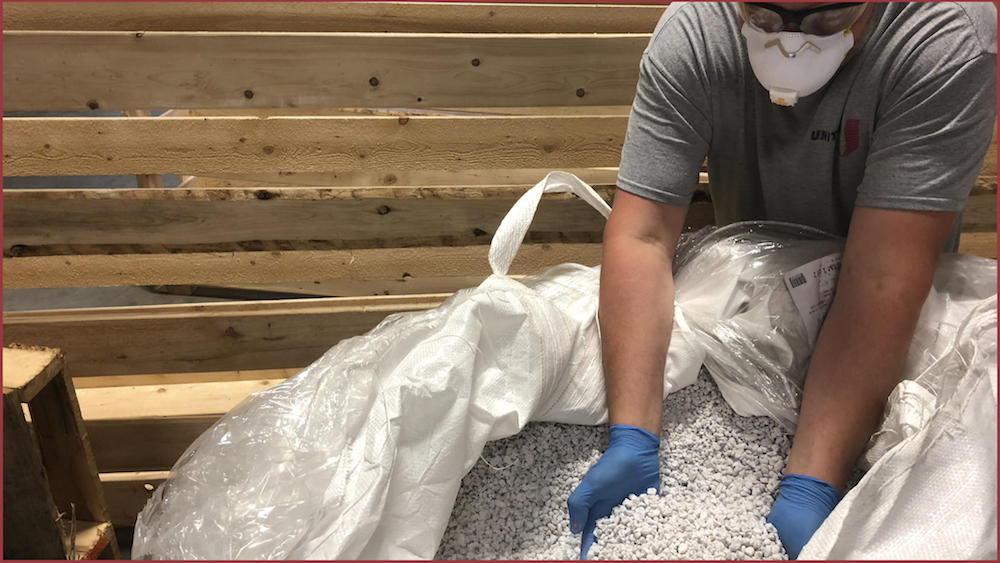
Fine battery powders can create dust at receiving, transfer and discharge points.

Enclosed conveying can help reduce opportunities for material escape, but successful handling also depends on how material enters and leaves the equipment.

UniTrak evaluates the complete transfer arrangement rather than treating the conveyor as an isolated component.

CONTAMINATION & PRODUCT INTEGRITY

Protect process-critical ingredients between manufacturing stages.

Battery-material processes can involve ingredients where unwanted carryover or foreign material can affect downstream quality.

Product-contact surfaces, material retention, cleanout requirements and interaction with upstream and downstream equipment should therefore be considered during conveyor selection.

UniTrak offers different conveying technologies so accessibility, containment and material movement can be matched to the application's requirements.

ABRASION & EQUIPMENT WEAR

Select equipment for continued operation — not simply the first successful transfer.

Some battery materials and metal-containing powders can be abrasive.

Repeated exposure to hard particles can increase wear on product-contact surfaces and moving components.

UniTrak evaluates material characteristics, conveying method, operating conditions and required capacity together so wear considerations become part of equipment selection.

BULK DENSITY & MATERIAL FLOW

Design around the actual powder rather than its material name.

Battery materials can vary significantly in bulk density, particle size, flow characteristics and compaction behavior.

Fine powders may bridge or resist flow, while dense materials can substantially increase equipment loading.

Receiving, hopper discharge, feeding and conveying must therefore be evaluated as a connected material-handling process.

COMBUSTIBLE & HAZARDOUS MATERIALS

Match the equipment configuration to the installation.

For battery materials with combustible-dust or other handling hazards, UniTrak establishes the required construction, protective measures and electrical ratings during application engineering. ATEX certification or explosion-proof electrical components are specified where required for the project.

BATTERY MATERIALS WE CAN EVALUATE

Different ingredients create different conveying challenges.

Move valuable cathode ingredients while controlling dust, loss and contamination.

Cathode-material production can involve fine, dense and valuable powders requiring transfer between receiving, processing, blending, storage and packaging stages.

Material characteristics vary significantly with chemistry and manufacturing stage, making application-specific conveyor selection important.

Suitable applications may involve:

  • Nickel-containing cathode materials
  • Cobalt-containing materials
  • Manganese-containing materials
  • Mixed metal oxides
  • Lithium-containing cathode materials
  • Cathode precursor materials
  • Other suitable cathode powders and ingredients

Common concerns: Material Value • Fine Powders • Dust • Bulk Density • Contamination • Abrasion • Material Loss

Keep fine anode materials moving while reducing unnecessary material escape and retention.

Anode-material applications can involve fine powders with handling requirements driven by particle size, dust, flow characteristics, contamination and material value.

Suitable applications may include:

  • Graphite-based materials
  • Synthetic graphite
  • Natural graphite
  • Carbon-based anode materials
  • Silicon-containing anode materials
  • Other suitable anode ingredients

The actual material characteristics and hazards must be evaluated before equipment selection.

Common concerns: Fine Powders • Dust • Flow • Containment • Contamination • Material Retention

Provide reliable transfer between the stages that create the finished battery material.

Battery-material production often involves precursor powders and intermediate products before the material reaches its final chemistry or physical form.

These materials may combine fine particle size, high bulk density, abrasion, dust and contamination sensitivity.

UniTrak can evaluate suitable precursor-material transfers between process stages based on the actual physical characteristics of the material.

Potential applications include:

  • Mixed metal precursor materials
  • Nickel-containing precursors
  • Cobalt-containing precursors
  • Manganese-containing precursors
  • Metal-containing intermediate powders
  • Other suitable precursor materials

Common concerns: Dust • Density • Abrasion • Flow • Contamination • Product Loss

Protect process-critical ingredients that may represent a small portion of the batch but significant value to the finished product.

Battery-material production can involve nickel, cobalt, manganese and other metal or metal-containing ingredients introduced at different stages of the process.

These materials may be supplied as powders, compounds, oxides or other dry bulk forms.

UniTrak evaluates the physical material rather than assuming that all materials containing the same metal will behave alike.

Potential examples include:

  • Nickel-containing materials
  • Cobalt-containing materials
  • Manganese-containing materials
  • Metal oxides
  • Mixed metal oxides
  • Specialty metal-containing additives

Common concerns: Material Value • Dust • Density • Containment • Abrasion • Material Hazards

Move low-particle-size ingredients without overlooking dust and flow behavior.

Conductive additives and other fine carbon materials can present difficult powder-handling characteristics.

Very fine particles can create dust, poor flow, material retention and containment challenges.

Conveyor and receiving arrangements must be selected around the specific material characteristics.

Potential applications may include suitable forms of:

  • Carbon-based conductive additives
  • Fine carbon materials
  • Specialty conductive powders
  • Other suitable dry conductive ingredients

Suitability must be evaluated for the specific carbon material or formulation.

Common concerns: Fine Particles • Dust • Flow • Containment • Material Retention • Combustibility

Support suitable dry bulk streams as valuable materials return to the production cycle.

Battery recycling and material recovery can produce powders, granules and processed intermediate materials requiring transfer between process stages.

UniTrak can evaluate suitable, reasonably consistent dry bulk recovered materials.

Suitability depends on material condition, particle size, contamination, foreign material, temperature, composition and process requirements.

UniTrak equipment is not positioned for whole batteries, shredded battery packs, large scrap, wet slurries or general battery dismantling.

    Common concerns: Material Variability • Dust • Abrasion • Density • Contamination • Foreign Material

    Protect finished material on the way to storage or packaging.

    Once processing is complete, the conveying requirement may shift from moving intermediate material to protecting a finished, high-value powder or granulated product.

    Product loss, contamination, segregation, dust and packaging integration can become particularly important at this stage.

    UniTrak can evaluate suitable conveying arrangements between final processing, storage and packaging operations.

      Common concerns: Product Quality • Material Loss • Dust • Contamination • Storage • Packaging

      MATCH THE CONVEYOR TO THE MATERIAL — NOT JUST THE INDUSTRY

      Protecting valuable battery ingredients starts with the transfer requirements: material condition, product-contact surfaces, containment, throughput and the next process. Match the conveying method to those requirements.

      Approved UniTrak tiptrak equipment photograph

      TIPTRAK® BUCKET ELEVATOR

      Protect valuable material during elevation.

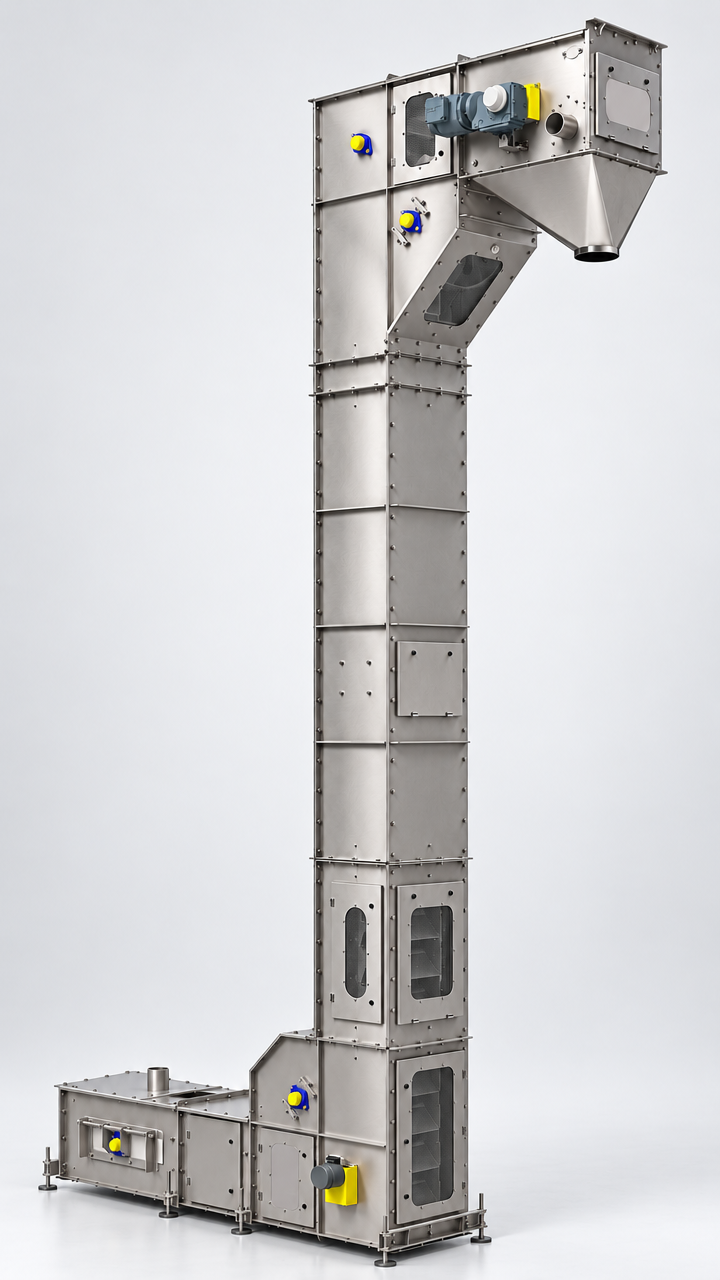
      TipTrak’s low-speed, interlocking buckets move powders and granules through horizontal and vertical sections while preventing spillage along the conveying path. Product-contact materials, bucket loading and construction are selected around the material’s density, abrasion and contamination requirements.

      Relevant considerations: Product Protection • Controlled Transfer • Material Value • Granules • Selected Powders • Finished Materials

      EXPLORE TIPTRAK
      Approved UniTrak powderflight equipment photograph

      POWDERFLIGHT AEROMECHANICAL CONVEYOR

      Enclosed powder transfer with minimal product retention.

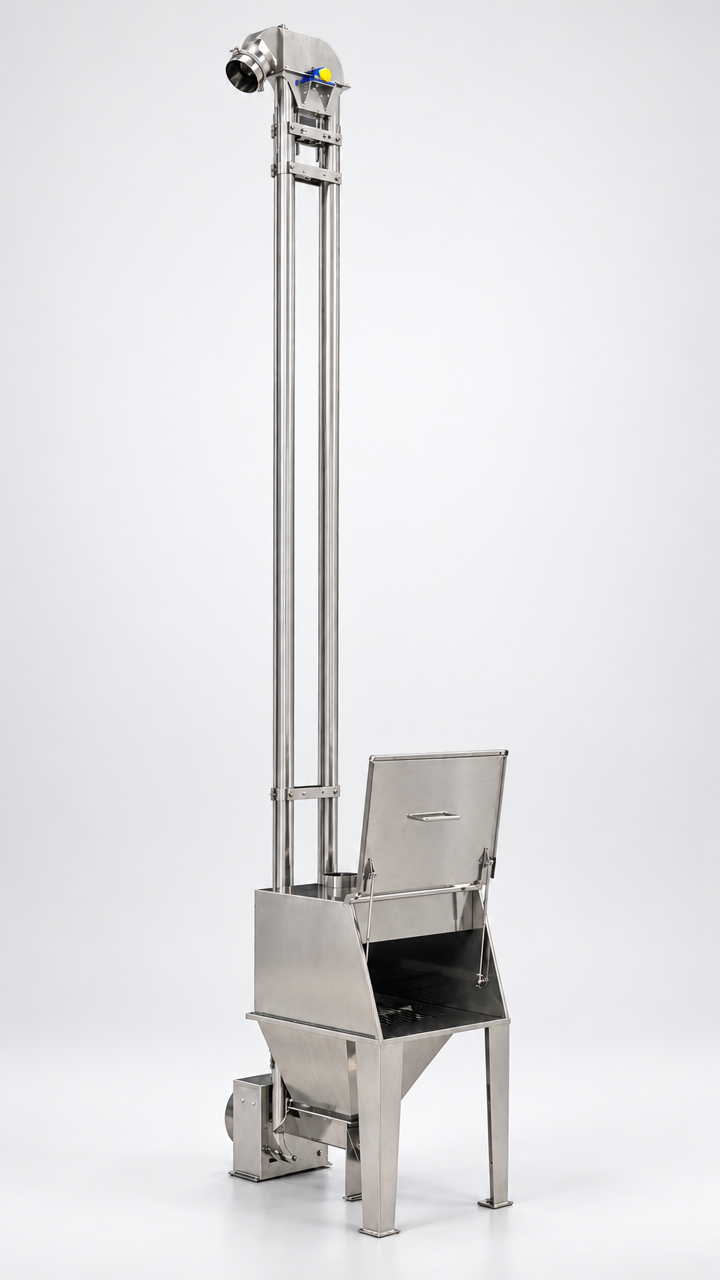
      Powderflight’s rope-and-disc assembly generates an air stream that carries compatible dry bulk material through an enclosed tube. Compact routing connects receiving and process equipment, while material selection accounts for density, abrasion, product-contact requirements and the operating environment.

      Relevant considerations: Enclosed Transfer • Fine Powders • Dust • Compact Routing • Process Integration

      EXPLORE POWDERFLIGHT
      Approved UniTrak uniflex equipment photograph

      UNIFLEX FLEXIBLE SCREW CONVEYOR

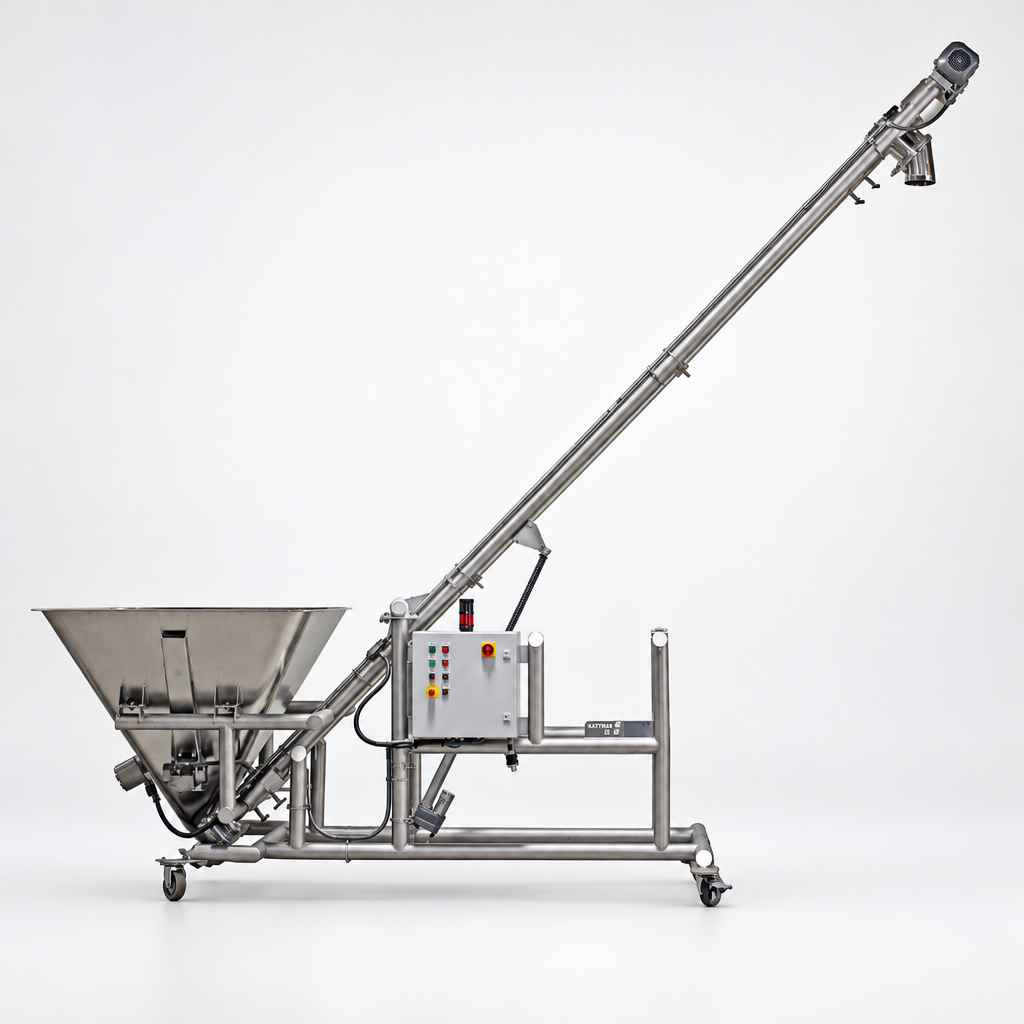
      Compact transfer for compatible powders and granules.

      UniFlex’s rotating flexible screw moves material from a charged hopper through a stationary tube. Its compact arrangement connects receiving with batching and process equipment. Selection accounts for screw contact, material flow, abrasion and bulk density.

      Relevant considerations: Powders • Compact Layouts • Short-Distance Transfer • Batch Applications • Process Feeding

      EXPLORE UNIFLEX
      Approved UniTrak kleantrak equipment photograph

      KLEANTRAK SANITARY BELT CONVEYOR

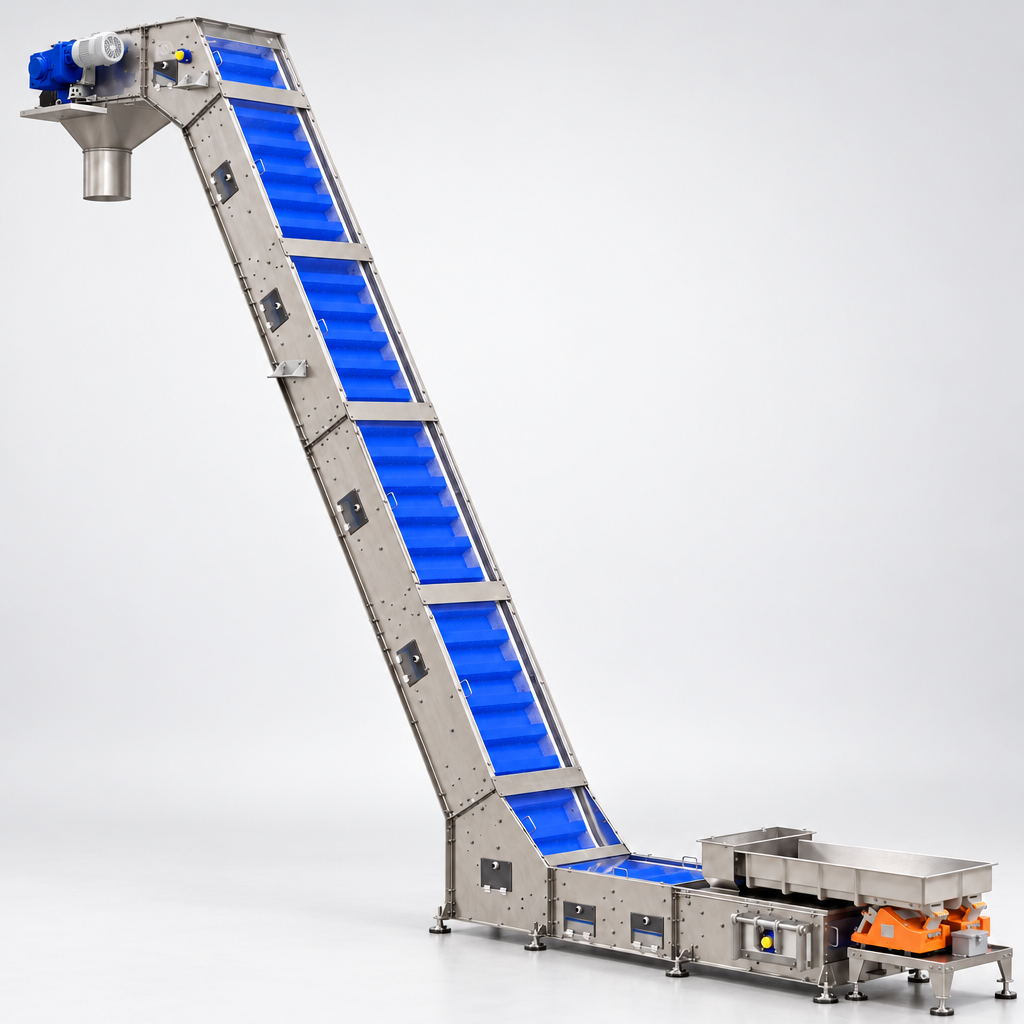
      Accessible belt conveying for products that need cleaning access.

      KleanTrak combines stainless steel construction with accessible belt and product-contact areas. It serves compatible products where belt transfer and cleaning access fit the application. Belt material, loading and cleaning arrangements are selected around the product.

      Relevant considerations: Accessibility • Cleaning • Contamination-Sensitive Applications • Controlled Transfer

      EXPLORE KLEANTRAK
      Approved UniTrak bagstander equipment photograph

      BAGSTANDER BULK BAG HANDLING

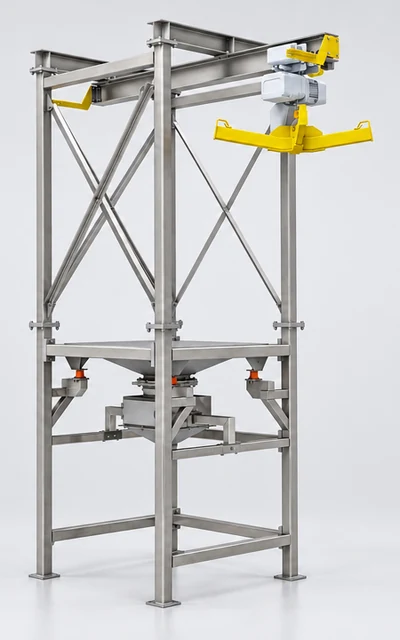
      Connect bulk bags with your production process.

      Bagstander unloaders and fillers connect bulk bags with hoppers, conveyors and weighing arrangements. Each system is built around the bag, material and process, with discharge and flow-assistance components selected for the application.

      Relevant considerations: Bulk Bags • Powders • Weighing • Material Receiving • Process Integration

      EXPLORE BAGSTANDER

      CONNECT BATTERY-MATERIAL PROCESS STEPS

      Connect receiving, conveying and downstream equipment around the material and required process sequence. UniTrak supplies its core conveying and bulk bag handling equipment with selected ancillary components and agreed equipment interfaces.

      Material properties and installation requirements guide the equipment configuration and connections between process stages.

      BULK BAG TO POWDERFLIGHT

      Typical Process Arrangement

      Representative material-flow schematic: Bagstander to Receiving Hopper to Powderflight to Process Equipment. Ancillary blocks describe functional stages, not equipment manufactured by UniTrak.

      Bagstander → Receiving Hopper → Powderflight → Process Equipment

      For compatible battery powders requiring enclosed transfer from bulk receiving to downstream processing.

      Powderflight can be flood fed from a suitable hopper.

      BULK BAG TO UNIFLEX

      Typical Process Arrangement

      Representative material-flow schematic: Bagstander to Charged Hopper to UniFlex to Process Equipment. Ancillary blocks describe functional stages, not equipment manufactured by UniTrak.

      Bagstander → Charged Hopper → UniFlex → Process Equipment

      A compact arrangement for suitable battery powders and ingredients compatible with flexible screw conveying.

      CONTROLLED FEED TO TIPTRAK

      Typical Process Arrangement

      Representative material-flow schematic: Hopper or Process Discharge to Controlled Feeder to TipTrak to Downstream Process. Ancillary blocks describe functional stages, not equipment manufactured by UniTrak.

      Hopper / Process Discharge → Controlled Feeder → TipTrak → Downstream Process

      For suitable battery materials where controlled bucket conveying provides advantages for the application.

      CONTROLLED FEED TO KLEANTRAK

      Typical Process Arrangement

      Representative material-flow schematic: Hopper or Process Discharge to Controlled Feeder to KleanTrak to Downstream Process. Ancillary blocks describe functional stages, not equipment manufactured by UniTrak.

      Hopper / Process Discharge → Controlled Feeder → KleanTrak → Downstream Process

      For selected applications where accessible belt conveying and controlled material introduction are appropriate.

      WEIGHED BULK BAG DISCHARGE

      Typical Process Arrangement

      Representative material-flow schematic: Bagstander with Load Cells weighing at bag support to Receiving Hopper to Selected Conveyor. Ancillary blocks describe functional stages, not equipment manufactured by UniTrak.

      Bagstander with Load Cells → Receiving Hopper → Selected Conveyor

      For battery ingredients where visibility into the quantity discharged from a bulk bag is important to the process.

      Load cells measure the supported bag or receiving arrangement.

      The downstream conveyor must be selected around the material and application.

      MULTI-STAGE BATTERY-MATERIAL HANDLING

      Typical Process Arrangement

      Representative material-flow schematic: Bulk Receiving to Material Transfer to Process Equipment to Intermediate Transfer to Storage or Packaging. Ancillary blocks describe functional stages, not equipment manufactured by UniTrak.

      Bulk Receiving → Material Transfer → Process Equipment → Intermediate Transfer → Storage or Packaging

      Battery-material production can require multiple transfers between processing stages.

      Ancillary equipment may be sourced from qualified third parties where appropriate.

      Application Guidance

      Approved general TipTrak product photograph, not a battery installation.
      Technical Guide

      Battery Powder Conveying

      Explore the handling challenges of graphite powder, lithium cobalt oxide and lithium iron phosphate, including abrasion, material loss and product-contact requirements. Review the TipTrak design features discussed in UniTrak’s battery-production guidance.

      Read Battery Conveying Guidance
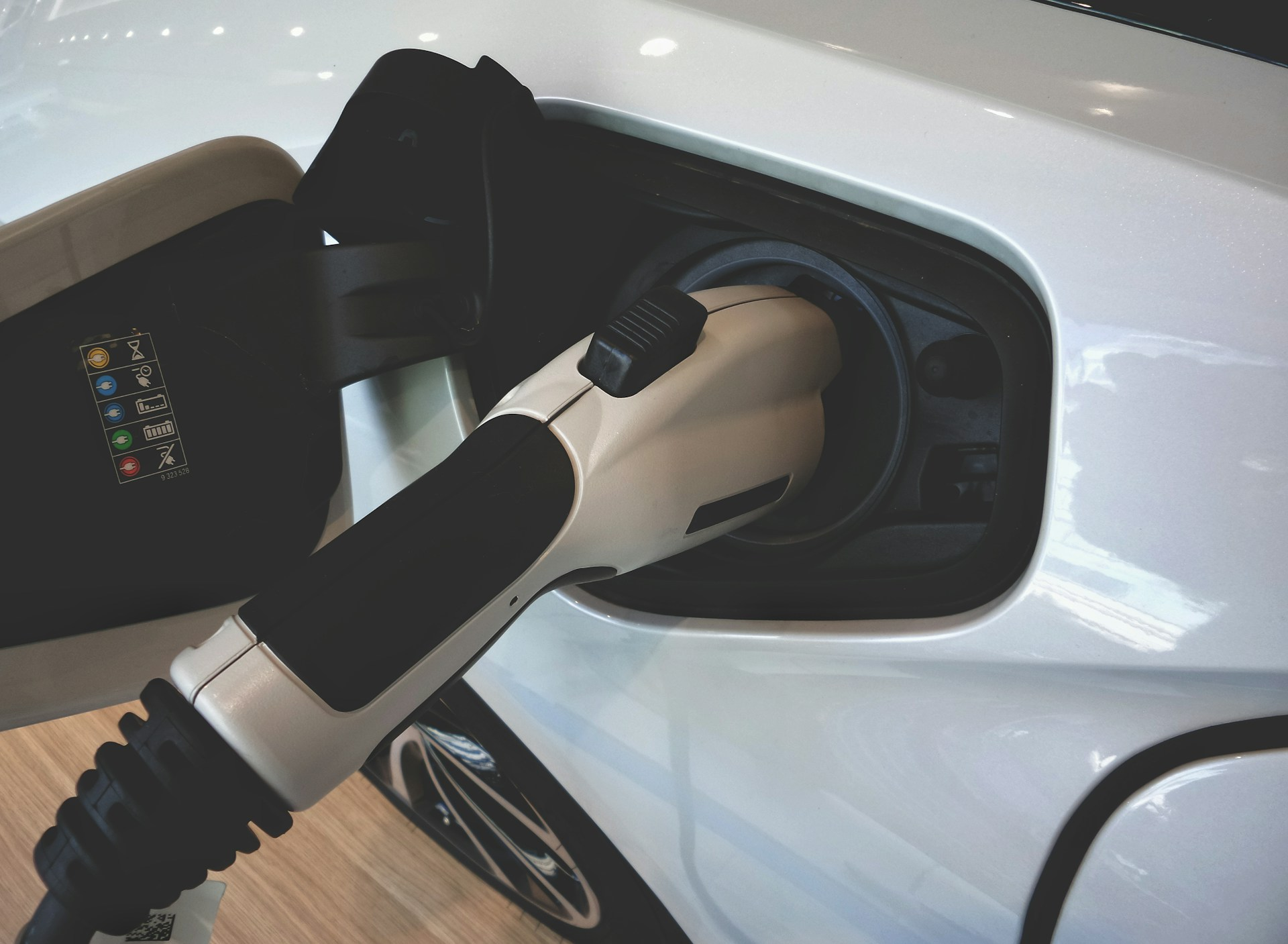
      Electric-vehicle charging editorial photograph from the official battery-material article, not a plant or customer installation.
      Technical Guide

      Cathode, Anode & Additive Materials

      Understand the different material forms involved in battery production, including cathode powders, graphite and silicon-based anode ingredients, and conductive additives. Use the material’s physical properties and manufacturing stage to define the conveying requirement.

      Read Battery Material Guidance

      See How Your Material Conveys

      Test the actual battery powder, precursor or granule to understand feeding, conveying, discharge and product retention. The results help refine the transfer arrangement and equipment selection around the material’s behaviour under the test conditions.

      Where appropriate, testing actual material can help evaluate:

      • Material flow
      • Feeding behavior
      • Conveying behavior
      • Discharge
      • Product retention
      • Dust generation
      • Buildup
      • Abrasion
      • Particle degradation
      • Segregation
      • Equipment suitability

      Contact our team with the material details and SDS before sending samples so we can confirm the test requirements.

      BATTERY MATERIAL CONVEYING FAQ

      UniTrak provides conveying options for dry battery-production materials, including graphite, cathode powders, precursors, conductive additives and processed recovered materials. Equipment selection accounts for particle form, bulk density, abrasion, product-contact requirements and the transfer between process stages.

      Yes. Suitable cathode powders, precursors and ingredients can be evaluated for UniTrak conveying equipment. Fine particle size, bulk density, abrasion, contamination, dust and material-specific hazards should be considered when selecting the equipment.

      Yes. Suitable graphite and other dry anode materials can be evaluated. The specific physical properties of the material, including particle size, bulk density, flow characteristics and dust behavior, influence conveyor selection.

      Yes. Suitable nickel-containing powders, compounds, precursors and other dry bulk materials can be evaluated. Different nickel-containing materials can have very different physical and safety characteristics, so the specific material and SDS should be reviewed.

      Yes. Suitable cobalt- and manganese-containing powders, compounds and precursor materials can be evaluated as part of a battery-material conveying application. Equipment selection is based on the actual physical and safety characteristics of the material.

      TipTrak provides low-speed bucket conveying where product protection and horizontal or vertical transfer are priorities. Powderflight provides enclosed aeromechanical transfer with minimal product retention. UniFlex offers compact screw conveying for compatible ingredients. Selection depends on material properties, product-contact requirements and the complete transfer arrangement. Bagstander connects bulk bag receiving with the selected conveyor.

      A conveying test shows how the material feeds, moves and discharges under the test conditions. Wear-life assessment also requires consideration of abrasiveness, contact materials, operating speed and duty over time.

      Yes. Suitable battery powders, granules and other materials can be evaluated for TipTrak where continuous bucket conveying provides advantages for the application. TipTrak requires controlled material introduction.

      Powderflight can be considered for compatible battery powders where aeromechanical conveying is appropriate. Its enclosed conveying path can be useful for suitable fine-powder transfers, but density, abrasion, particle characteristics and application-specific hazards must be evaluated.

      No. Powderflight can be flood fed directly from a suitable hopper. A separate metering device may be used when the process requires controlled dosing, but it is not inherently required by the conveyor.

      Yes. Bagstander bulk bag equipment can be used for suitable battery powders and ingredients and integrated with hoppers, weighing equipment and selected downstream conveyors.

      Some battery ingredients and fine powders can present combustible-dust hazards. The specific material, particle characteristics, SDS, process and installation environment must be evaluated when determining equipment requirements.

      Yes. UniTrak can engineer equipment for applications requiring ATEX certification where applicable. The required equipment configuration and certification are established for the specific application.

      Yes. UniTrak can provide equipment configurations incorporating explosion-proof (XP) electrical components and ratings where required. The appropriate electrical classification and equipment configuration must be established for the installation.

      Suitable battery materials may be tested through UniTrak using available equipment following material and safety review. An SDS is required. Testing availability for combustible, reactive, toxic or otherwise hazardous materials must be confirmed before material is shipped.

      Provide the material name and SDS, particle size and form, bulk density, required conveying rate, conveying distance and elevation, flow characteristics, abrasion information, dust and combustible-material information where applicable, contamination requirements, receiving method, upstream and downstream equipment, area classification and any ATEX or explosion-proof electrical requirements.

      BATTERY MATERIAL HANDLING RESOURCES

      Approved general TipTrak photograph accompanying the battery-conveying resource; not the article cover or an installation.

      Overcoming Complexities in Conveying Bulk Materials for Battery Production

      Review graphite, lithium cobalt oxide and lithium iron phosphate handling considerations and the TipTrak design features discussed for suitable abrasive battery materials.

      READ ARTICLE
      Approved Monocoque TipTrak product photograph, not a battery installation.

      Comparing Bulk Material Handling Equipment for Battery Production

      Review the published comparison of conveying methods and TipTrak design considerations for battery-production materials; suitability remains application-specific.

      READ ARTICLE
      Original electric-vehicle charging editorial photograph from battery-material guidance.

      Exploring Fundamental Materials Driving Battery Production

      Review cathode, anode, precursor and additive context, including NMC, graphite and silicon-based ingredients.

      READ ARTICLE
      Original general UniTrak material-testing photograph.

      Why Material Testing Should Happen Before You Buy a Conveyor

      Understand why actual flow, feeding, discharge and physical properties should be evaluated before finalizing the conveying solution.

      READ ARTICLE
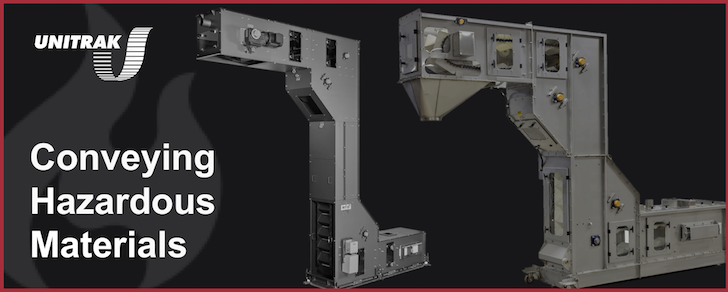
      Original hazardous-material bucket-elevator article equipment illustration.

      Bucket Elevators for Safely Conveying Hazardous Materials

      Review application-specific enclosure, grounding, drive and ATEX considerations without assuming every battery material or equipment configuration has the same requirements.

      READ ARTICLE

      DISCUSS YOUR BATTERY MATERIAL APPLICATION

      Start with the material. We'll help determine how to move it.

      Tell us what you need to move, where it needs to go and what is happening in the current process. Our team will review the material and transfer requirements with you.

      Tell us about:

      • Material name, physical form and SDS.
      • Required conveying rate.
      • Transfer distance, elevation and equipment connections.
      • Handling concerns such as dust, breakage, sticking or abrasion.
      • Product-contact, cleaning and installation requirements.

      You do not need to choose the conveyor before contacting us.

      Industry memberships