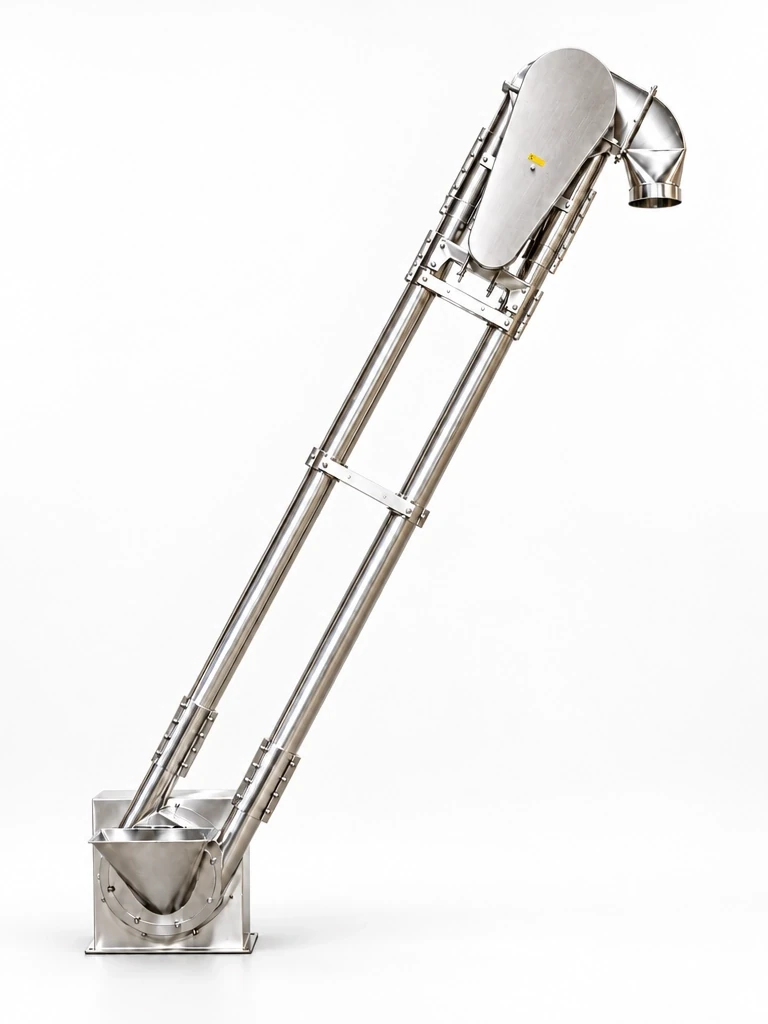
Powderflight Aeromechanical Conveyor

Protect your ingredients. Keep production moving.

Transfer powders, granules and blends through an enclosed conveying system that protects product quality and reduces material left behind. Powderflight’s self-emptying action supports ingredient recovery and batch accuracy, with conveying arrangements selected around your production equipment and available space.

REQUEST AN APPLICATION REVIEW
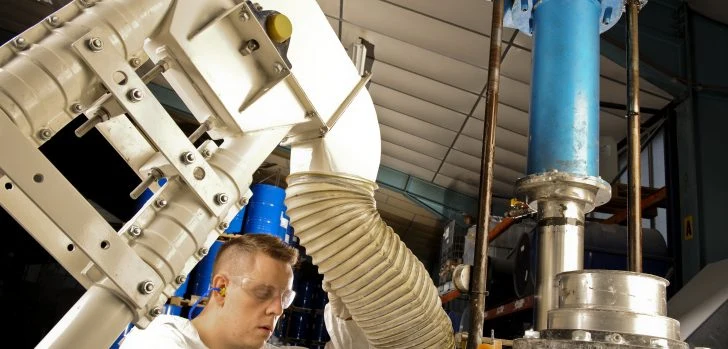
Powderflight aeromechanical conveyor in an inclined configuration.

Choose the size and infeed arrangement for your process.

Powderflight is available in three nominal tube sizes: M75, M100 and M125. Selection considers required throughput, material characteristics and the conveying layout. Compare model sizes and capacity guidelines in the Specifications section below.

HOPPER & INFEED OPTIONS

Standard hoppers, sack-tip/bag-dump hoppers, covered hoppers and large hoppers with dust hoods accommodate different ways of introducing material. An integral screw feeder is available where assisted or regulated feeding benefits the process.
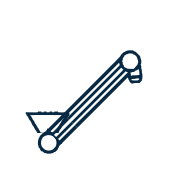
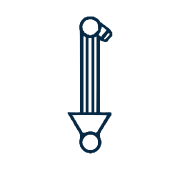
FIXED & MOBILE INSTALLATIONS

A fixed installation connects dedicated process equipment. A portable/mobile arrangement provides flexibility where conveying equipment needs to move between production tasks.

CONNECTIONS & CONTROLS

Inlet and discharge connections, supporting structures and controls are selected around your material, plant layout and surrounding equipment.

Not sure which configuration fits your process?

Tell us about your material, required capacity, conveying distance and equipment layout. Our team can review the application and recommend an appropriate Powderflight arrangement.

REQUEST AN APPLICATION REVIEW

Compare sizes and capacity guidelines.

Use these nominal tube sizes and approximate volumetric capacities as a starting point for equipment selection.

Capacity Guidelines

M75

Approximate volumetric capacity

360 ft³/hr10.2 m³/hr
Nominal tube diameter
75 mm / 3 in

M100

Approximate volumetric capacity

720 ft³/hr20.4 m³/hr
Nominal tube diameter
100 mm / 4 in

M125

Approximate volumetric capacity

1,080 ft³/hr30.6 m³/hr
Nominal tube diameter
125 mm / 5 in

Capacity guidelines are approximate. Actual throughput depends on material characteristics and conveyor configuration.

Technical Specifications

Construction

Product-contact metalwork
Stainless steel
Conveyor rope
Stainless steel or galvanized carbon steel wire rope
Disc materials
Polyurethane/nylon laminated discs

Configuration & Options

Conveying arrangements
Inclined, vertical and combined horizontal/vertical layouts
Hopper options
Standard, sack-tip/bag-dump, covered and dust-hood arrangements
Additional infeed option
Integral screw feeder
Installation options
Fixed or portable/mobile
Drive location
Top or bottom
Hazardous-area applications
Powderflight can be supplied for combustible-dust hazardous-area applications, including applications requiring ATEX dust compliance. Suitability and the required equipment specification must be confirmed during application review.

Protect ingredient quality, batch accuracy and product yield.

SUPPORT BATCH ACCURACY

Reduce the material missing from your next batch.

Ingredients retained inside a conveyor can leave a transferred batch short of its intended quantity. Powderflight’s self-emptying action reduces residual material after transfer, helping preserve the ingredient quantities established by your weighing and dosing equipment.

RECOVER MORE PRODUCT

Keep valuable ingredients in production.

Material left inside conveying equipment reduces product yield and takes time to recover. Powderflight transfers powders with minimal retention, reducing the product left behind after a conveying run.

PRESERVE PRODUCT & BLEND INTEGRITY

Protect fragile particles and blended ingredients.

The air stream generated by the rope-and-disc assembly supports material during conveying. This reduces physical contact, minimises particle damage and helps maintain the distribution of ingredients in blended products.

KEEP DUST CONTAINED

Reduce product escape and the cleanup that follows.

Powderflight’s dust-tight conveying path keeps material enclosed during transfer. Inlet and discharge connections are designed around the process to reduce dust escape and product loss.

FIT YOUR AVAILABLE SPACE

Connect equipment around your plant layout.

Inclined, vertical and combined conveying arrangements connect mixers, blenders, storage and packaging equipment. A compact tubular layout and fixed or mobile options help accommodate existing production space.

Different ingredients. Different handling priorities.

Powderflight transfers dry ingredients across food, chemical and other bulk-material processes. Explore how enclosed conveying, ingredient recovery and flexible layouts address the handling priorities in each application.

Move food ingredients efficiently while controlling dust and product loss.

Food ingredients need to reach the next process without unnecessary loss, particle damage or separation of blends. Powderflight provides enclosed transfer between ingredient storage, mixers, blenders and packaging equipment.

Hopper arrangements and product-contact components are selected around the ingredient and the process’s hygiene requirements.

Materials and applications include:

  • Flour and flour-based ingredients
  • Sugar and powdered sugar
  • Starches
  • Milk powders
  • Cocoa powders
  • Coffee powders and granules
  • Protein powders
  • Powdered flavorings
  • Seasoning blends
  • Bakery premixes
  • Dry beverage mixes
  • Food additives
  • Granular food ingredients
  • Dry ingredient blends
Explore Food Processing

Transfer chemical powders within an enclosed conveying system.

Dust escape and retained ingredients can affect housekeeping, product yield and formulation consistency. Powderflight provides enclosed transfer of chemical powders and granules between processing stages.

Component selection and containment arrangements are reviewed against chemical compatibility and any material hazards.

Materials and applications for evaluation include:

  • Powdered chemical ingredients
  • Chemical additives
  • Pigments
  • Detergent powders
  • Mineral-based chemicals
  • Granular chemical products
  • Polymer additives
  • Dry chemical blends
  • Fine industrial powders
  • Specialty chemical ingredients
  • Processing aids
  • Powdered intermediate products
Explore Chemical Manufacturing

Convey powders, additives and granular materials between processes.

Powderflight transfers polymer powders, granules and additives between blending, compounding, storage and packaging operations. Enclosed conveying reduces material exposure, while minimal retention helps recover valuable ingredients between production runs.

Materials and applications include:

  • Plastic powders
  • Polymer powders
  • Plastic granules
  • Polymer additives
  • Masterbatch ingredients
  • Resin powders
  • Processing additives
  • Powdered fillers
  • Dry polymer blends
  • Specialty plastic compounds
  • Recycled polymer powders
  • Granular polymer materials
Explore Plastics & Polymers

Support controlled transfer of suitable dry ingredients.

Ingredient recovery and controlled transfer matter when moving nutritional powders, premixes and formulation ingredients. Powderflight provides an enclosed conveying path with product-contact components selected for the application.

Cleaning, containment and process-validation requirements are reviewed before confirming the equipment configuration.

Materials and applications for evaluation include:

  • Nutritional powders
  • Vitamin premixes
  • Powdered supplement ingredients
  • Mineral supplements
  • Protein blends
  • Dry excipient ingredients
  • Granular supplement materials
  • Powdered formulation ingredients
  • Dry nutraceutical blends
Explore Pharmaceutical & Nutraceutical

Transfer dry ingredients used in agricultural and feed production.

Feed additives, premixes and agricultural ingredients need to reach the next process in the intended proportions. Powderflight combines enclosed transfer with minimal product retention, supporting ingredient recovery and batch consistency.

Materials and applications include:

  • Powdered feed ingredients
  • Feed additives
  • Mineral supplements
  • Vitamin premixes
  • Dry nutritional blends
  • Powdered agricultural ingredients
  • Granular feed ingredients
  • Dry ingredient concentrates
  • Agricultural mineral powders
  • Specialty feed formulations
Explore Agriculture & Animal Nutrition

Evaluate enclosed conveying for specialized powder-processing applications.

High-value powders demand attention to ingredient recovery, contamination and material compatibility. An application review establishes whether Powderflight’s conveying action and construction meet the process requirements.

Material hazards, environmental controls and product condition are assessed together, with testing used to demonstrate performance where needed.

Materials for application review may include:

  • Selected carbon-based powders
  • Specialty mineral powders
  • Powdered additives
  • Dry precursor ingredients
  • Selected metal oxide powders
  • Dry material blends
  • High-value industrial powders
Explore Battery Materials

Handle suitable dry mineral and industrial materials.

Powderflight provides enclosed transfer of mineral and industrial powders between processing stages. Material density, abrasiveness and flow behaviour guide component selection and the conveying arrangement.

Materials and applications for evaluation include:

  • Mineral powders
  • Talc
  • Fine limestone products
  • Selected silica-based materials
  • Powdered fillers
  • Specialty industrial minerals
  • Dry pigment materials
  • Fine granular industrial products
  • Dry industrial blends
  • Processing additives
Explore Mining & Minerals

A conveying solution selected around the material, not just the industry.

The handling problem determines the conveying solution. UniTrak reviews your material, required throughput and equipment layout to establish how Powderflight can support enclosed transfer and product recovery.

Materials and applications for evaluation include:

  • Specialty powders
  • Dry blended materials
  • Fine granular products
  • Powdered processing aids
  • Industrial additives
  • High-value dry ingredients
  • Selected fragile granules
  • Dry manufacturing intermediates
  • Specialty chemical blends
  • Difficult-handling dry materials
Explore Industrial & Specialty

See how your material performs.

Test your actual material to assess conveying performance, product condition and residual material before finalising the equipment selection.

DISCUSS YOUR MATERIAL

Fit the conveyor around your process.

Connect upstream and downstream equipment with inclined, vertical and combined conveying arrangements developed around your plant layout.

COMMON CONFIGURATIONS

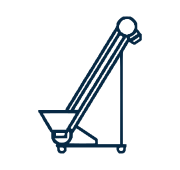
Powderflight Incline conveyor configuration

INCLINE

A straight inclined conveying arrangement for transferring material between different elevations.

Powderflight 90 Degree conveyor configuration

90 DEGREE

A vertical conveying arrangement for moving material between elevations within a compact footprint.

Powderflight Mobile conveyor configuration

MOBILE

An inclined conveyor mounted on a mobile support arrangement, providing flexibility where equipment needs to be repositioned.

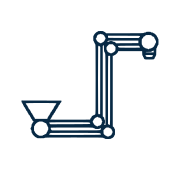
Powderflight Horizontal Vertical Horizontal conveyor configuration

HORIZONTAL VERTICAL HORIZONTAL

A combined conveying path incorporating horizontal and vertical sections to connect equipment at different elevations.

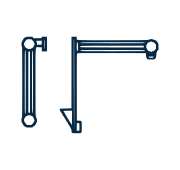
Powderflight 2 Linked Conveyors Vertical and Horizontal conveyor configuration

2 LINKED CONVEYORS — VERTICAL AND HORIZONTAL

Two linked conveyors arranged to provide vertical elevation and horizontal transfer.

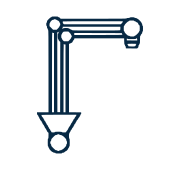
Powderflight Vertical Horizontal conveyor configuration

VERTICAL HORIZONTAL

A conveying arrangement that elevates material vertically before transferring it horizontally to the discharge.

Powderflight Horizontal Vertical conveyor configuration

HORIZONTAL VERTICAL

A conveying arrangement that transfers material horizontally before elevating it vertically to the discharge.

Final dimensions, conveying geometry and equipment connections are developed around your material, process requirements and available space.

PROCESS INTEGRATION

Connect conveying with the rest of your process.

Powderflight can be integrated with upstream and downstream equipment, including storage vessels, feeders, mixers, blenders and packaging systems. Infeed and discharge arrangements can be developed around the material flow, available space and equipment interfaces.

Working around a challenging plant layout?

Send us your equipment layout, required conveying distance, elevation and process details. We can review the available space and determine how Powderflight could integrate with your process.

REQUEST AN APPLICATION REVIEW

See Powderflight at work in real applications.

From transferring dry ingredients into mixers to moving powders between processing and packaging equipment, Powderflight can be configured around different materials, process layouts and production requirements.

Explore real installations to see how the conveying system integrates into industrial processing environments.

Select Play to open the privacy-enhanced YouTube player.

Compare the issues that matter to your powder-handling process.

Different conveying technologies move material in different ways. The right choice depends on material behavior, conveying distance, throughput, containment requirements and the surrounding process.

ConsiderationPowderflightAlternative Conveying Methods
Material transferRope-and-disc assembly generates an air stream that supports material inside enclosed tubesConveying action varies by technology, including screws, belts, drag elements and pneumatic air streams
Batch transferSelf-emptying action reduces material retained after transferResidual material depends on the conveying mechanism, geometry and discharge arrangement
Product and blend integrityAeromechanical conveying minimises particle damage and helps preserve blendsProduct handling depends on mechanical contact, conveying velocity and transfer points
Dust containmentDust-tight conveying path with application-specific inlet and discharge connectionsEnclosed alternatives can also provide containment; open systems may require additional measures
Receiving equipmentNo conveying-air filtration required at discharge; receiving-vessel venting is assessed for the processAuxiliary equipment and air-handling requirements depend on the technology
Layout and footprintInclined, vertical and combined arrangements, with fixed or mobile optionsRouting flexibility, support needs and floor space vary by conveyor type

WHEN DOES POWDERFLIGHT MAKE SENSE?

Consider Powderflight when your process needs enclosed powder transfer, minimal retained material, protection of blended ingredients and flexible equipment connections.

UniTrak reviews your material, required throughput and layout to select the conveying arrangement. Material testing can demonstrate transfer performance where handling behaviour needs to be established.

TALK TO A CONVEYING SPECIALIST

POWDERFLIGHT FAQ

A Powderflight aeromechanical conveyor is a bulk material handling solution designed to move powders and other dry bulk materials efficiently through a sealed conveying tube. It uses a continuous wire rope with evenly spaced discs that travel at high speed through the tube, aerating the material and carrying it to the outlet for centrifugal discharge.

Powderflight uses a continuous wire rope fitted with evenly spaced discs inside two enclosed tubes. The moving discs generate an air stream that aerates and carries material through the conveying tube. Depending on the conveying arrangement, material leaves the conveyor by gravity or centrifugal discharge.

The Powderflight conveyor is used for a wide range of material handling applications, including powders, granules, pellets, flakes, prills, and other dry bulk materials. Examples include calcium carbonate, milk powder, wheat flour, starch, titanium dioxide, plastic granules, coffee beans, curry powder, and cement. Material characteristics can affect output, so testing is recommended to confirm performance for a specific product.

Yes. Powderflight’s aeromechanical conveying action supports fragile particles and blended ingredients during transfer. Its rope-and-disc assembly generates an air stream that carries material through the conveying tube, reducing unnecessary mechanical working. Material testing can assess particle condition and blend behaviour through the proposed transfer.

Yes. The Powderflight conveyor can operate at any angle, which gives engineers flexibility when designing a system configuration around available plant space and process flow. This makes it a practical option for layouts that need incline, vertical, horizontal, or combined paths.

Yes. Powderflight is available in multiple configurations, including horizontal and vertical arrangements. This makes it well suited to applications that require horizontal to vertical flow within a compact footprint. Final layout and conveyor length should be matched to the material and the process requirements.

Yes. The Powderflight aeromechanical conveyor is dust-tight, which can help support a cleaner work environment during material transfer. Bag dump hood and dust collection systems are also available for applications with specific health and safety requirements.

Yes. Powderflight can be supplied for combustible-dust hazardous-area applications, including applications requiring ATEX dust compliance. The appropriate configuration depends on the material, hazardous-area classification and installation requirements, which must be confirmed during application review.

Powderflight does not require conveying-air filtration at discharge. Receiving-vessel venting and any dust extraction at process connections are assessed as part of the overall installation.

Yes. Powderflight’s self-emptying conveying action reduces material retained after transfer, supporting ingredient recovery and batch accuracy. Weighing and dosing are provided by the surrounding process equipment.

Yes. Powderflight aeromechanical conveyors are available in stainless steel construction. The appropriate specification depends on the material and application requirements.

Yes. Standard or customized in-feed arrangements are available to optimize performance. Optional integral feed screw designs are also available for low-headroom infeed solutions and for consistent feeding of difficult materials. Top or bottom mounted drive positions can also be selected to suit site or process conditions.

Powderflight conveyors are used across a wide range of powder and bulk solids applications. This includes material handling applications in sectors such as food and beverage and chemical processing, along with other dry bulk processing environments. Suitability should always be confirmed based on the specific material and process.

Powderflight can accept flood-fed material and does not require a separate feeder for every installation. Hopper and infeed arrangements are selected around the application. An integral screw feeder can be included where assisted feeding or control of material introduction is needed.

Powderflight is available in three nominal tube sizes: M75 at 75 mm / 3 in, M100 at 100 mm / 4 in and M125 at 125 mm / 5 in. Model selection considers required throughput, material characteristics and the conveying layout.

Compare Powderflight specifications

Yes. UniTrak can review your material and arrange testing to assess conveying performance, product condition and residual material. The test scope and sample requirements are agreed around your application.

Explore material testing

Explore aeromechanical conveying applications and technical resources.

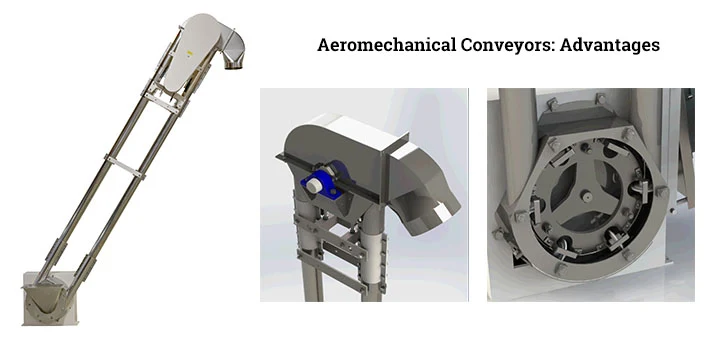
Aeromechanical Conveyors: Advantages

Aeromechanical Conveyors: Advantages

Learn how aeromechanical conveying works and explore its material-transfer, containment and layout advantages.

VIEW RESOURCE
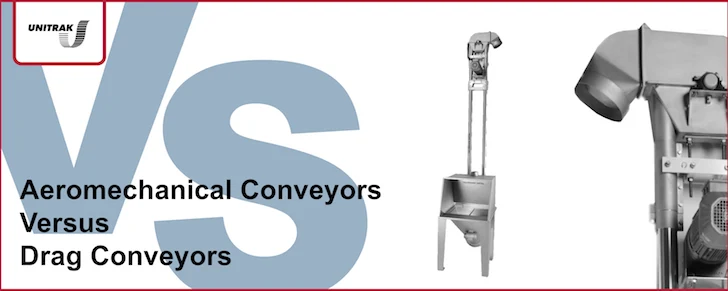
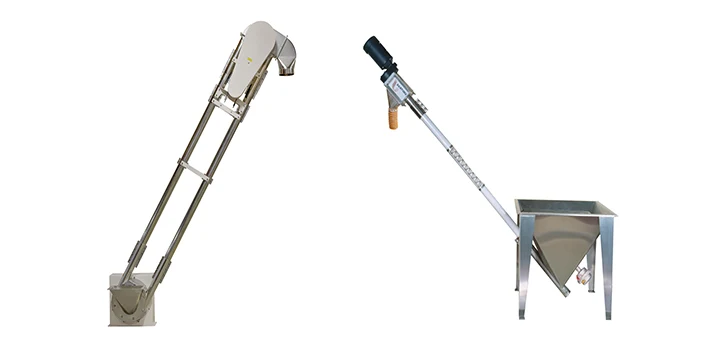
Drag vs. Aeromechanical Conveyors

Drag vs. Aeromechanical Conveyors

Compare conveying principles, controlled feeding, containment and equipment-integration considerations.

VIEW RESOURCE
Batch Production Conveyors

Batch Production Conveyors

Explore conveying options for batch operations, including Powderflight self-emptying and mobile-base arrangements.

VIEW RESOURCE
Aeromechanical Conveyors for Difficult-To-Handle Materials

Aeromechanical Conveyors for Difficult-To-Handle Materials

Review UniTrak’s guidance on aeromechanical conveying for materials with difficult handling characteristics.

VIEW RESOURCE

DISCUSS YOUR APPLICATION

Let's find the right conveying solution for your material.

Tell us about your powder or bulk material, required capacity, conveying distance, elevation and process layout. Our team can review the application and help determine whether Powderflight is the right fit.

Where material behavior is uncertain, application testing may help establish the most appropriate conveying approach.

Industry memberships