DEFINE THE MATERIAL REQUIREMENTS
Use the actual material data and operating conditions to establish containment, compatibility and hazard-control needs.
Coordinate containment, material compatibility and hazardous-area requirements.
Combustible and hazardous materials require a conveying design matched to the installation. UniTrak combines application-specific construction, containment and appropriately rated components around your material and process. Define the relevant hazard data, area classification and equipment interfaces early so the conveying specification addresses the project requirements.
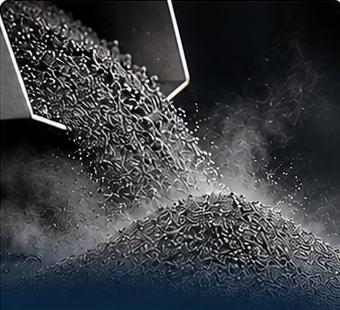
Use the actual material data and operating conditions to establish containment, compatibility and hazard-control needs.
Area classification and project requirements guide component selection. ATEX and North American hazardous-location terminology are distinct.
Review the conveyor, inlet, discharge and surrounding equipment together. Individual rated components form part of the wider process design.
Hazardous characteristics occur across many material types.
Whether a material requires specialized conveying equipment depends on its physical properties, particle size, concentration, process conditions and installation environment.
Applications where containment, material compatibility or hazardous-area requirements may influence conveyor design.
Many common dry bulk solids can form combustible dust clouds when sufficiently fine and dispersed.
Combustibility must be determined from appropriate material data and testing rather than assumed from the product name alone.
Metal powders can also be combustible, and some battery-material applications may introduce additional requirements around containment, material compatibility and hazardous-area design.
Not every metal or battery material is combustible. Final equipment requirements depend on the actual material and process.
Some applications require specialized conveying because exposure, leakage or contamination must be minimized.
The required level of containment should be defined by the process rather than assumed.
Match the conveying technology to the material and hazard.
No single conveyor is appropriate for every combustible or hazardous application. Equipment selection should consider the material, required containment, area classification, process layout, cleaning requirements and overall risk-control strategy.
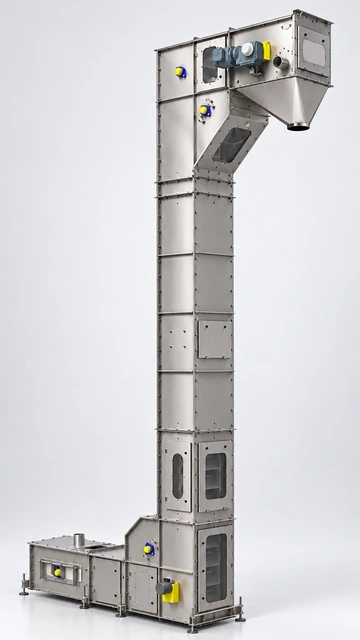
TipTrak Monocoque provides sealed, dust-tight conveying with application-specific purge, grounding, bucket-material and electrical options. Its interlocking buckets support gentle horizontal and vertical transfer with fewer intermediate connections.
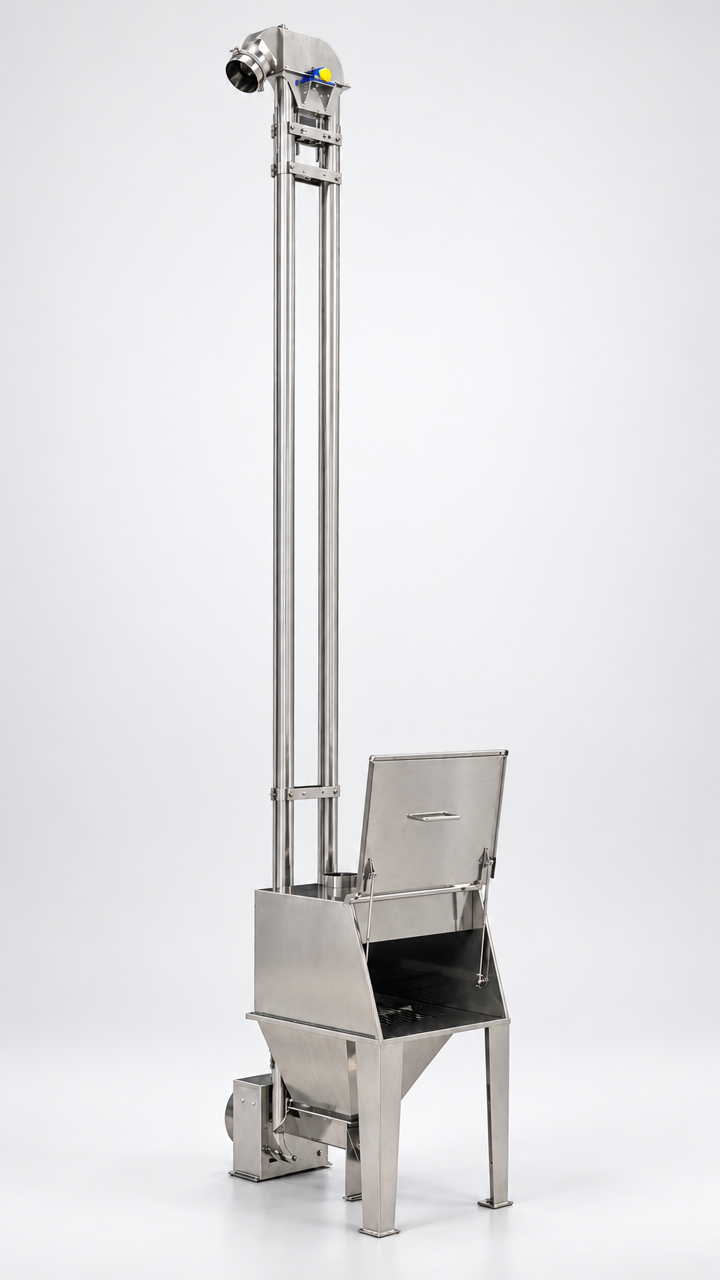
Powderflight provides enclosed aeromechanical conveying for compatible powders and granules. Confirm the material, construction, rated components and process interfaces against the hazardous-area requirements of the installation.
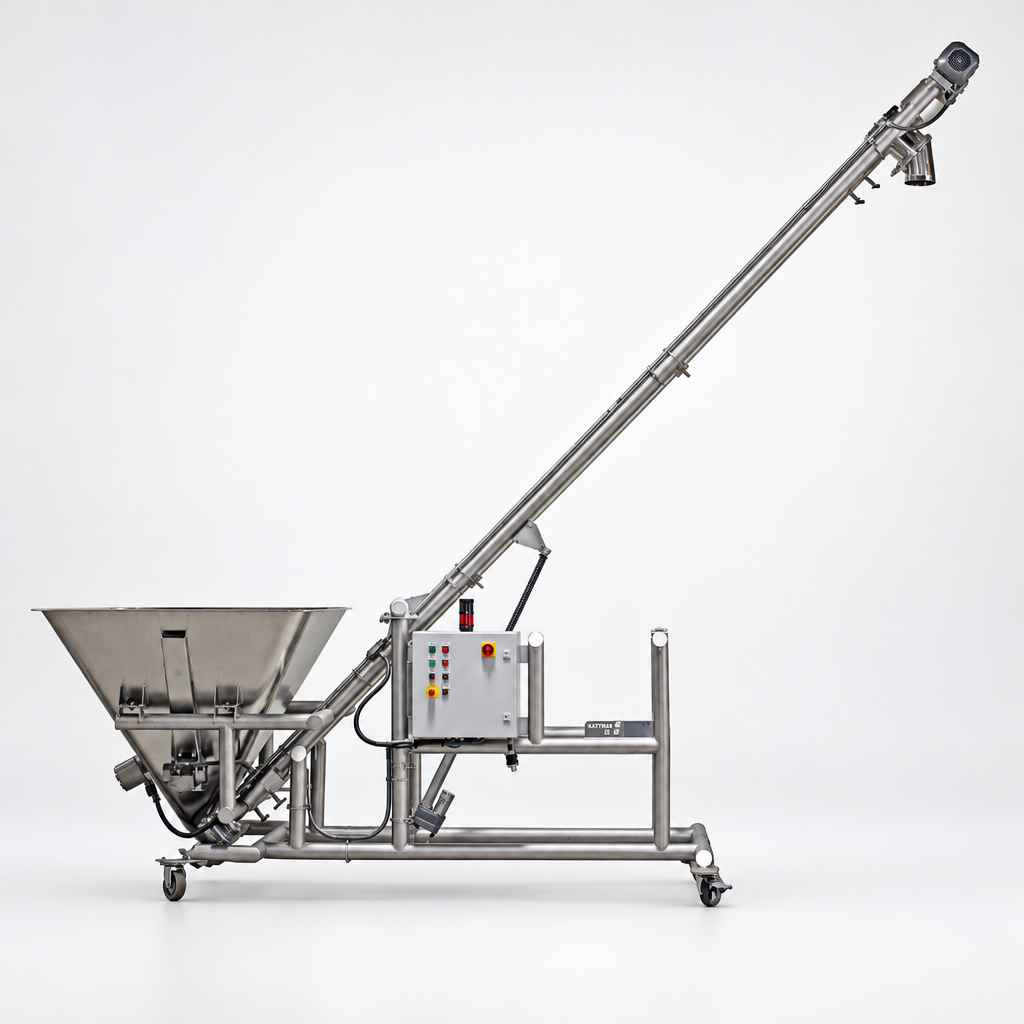
UniFlex provides compact enclosed screw conveying from a charged hopper. Material compatibility, contact conditions and the specified hazardous-area configuration determine application fit.
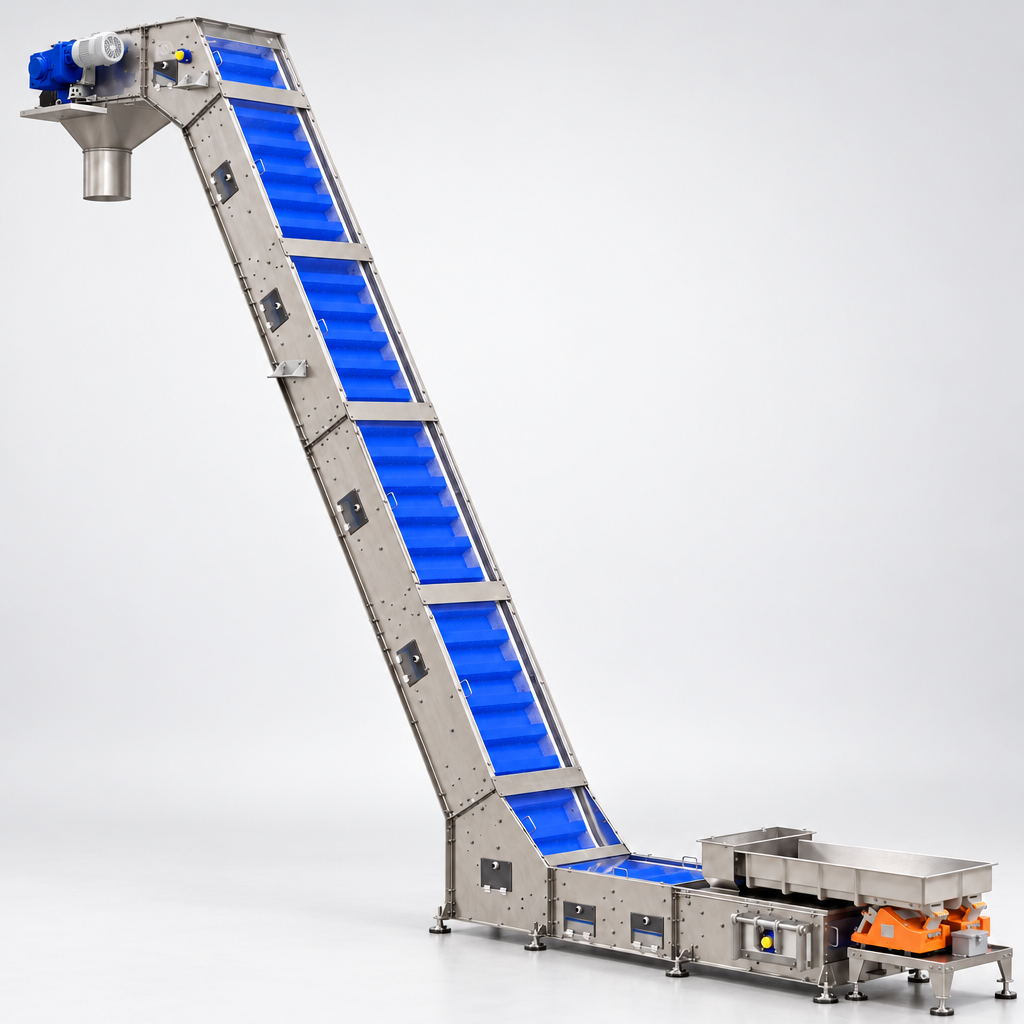
KleanTrak prioritizes supported belt movement and cleaning access. Select it where those features match the application; it does not provide the sealed conveying path required for some containment-sensitive materials.
For additional guidance on containing powders throughout the transfer path, explore our dusty and fine powder conveying guidance.
Hazardous applications require more than a rated motor.
Equipment selection starts with understanding the actual material.
Relevant information may include:
Do not assume a material is safe or hazardous solely from its commercial name.
Electrical and mechanical requirements depend on where the equipment will operate.
Projects may involve:
ATEX terminology and North American hazardous-area classifications are not interchangeable. The required equipment configuration must be based on the actual project specification.
Dry materials moving through equipment can generate static electricity.
Depending on the application, the design may need to consider:
These measures form part of a broader hazard-control strategy and should not be treated as a complete solution on their own.
Hazardous products may require greater control over material escaping from or entering the conveyor.
Potential requirements include:
Containment requirements should be coordinated with the surrounding process.
Equipment materials must be compatible with the product being conveyed.
Considerations can include:
Carbon steel, stainless steel and specialized polymer components can be selected where appropriate for the application.
TipTrak and KleanTrak require controlled feeding into the conveyor.
An uncontrolled head load can overfill the conveying system, increase spillage and place unnecessary load on components.
The correct feeder should be selected around the material and process. Depending on the application, this may include vibratory feeders, rotary valves or other controlled-discharge equipment.
Powderflight can receive material directly from a suitable hopper where the application permits and does not inherently require a separate metering feeder.
UniFlex is normally supplied from a charged hopper, with the screw drawing material from the available product supply.
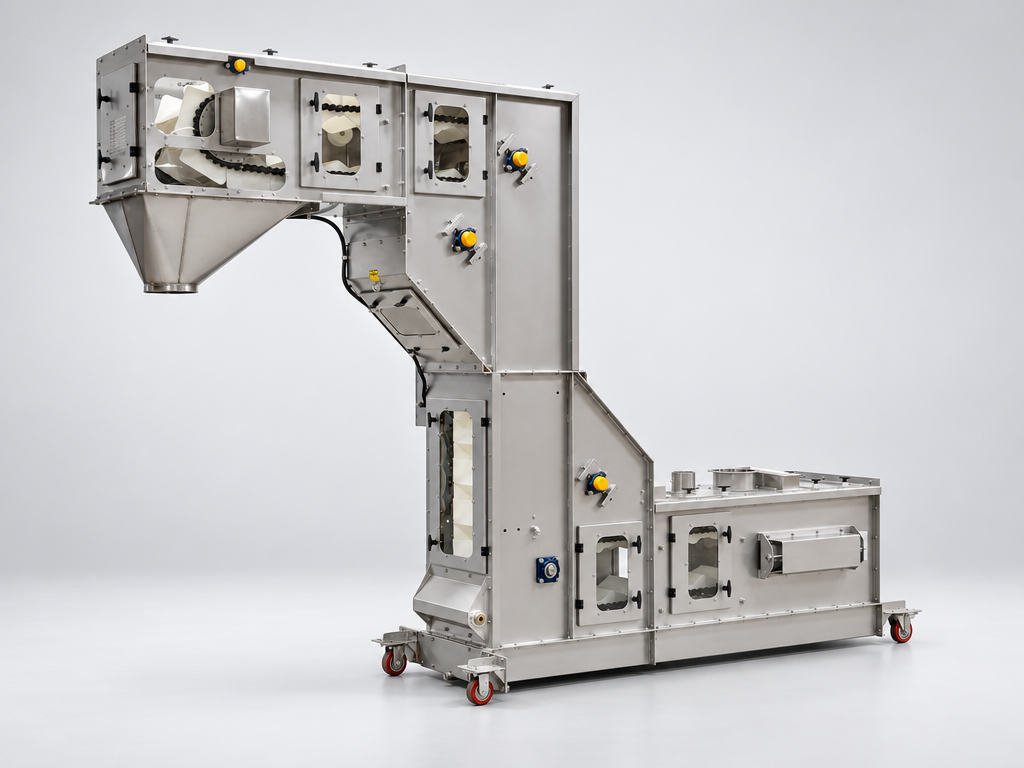
TipTrak Monocoque supports sealed conveying and application-specific inert-gas fill or purge arrangements. Coordinate the enclosure, process connections and specified controls around the material and installation.
Read Application GuidanceFollowing SDS and safety review, accepted materials can be assessed for conveying behaviour, discharge, retention and buildup using suitable available equipment. Contact UniTrak before sending samples.
A bulk solid may present additional risk because of combustibility, explosibility, toxicity, chemical reactivity, corrosivity or other properties. Fine powders can behave differently from the same material in larger particle form, so equipment selection should be based on actual material and process data.
Yes. Some metal powders can form combustible or explosible dust clouds depending on the material, particle size, concentration and operating conditions. Combustibility should be determined from appropriate material data or testing rather than assumed.
UniTrak can engineer and supply equipment for applications requiring ATEX certification where applicable. The required configuration depends on the material, installation, equipment category and project requirements.
Application-specific equipment can be configured with explosion-proof or appropriately rated electrical components where required for North American hazardous locations. Final requirements must be based on the project's area classification and applicable standards.
No. ATEX applies to equipment and protective systems used in potentially explosive atmospheres under the European regulatory framework. North American hazardous-location requirements use different classifications and certification systems. The correct equipment specification depends on where the system will be installed.
No. Electrical classification is only one part of combustible-dust risk management. Material properties, containment, ignition sources, grounding, process interfaces, housekeeping and the overall facility hazard strategy must also be considered.
TipTrak Monocoque is a strong option where sealed bucket conveying and application-specific hazardous-area construction are required. Powderflight and UniFlex provide enclosed alternatives for compatible materials. Selection depends on the material, containment requirements, area classification and process layout.
Yes. TipTrak Monocoque provides a sealed, dust-tight enclosure and can be configured for purge operation and positive or negative pressure conditions where required by the application.
Yes. TipTrak bucket options include conductive and anti-static materials for appropriate applications. The specific bucket material should be selected around the product, temperature and project requirements.
UniTrak reviews hazardous-material samples using the SDS and relevant safety information before accepting a trial. Accepted materials can be evaluated using suitable available equipment. Contact the team before sending a sample.
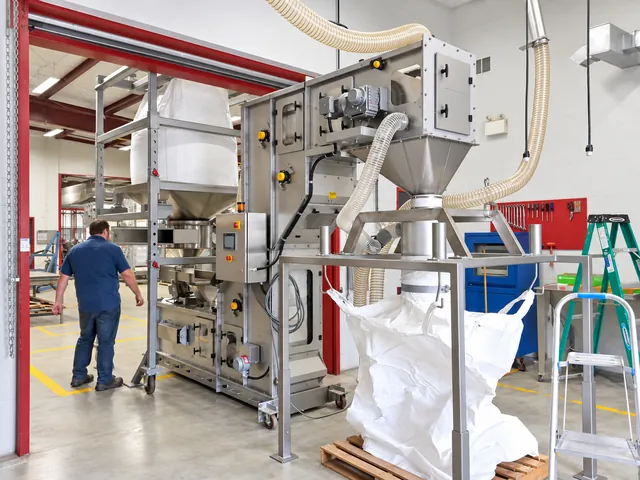
Learn how conveying-system design can influence dust control and containment in chemical applications.
Read resource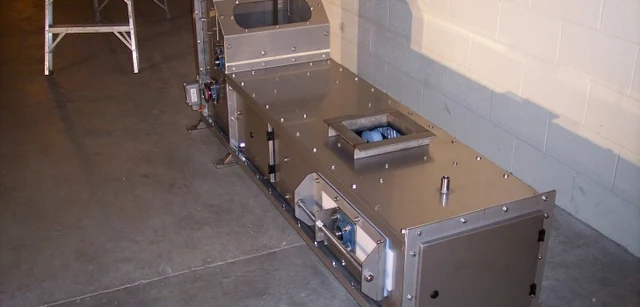
Explore how controlled feeding can help prevent overfilling, spillage and unnecessary equipment loading.
Read resource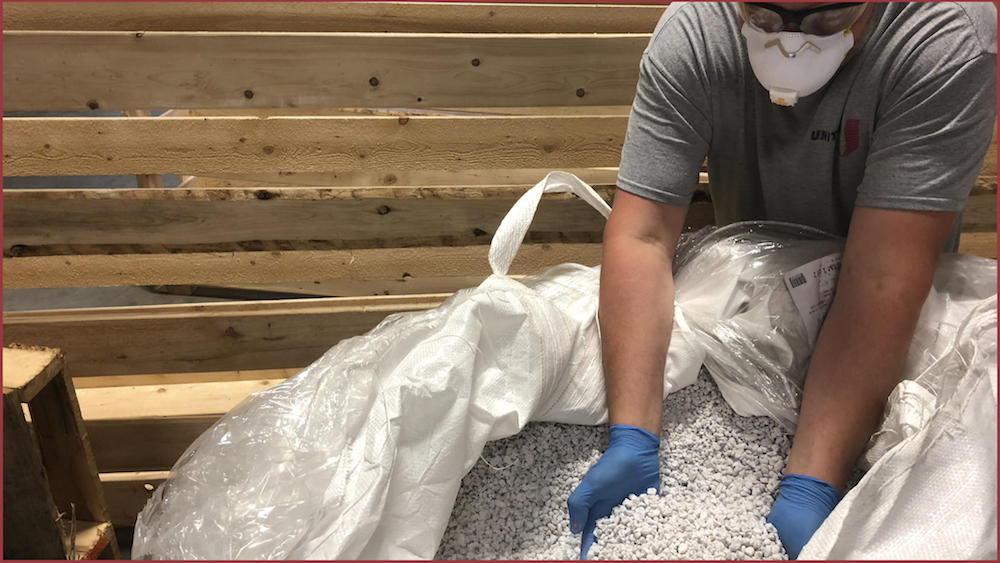
Learn how material testing can reduce uncertainty before final equipment selection.
Read resourceShare your material, required conveying rate, route and current handling problem. UniTrak will review the application and recommend equipment and configuration options around your process.