MAINTAIN MATERIAL FLOW
Adhesion at chutes, transitions and discharge points can restrict production. Select the conveying path around how the product releases.

Reduce buildup and interruptions while protecting product condition.
Sticky products need a conveying method matched to their temperature, moisture and release behaviour. UniTrak combines bucket, belt and enclosed conveying options with application-specific feeding and discharge arrangements. Testing your actual material helps identify how to move it with less buildup, smearing and unnecessary mechanical working.
Adhesion at chutes, transitions and discharge points can restrict production. Select the conveying path around how the product releases.
Compression and repeated mechanical contact can encourage smearing. Supported bucket or belt movement benefits compatible sticky products.
Warm, moist or freshly coated material may behave differently from the finished product. Review the condition at the actual conveying stage.
Understanding what creates the adhesion helps determine how the material should be moved.
These are representative examples only. Suitability requires application review.
Sticky and adhesive materials are characterized primarily by adhesion, smearing or accumulation during conveying. Non-free-flowing materials primarily resist gravity flow; packing, caking and smearing describes compaction, agglomeration or changes under pressure, time or handling. A material may exhibit more than one characteristic.
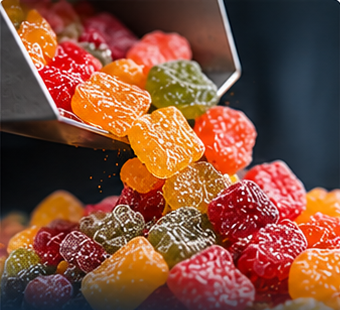
Gummy candies, chewy confectionery and similar products can adhere to each other and to equipment, particularly when warm or soft.
Handling methods that keep the product relatively open and supported can be advantageous compared with forcing tacky pieces through confined conveying paths.
Common concerns: Adhesion • Clumping • Temperature • Smearing • Cleaning
Warm granola, cereal clusters and coated foods can be particularly difficult because they may be both sticky and susceptible to breakage.
The goal is to move the product without introducing unnecessary impact, compression or confined areas where tacky material can accumulate.
Common concerns: Adhesion • Breakage • Buildup • Temperature • Product Integrity
Some dried or partially dried food products can stick to each other, form clusters or accumulate where material is compressed or confined.
Behavior can vary significantly with moisture content and temperature.
Common concerns: Moisture • Adhesion • Clumping • Buildup • Cleaning
Some powders containing oils, fats or moisture may adhere to internal surfaces, form deposits or gradually restrict confined conveying paths.
The material's response to mechanical action is particularly important when selecting between conveying technologies.
Common concerns: Coating • Buildup • Smearing • Restricted Flow • Cleaning
Certain polymers, resins and specialty granules may become adhesive as temperature or surface properties change.
A product that flows freely when cool may become difficult immediately after processing.
Common concerns: Temperature • Adhesion • Buildup • Smearing • Material Testing
A product may convey easily in storage but become highly adhesive immediately after cooking, coating, heating or another manufacturing operation.
That means equipment selection should consider where in the process the material is being conveyed and what condition it is in at that moment.
Common concerns: Changing Behavior • Temperature • Moisture • Coatings • Application Risk
For sticky products, how the material is carried can matter as much as whether the conveyor can move it.
Sticky products can be particularly difficult in systems where material is confined, compressed or subjected to repeated mechanical interaction.
UniTrak manufactures multiple conveying technologies, allowing the conveying method to be selected around the material and process rather than forcing every sticky product through the same type of equipment.
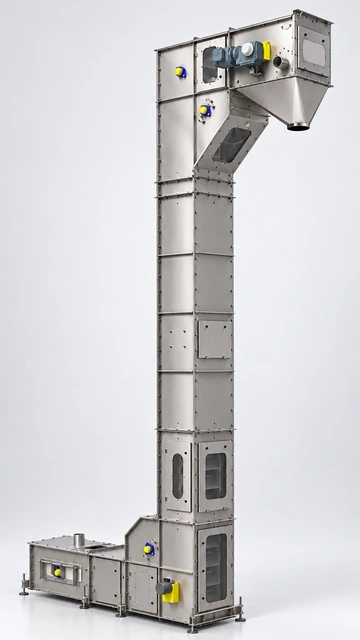
TipTrak carries sticky products in buckets with limited mechanical working. Application-specific bucket materials, discharge features and cleanout arrangements address product release. The warm-granola case demonstrates this approach for a product combining adhesion and fragility.
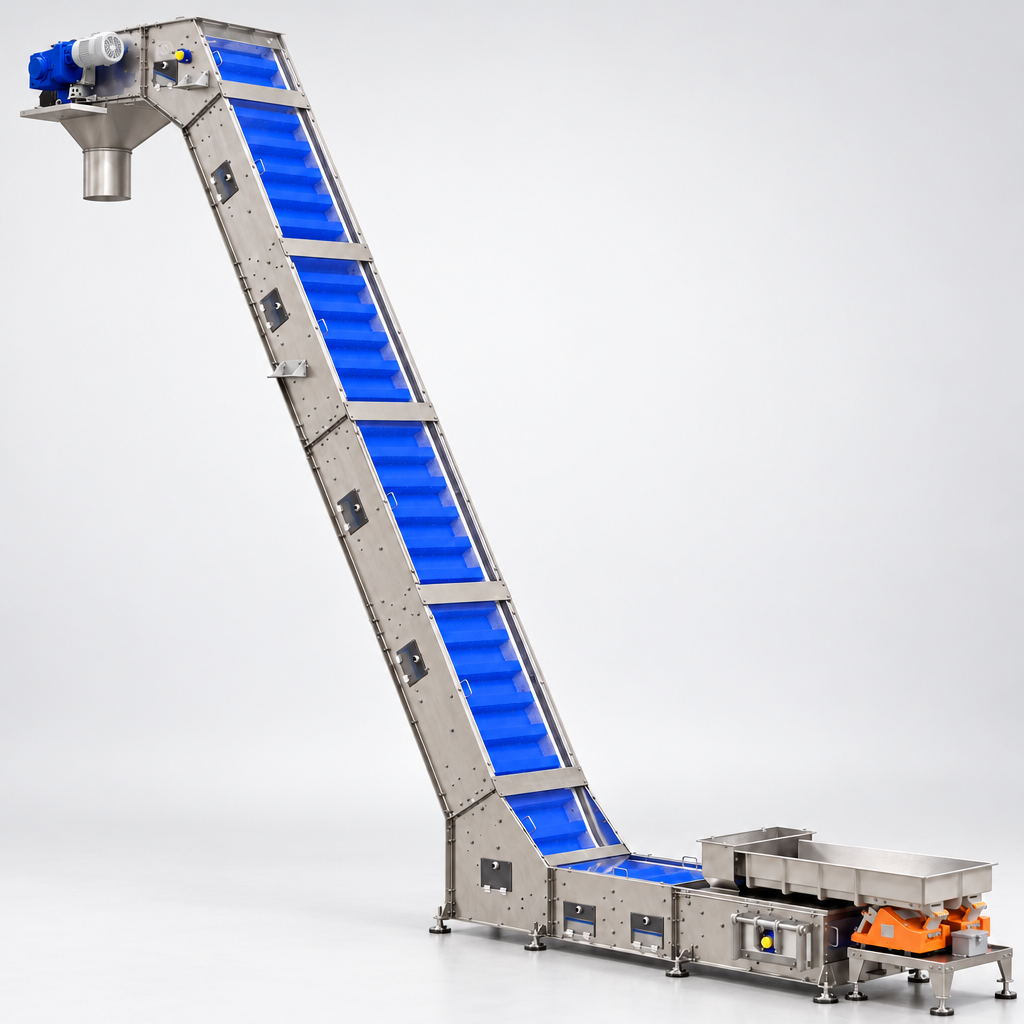
KleanTrak supports compatible sticky products on an accessible belt. Belt selection and discharge arrangements address product release, while direct access supports cleaning between production runs.
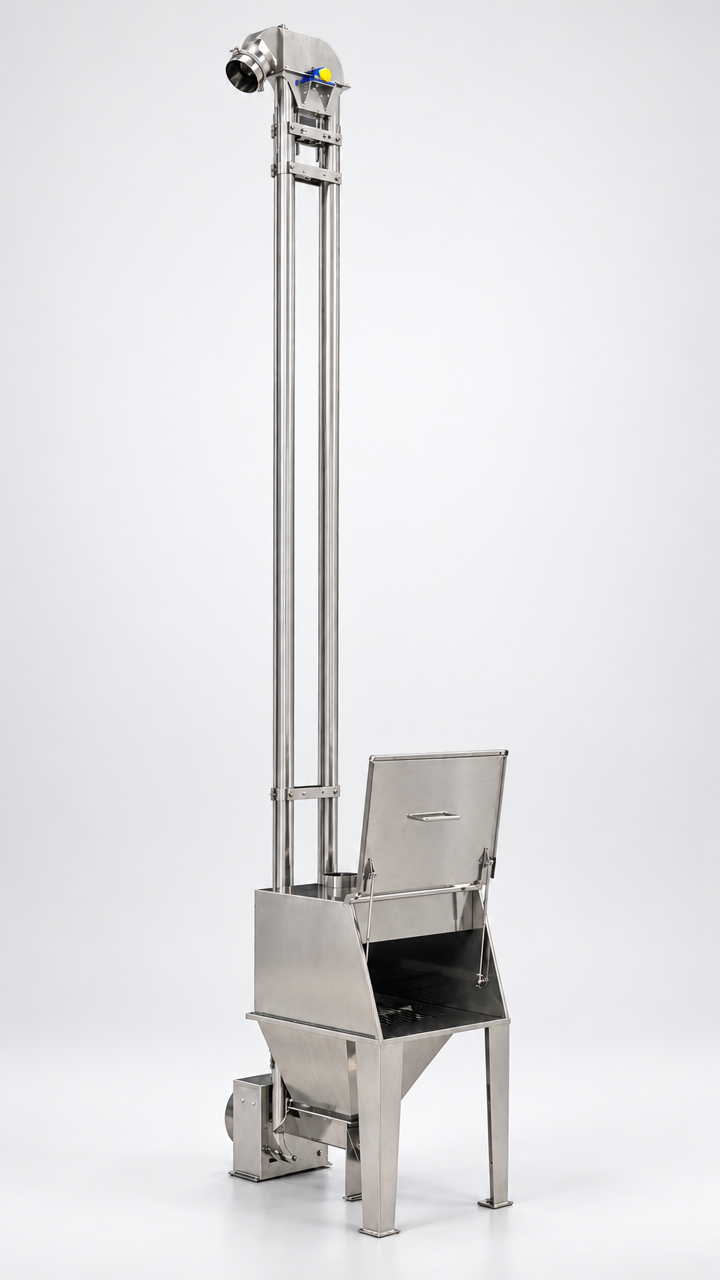
Powderflight provides enclosed transfer for compatible powders and granules. For adhesive products, assess whether material remains mobile through the tube or deposits on conveying surfaces.
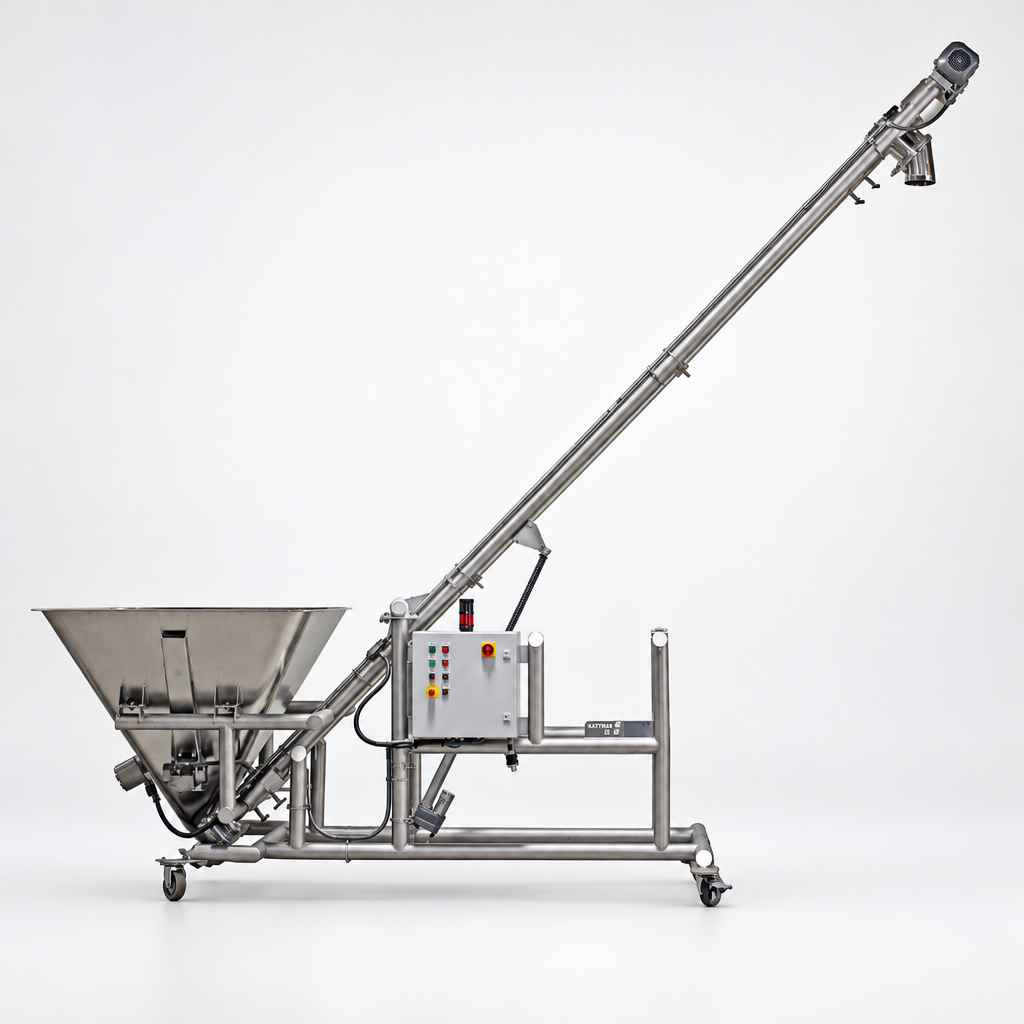
UniFlex provides compact enclosed screw conveying. Review how the product responds to screw contact, particularly where mechanical working encourages smearing or accumulation.
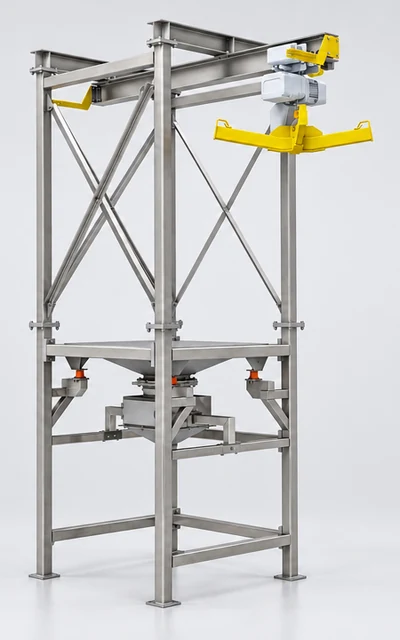
Bagstander connects bulk bag discharge with downstream conveying. Match the outlet and discharge assistance to the material’s flow behaviour so receiving does not become the process restriction.
For products that are also easily broken, explore our fragile and friable material conveying guidance.
Buildup is often driven by confinement, compression and the condition of the material.
Warm, moist, coated or freshly processed products may be significantly more adhesive than the same material after cooling or drying.
Evaluate the product in the condition in which it will actually enter the conveyor.
Pipes, tubes, tight transitions, chutes and restricted sections can become collection points for adhesive material.
As deposits grow, the available conveying area becomes smaller and flow can become increasingly inconsistent.
Sticky materials may smear, coat or compact when repeatedly subjected to mechanical force.
Conveying methods that carry the product with less mechanical interaction can therefore be advantageous for suitable applications.
Sticky products may require periodic inspection or cleaning regardless of conveying technology.
Equipment accessibility and the number of enclosed areas where material can accumulate should therefore be considered during selection.
Sticky-material applications often benefit from minimizing confinement, compression and repeated mechanical interaction.
UniTrak evaluates both the material and the conveying method to determine how the product can be moved with fewer opportunities for buildup and clogging.
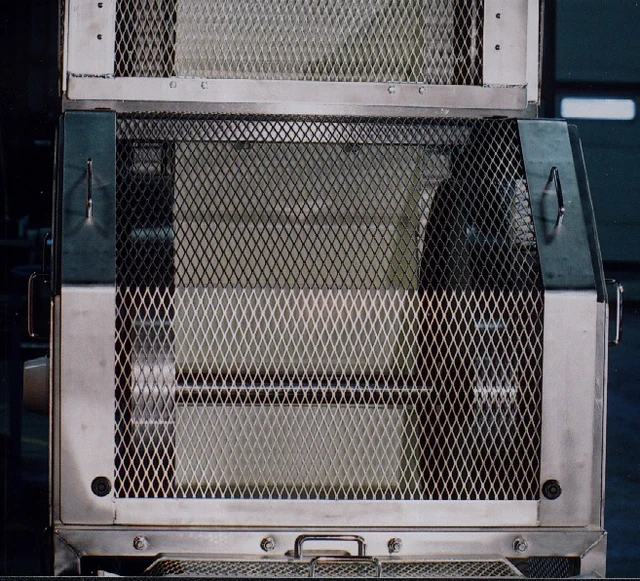
UniTrak’s case covers granola base, soy granola clusters, toasted coconut, bulk crisp topping, toasted oats and crisp rice. An S5 TipTrak elevated warm product from an oven. Testing and subsequent operation showed that product did not adhere to the buckets in this application, while the design supported faster cleaning and turnaround.
VIEW GRANOLA CASE STUDY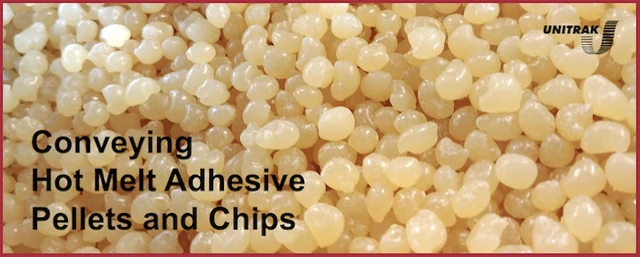
Warm adhesive pellets can stick to conveying surfaces while also needing protection from breakage. UniTrak’s guidance describes TipTrak bucket surfaces and infeed arrangements for these products, alongside Powderflight for compatible resins, polymer mixes, waxes and other production inputs.
READ APPLICATION GUIDANCEAssess adhesion, buildup, conveying and discharge using representative material. Temperature, moisture and coatings should reflect the stage at which the product will enter the conveyor.
A sticky or adhesive material tends to cling to itself or equipment during handling. Adhesion can be influenced by moisture, temperature, oils, sugars, coatings, particle characteristics and the physical properties of the product.
Sticky material can accumulate inside confined conveying paths, coat internal components, smear under mechanical pressure or build up at transitions. As deposits increase, they can restrict flow, reduce capacity and increase cleaning or maintenance requirements.
TipTrak and KleanTrak are strong starting points where carrying the product limits compression and mechanical working. Product release, temperature, moisture and cleaning requirements determine the configuration. Powderflight and UniFlex remain options where the material stays compatible with enclosed tube conveying.
Yes. TipTrak can be particularly well suited to suitable sticky materials because the product is carried in buckets rather than forced continuously through a confined conveying line. This can reduce some of the compression and internal buildup concerns associated with other conveying methods.
Yes. TipTrak carries the product in buckets with gentle, controlled movement. UniTrak’s warm-granola case documents an S5 installation where product did not adhere to the buckets. The material’s actual condition and discharge behaviour guide the configuration for another application.
Yes, KleanTrak can be considered for suitable sticky food products. The material is carried on an accessible belt, which can be advantageous where gentle handling, open conveying and cleaning access are important.
Some compatible mildly adhesive powders can be conveyed with Powderflight. Highly sticky materials that coat or accumulate inside the conveying line require more careful evaluation because buildup could eventually affect performance.
Potentially. Suitability depends on how the product responds to mechanical action inside the conveying tube. Materials that smear, compact or coat internal surfaces may require a different conveying approach.
Yes. Some products become substantially more adhesive when warm, while others change behavior as they cool. Equipment selection should consider the material condition at the actual point where it will be conveyed.
It can. Moisture may increase cohesion between particles or adhesion to equipment surfaces for some products. The effect depends on the specific material.
Adhesive material can gradually accumulate on internal surfaces or in restricted sections. Over time, those deposits reduce the available conveying area and can eventually restrict or block material flow.
For suitable applications, yes. Carrying the material in a relatively open manner can reduce the amount of compression, confinement and repeated mechanical interaction compared with some enclosed conveying methods.
Not necessarily. A sticky material is characterized primarily by adhesion or buildup during handling. A non-free-flowing material primarily has difficulty moving under gravity. Some materials exhibit both characteristics.
Yes. Suitable customer materials can be tested by UniTrak using available test equipment. Testing can help evaluate adhesion, buildup, clogging, conveying behavior and overall equipment suitability before the final solution is selected.
Provide the material name, SDS where available, particle size and form, bulk density, required rate, temperature, moisture content where known, conveying distance and elevation, description of the sticking or clogging problem, current handling method, cleaning requirements and relevant upstream and downstream equipment.
See the documented warm-granola application, product testing and application-specific TipTrak outcome.
Read resourceReview warm-pellet sticking, gentle handling and conveying-method selection for adhesive pellets and compatible production inputs.
Read resource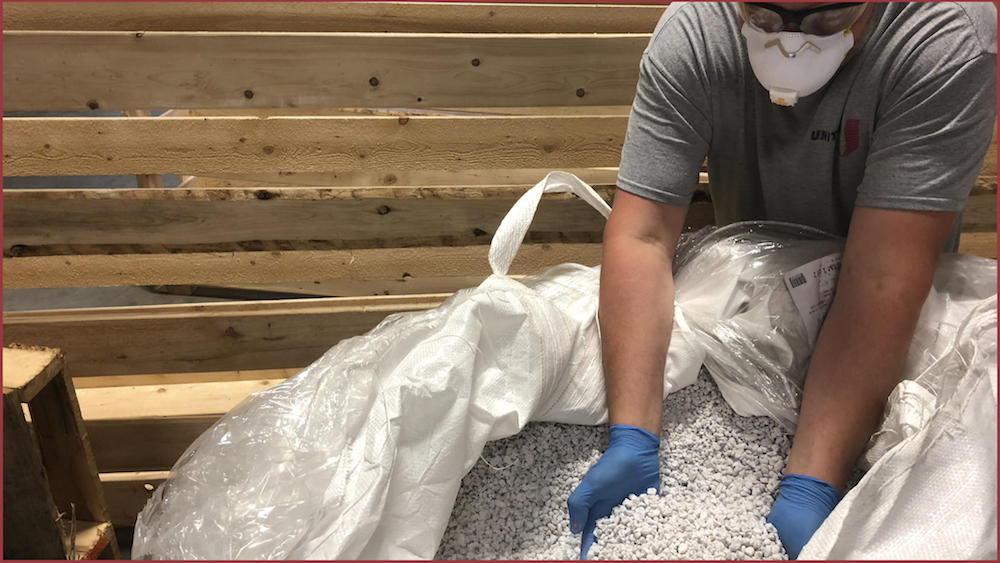
Understand how actual material testing can clarify conveying behavior, discharge, cleaning and equipment suitability before purchase.
Read resource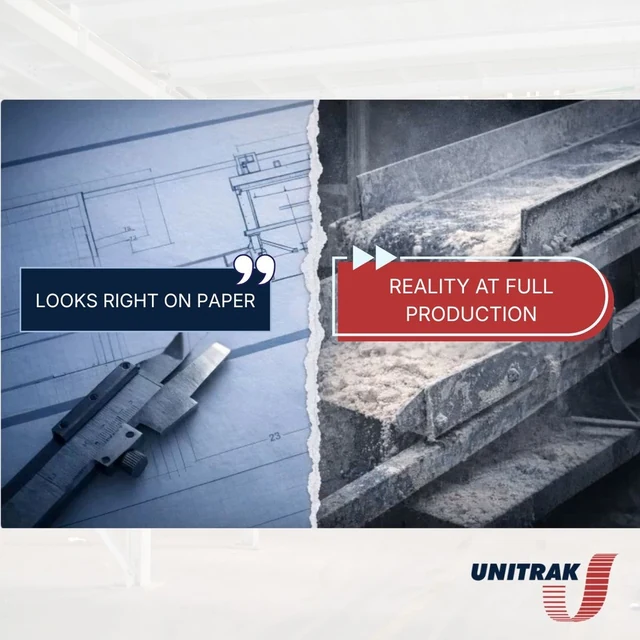
Consider moisture, temperature, flowability, routing, discharge and cleaning when matching equipment to the application.
Read resourceExplore documented sticky-material examples and application-specific TipTrak options for product movement and discharge.
Read resourceShare your material, required conveying rate, route and current handling problem. UniTrak will review the application and recommend equipment and configuration options around your process.