Conveying Equipment for Environmental & Energy Applications
Keep valuable materials moving through your process.
Transfer recovered nutrients, treatment powders and processed biomass with equipment built around your material and plant layout. UniTrak combines conveying and bulk bag handling to protect granules, control dust and connect bulk receiving with processing, storage and packaging.
Different environmental and energy materials require different handling approaches.
DUST & MATERIAL CONTAINMENT
Keep fine materials within the process.
Treatment chemicals, mineral powders, activated carbon and other fine materials can generate dust during receiving, feeding and transfer.
Escaping material can increase housekeeping requirements, contribute to product loss and affect the surrounding production environment.
Enclosed conveying can help limit material exposure, while inlet, discharge and transfer-point design remain important parts of the overall system.
Material characteristics and any associated dust hazards should be reviewed during equipment selection.
ABRASION & EQUIPMENT WEAR
Account for hard particles and demanding materials.
Mineral treatment products, recovered materials and other industrial solids may be abrasive.
Repeated contact with hard or angular particles can accelerate wear on product-contact components.
The severity of abrasion depends on the material, particle characteristics, conveying method, velocity and operating conditions.
Equipment selection should therefore consider both initial conveying performance and expected maintenance requirements.
VARIABLE & DIFFICULT MATERIAL FLOW
Maintain consistent material flow through the handling system.
Environmental processes can produce or consume materials with widely different flow characteristics.
Some powders flow freely. Others compact, bridge or resist movement from hoppers. Recovered products may also vary as upstream process conditions change.
Reliable conveying depends on understanding how the material behaves at each stage of the handling process.
Hopper design, flow assistance and the method used to introduce material to the conveyor should therefore be matched to both the material and the selected conveying technology.
PRODUCT DEGRADATION
Protect pellets, granules and recovered products.
Some environmental and renewable-energy products derive value from maintaining a particular particle form.
Pellets, crystals, granules and agglomerated materials can generate fines when subjected to unnecessary impact or aggressive handling.
Where product integrity matters, equipment selection should consider the complete material path from inlet through discharge.
HIGH BULK DENSITY & EQUIPMENT LOADING
Design around the actual weight of the material.
Treatment minerals, recovered nutrients and other industrial products can have significantly higher bulk densities than lightweight organic materials.
Bulk density affects conveyor capacity, equipment loading and drive requirements.
The actual material density and required mass flow should therefore be established when evaluating equipment.
BULK RECEIVING & PROCESS INTEGRATION
Connect delivered materials with the process that uses them.
Many dry treatment chemicals, additives and process ingredients are delivered in bulk bags.
Reliable handling requires more than simply supporting the bag.
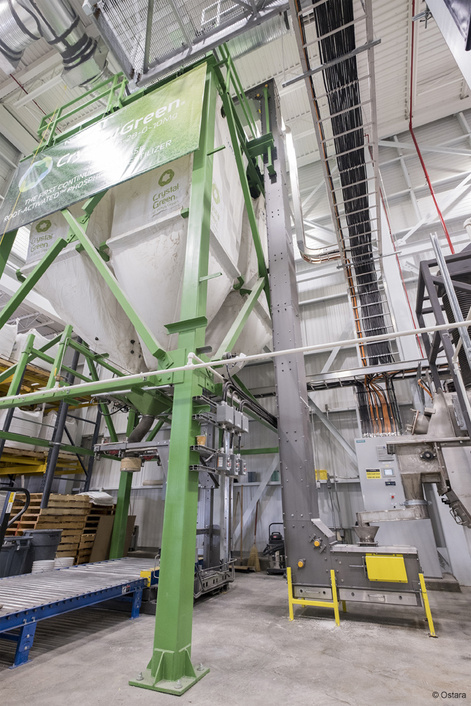
Discharge control, hopper design, dust management, weighing and downstream conveying may all need to operate together.
A coordinated material-handling arrangement can simplify the transfer between bulk receiving and the surrounding process.
Explore the dry materials and applications that influence conveying selection.
Handle recovered nutrients as valuable finished products.
Resource-recovery processes can convert nutrients from wastewater and other streams into useful fertilizer products.
Once recovered material reaches a dry, conveyable form, it may need to be elevated, transferred, stored or packaged while maintaining product quality.
Granular and crystalline products can be vulnerable to degradation and fines generation during unnecessary impact.
UniTrak conveying equipment can be considered for suitable recovered nutrient and fertilizer products.
Materials include:
Recovered nutrient granules
Struvite-based fertilizer products
Fertilizer crystals
Mineral fertilizer granules
Suitable dry nutrient products
Compatible fertilizer ingredients
Common concerns: Product Degradation • Fines • Abrasion • Bulk Density • Controlled Transfer • Packaging
Transfer suitable dry ingredients used in treatment processes.
Water and wastewater facilities can use dry bulk materials as treatment chemicals, process additives and filtration or adsorption media.
Many of these products are dusty, dense or abrasive.
Material handling may involve unloading bulk bags, transferring ingredients into storage or conveying material to downstream process equipment.
Materials for evaluation include:
Lime-based products
Calcium-based treatment materials
Activated carbon
Dry treatment additives
Mineral treatment products
Suitable powdered process chemicals
Common concerns: Dust • Abrasion • Bulk Density • Material Flow • Containment • Bulk Bag Handling
Handle dry media used in environmental treatment processes.
Activated carbon and other dry treatment media are used in applications involving water, air and process-stream treatment.
Material characteristics can vary considerably by grade and form.
Powdered products may generate significant dust, while granular products may be subject to abrasion or degradation.
The actual material should be evaluated before selecting conveying equipment.
Materials include:
Powdered activated carbon
Granular activated carbon
Selected filtration media
Dry adsorption media
Compatible treatment media
Common concerns: Dust • Abrasion • Product Degradation • Containment • Material Flow • Material Retention
Convey suitable biomass after it has been processed into a consistent form.
Biomass handling requirements depend heavily on the physical form of the material.
Pellets, granules and other consistently processed materials can be substantially different conveying applications from loose, fibrous or irregular biomass.
For suitable processed products, conveying equipment can be selected around particle integrity, bulk density, dust generation and required transfer path.
Materials for evaluation include:
Biomass pellets
Wood pellets
Processed bio-based granules
Suitable agricultural pellets
Densified organic materials
Compatible processed biomass products
Common concerns: Fines • Product Degradation • Dust • Variable Density • Material Flow • Spillage
Transfer suitable dry solids used in renewable-energy processes.
Renewable-energy manufacturing and production can involve dry feedstocks, intermediate materials and finished products.
The physical characteristics of these materials vary considerably.
UniTrak can evaluate applications where the material has reached a consistent, conveyable powder, granule or pellet form.
Materials for evaluation include:
Densified biomass
Suitable renewable-fuel pellets
Processed organic granules
Dry process additives
Compatible powdered ingredients
Other consistent dry bulk solids
Common concerns: Dust • Material Flow • Product Degradation • Bulk Density • Process Integration • Material Variability
Move recovered material once it becomes a consistent dry bulk product.
Resource-recovery processes can convert waste streams into reusable raw materials or finished products.
After sorting, processing or refinement, some recovered materials become suitable powders, granules or other consistent dry solids.
These materials may require transfer between processing stages or into storage and packaging.
Equipment selection should be based on the resulting material characteristics rather than the original waste stream.
Materials for evaluation include:
Recovered mineral products
Processed granular materials
Dry recycled feedstocks
Recovered powdered materials
Suitable process intermediates
Consistent dry recovered products
Common concerns: Material Variability • Abrasion • Dust • Bulk Density • Material Flow • Process Integration
Transfer dry materials used throughout environmental processes.
Environmental operations may use mineral powders and other dry additives to support treatment, neutralization or related processes.
These materials can be dense, abrasive, dusty or difficult to handle.
The conveying arrangement should consider the complete path from receiving through downstream process equipment.
Materials include:
Limestone
Lime-based materials
Calcium compounds
Mineral additives
Dry treatment powders
Suitable process additives
Compatible industrial minerals
Common concerns: Abrasion • Dust • Bulk Density • Bridging • Material Flow • Equipment Wear
NOT SEEING YOUR MATERIAL?
Environmental and energy applications involve a wide range of dry bulk materials.
Tell us what you're conveying, its physical form and where it needs to go.
Our team can review the material characteristics and process requirements to determine which conveying methods should be considered.
Select the conveying method around the material and process requirements.
TIPTRAK® BUCKET ELEVATOR
Protect recovered granules and pellets during elevation.
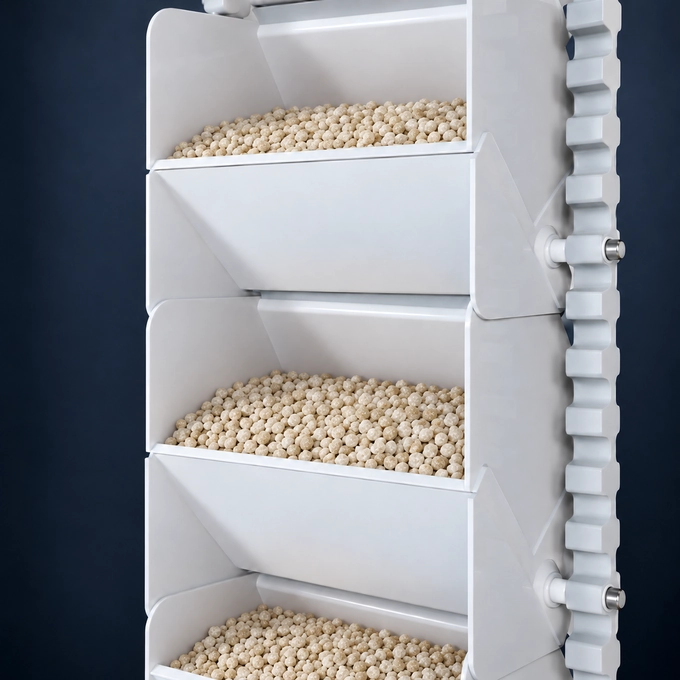
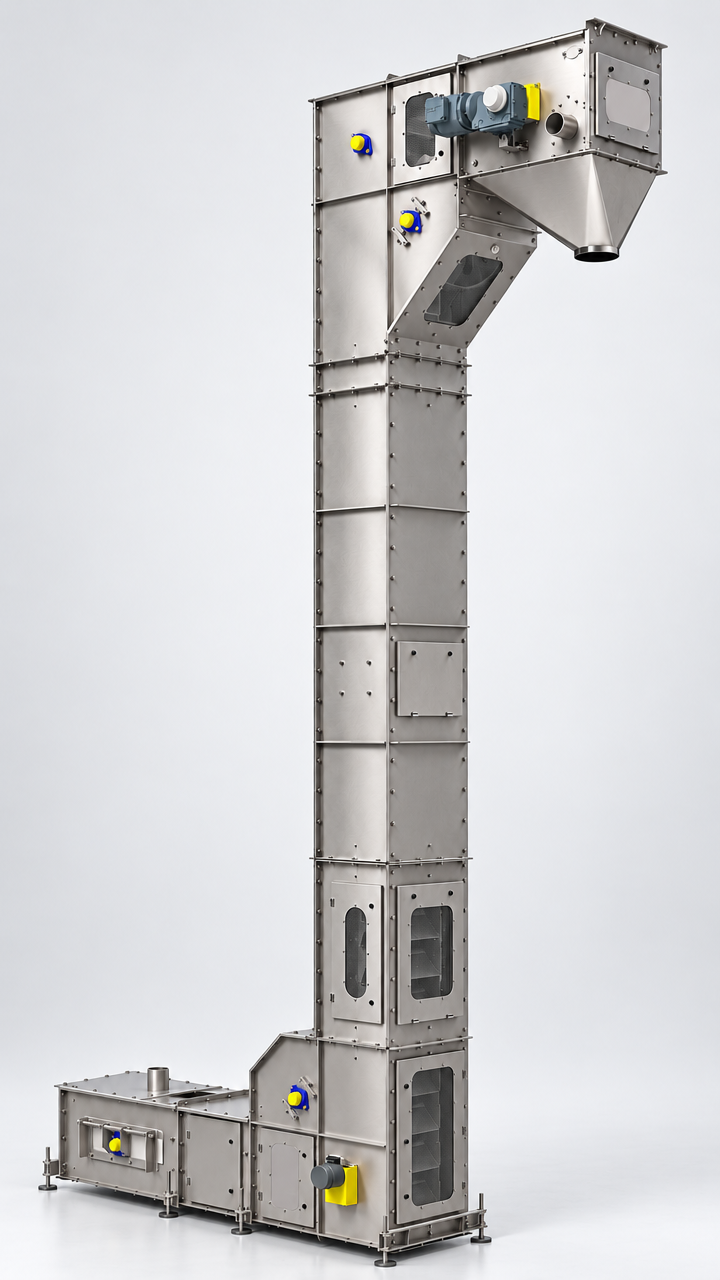
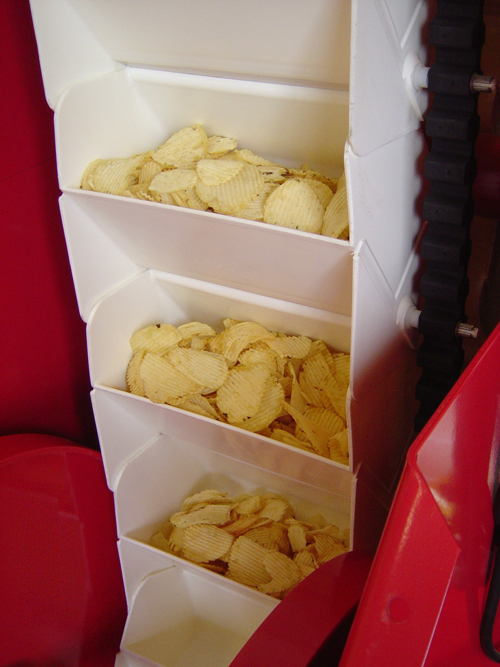
TipTrak’s low-speed, interlocking buckets carry recovered nutrient granules, crystals and processed biomass pellets horizontally and vertically while preventing spillage along the conveying path. Gentle handling protects particle integrity, while controlled feeding provides consistent bucket loading. Bucket materials and construction are selected around the product and process.
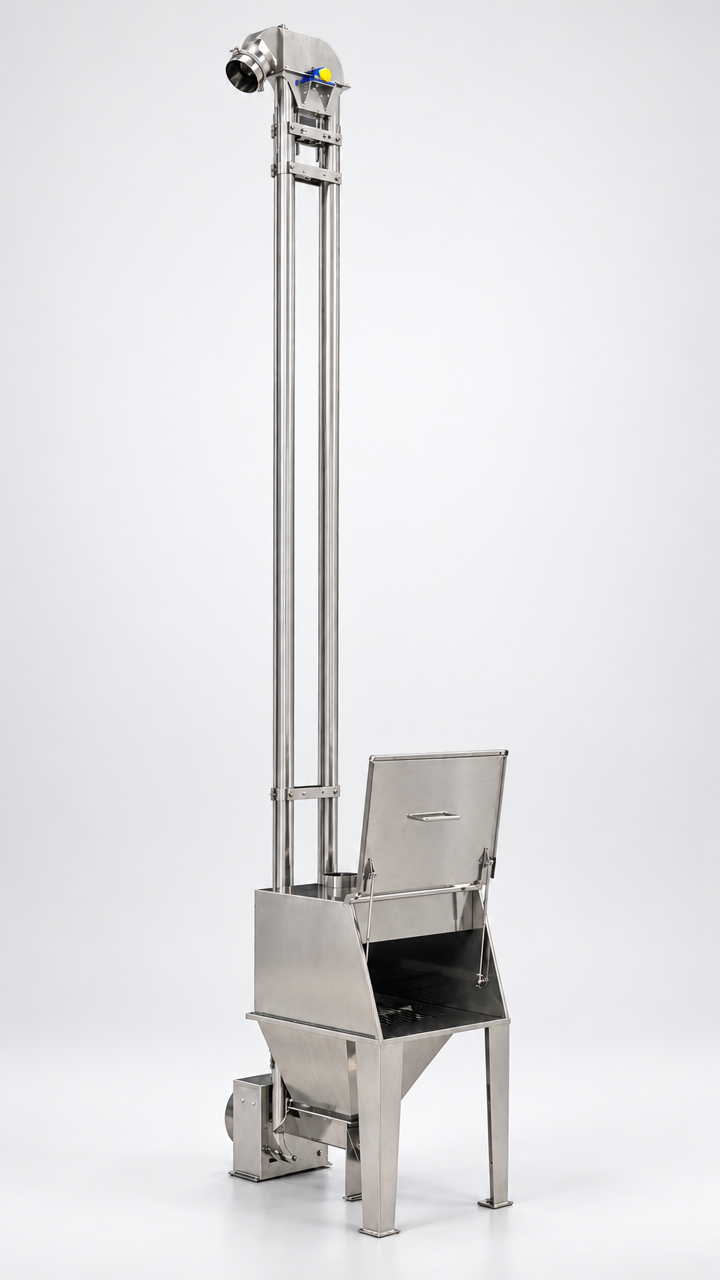
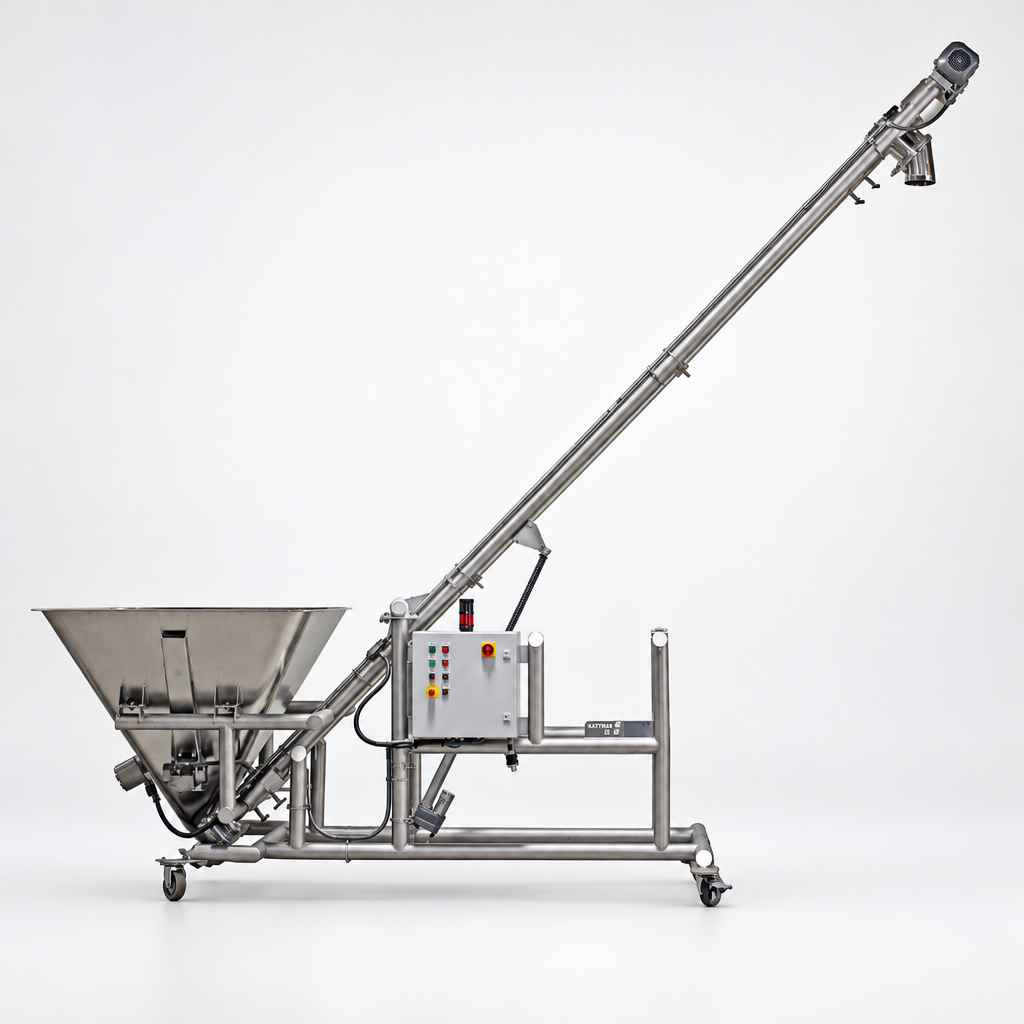
Powderflight uses a rope-and-disc assembly to create an air stream within an enclosed conveying tube. It transfers powders and granules between processes and can be flood fed from a receiving hopper. Separate metering is added when the process requires controlled dosing.
UniFlex draws material from a charged hopper using a rotating flexible screw inside a stationary tube. It transfers compatible powders and granules between production stages. Easy Clean options provide improved access where cleaning and product changeovers are priorities.
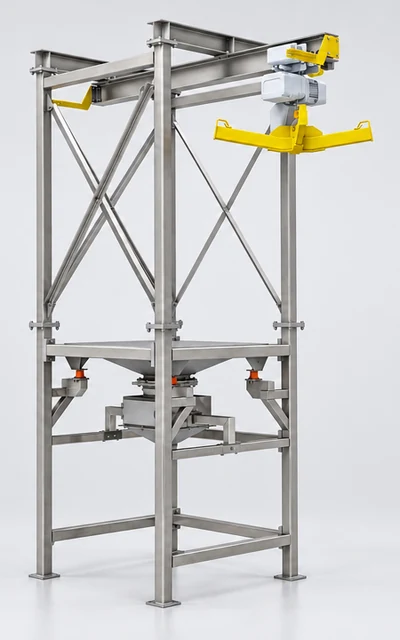
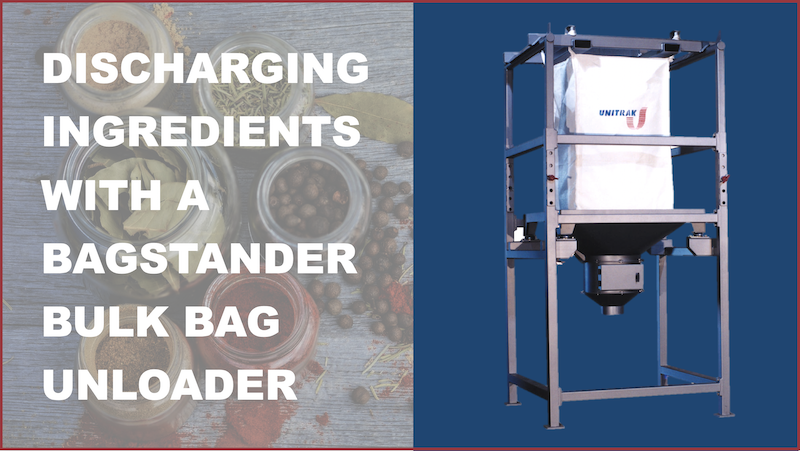
Bagstander supports bulk bag unloading or filling and integrates with conveying, receiving hoppers and optional weighing equipment. The discharge arrangement and flow assistance are selected around the material and downstream process.
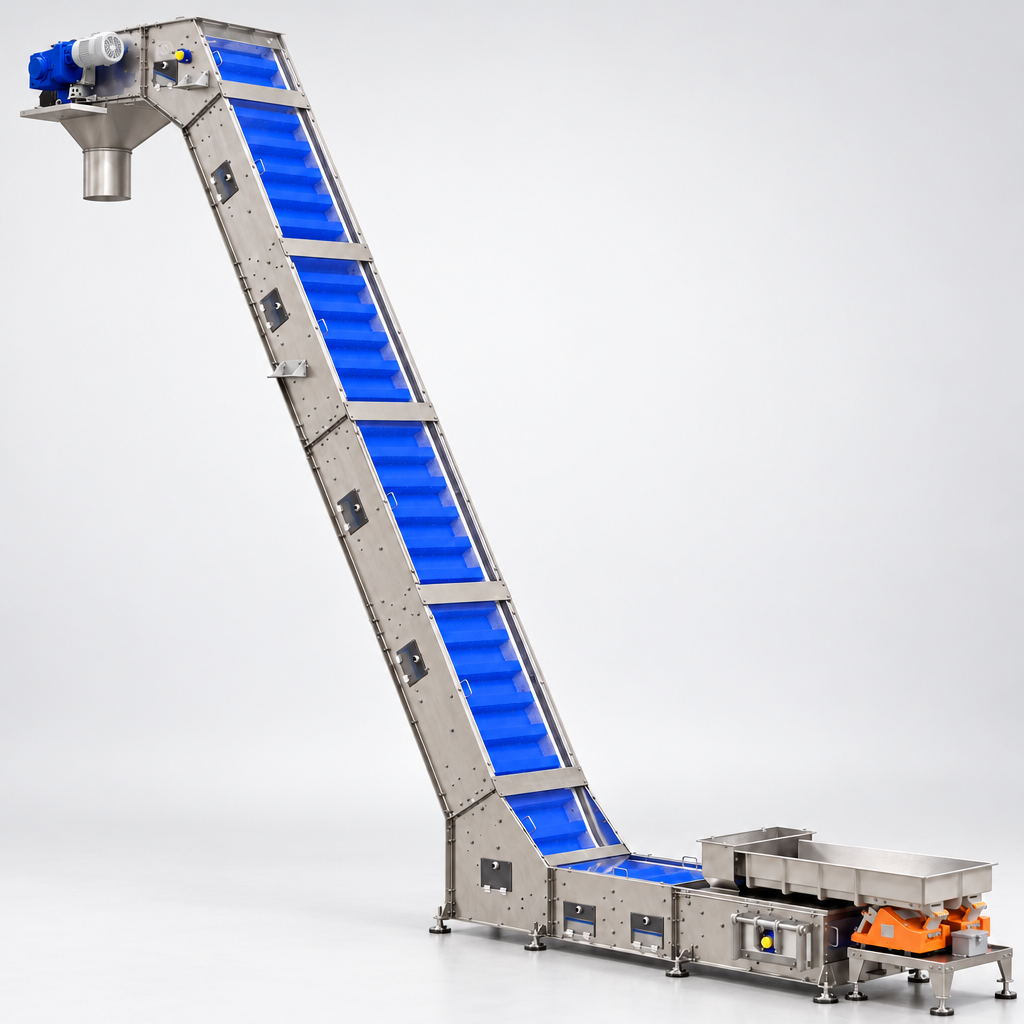
KleanTrak combines stainless steel construction with accessible product-contact areas. Its belt arrangement connects processing stages while supporting cleaning and changeovers. Controlled feeding provides consistent belt loading, with the conveying layout configured around the product and process.
Connect receiving, conveying and the next process.
UniTrak combines conveying and bulk bag handling with the hoppers, feeders, weighing equipment and connections needed for the application. Each transfer is arranged around the selected conveyor, available space and upstream and downstream equipment.
BULK BAG TO ENCLOSED POWDER TRANSFER
Bagstander → Receiving Hopper → Powderflight → Process Equipment
For suitable treatment chemicals, mineral additives and other dry materials requiring bulk bag discharge and enclosed conveying.
COMPACT POWDER TRANSFER
Bagstander → Charged Hopper → UniFlex → Downstream Process Equipment
For compatible powders and granules requiring compact transfer into an environmental or energy process.
WEIGHED BULK BAG DISCHARGE
Bagstander with Load Cells → Receiving Hopper → Conveyor
For applications requiring measurement of material discharged from a bulk bag before subsequent conveying.
RECOVERED PRODUCT ELEVATION
Process Discharge → Controlled Feeder → TipTrak → Storage or Packaging
For suitable recovered granules, fertilizer products or other finished materials requiring controlled elevation.
CONTROLLED BELT TRANSFER
Process Discharge or Hopper → Controlled Feeder → KleanTrak → Downstream Equipment
For suitable processed or recovered materials requiring belt conveying with accessible product-contact areas.
MULTI-STAGE MATERIAL HANDLING
Bulk Receiving → Conveying → Process Transfer → Finished Product Handling
For applications requiring dry material movement between multiple points within a larger process.
UniTrak manufactures its conveying and bulk bag handling equipment and incorporates selected ancillary components into the agreed system.
Recovered products and treatment materials can vary with their source and processing conditions. Testing your actual material helps assess flow, transfer and product integrity before selecting the conveying arrangement.
Contact UniTrak with your SDS and application details before sending material for safety review and acceptance.
UniTrak can evaluate suitable dry powders, granules, pellets, crystals and other consistent dry bulk solids used within environmental processes.
Examples may include treatment chemicals, mineral additives, activated carbon, recovered nutrient products and other compatible materials.
Yes. TipTrak bucket elevators have been used to convey recovered granular fertilizer products in a nutrient-recovery application.
The appropriate equipment depends on the physical characteristics of the specific product and required conveying arrangement.
UniTrak can evaluate suitable powdered and granular activated carbon applications.
The specific grade, particle size, bulk density, abrasiveness, dust characteristics and process requirements should be reviewed before equipment selection.
UniTrak can evaluate suitable lime-based and other mineral treatment products.
Bulk density, abrasiveness, particle size, dust generation and material flow should be established during application review.
UniTrak can evaluate suitable biomass materials that have been processed into a consistent conveyable form, such as certain pellets or granules.
Loose, fibrous and highly irregular materials require separate evaluation and may require a different handling approach.
Suitable pellet applications can be evaluated.
Where pellet integrity is important, TipTrak may be considered because of its low-speed conveying action. TipTrak requires controlled material introduction.
The actual product and required capacity should be reviewed before equipment selection.
Yes, where the process produces or consumes a suitable dry bulk solid.
UniTrak equipment can be integrated with surrounding process equipment to transfer material between appropriate stages.
Yes. Bagstander bulk bag handling equipment can be combined with receiving hoppers and UniTrak conveyors.
The downstream arrangement depends on the selected conveyor. Powderflight can be flood fed from a hopper, while UniFlex operates from a charged hopper. TipTrak and KleanTrak require controlled material introduction.
Enclosed conveying can help limit material exposure during transfer.
Effective dust control also depends on the design of receiving hoppers, discharge points and equipment connections.
The complete material-handling arrangement should be evaluated.
UniTrak can evaluate abrasive materials.
Particle hardness, shape, bulk density, conveying method and operating conditions all influence equipment wear and suitability.
Expected maintenance requirements should be considered during equipment selection.
Difficult-flowing materials may require appropriate hopper geometry, agitation or other flow-assistance measures.
The appropriate solution depends on both the material and the selected conveying technology.
The hopper and material-introduction arrangement should therefore be reviewed as part of the complete application.
Yes. UniTrak conveying equipment can be configured to connect with compatible customer or OEM process equipment.
Required throughput, inlet and discharge geometry, controls and operating sequence should be reviewed during application development.
UniTrak's focus is conveying and dry bulk material handling.
We can integrate our conveyors and bulk bag equipment with selected ancillary components and surrounding process equipment, but the overall scope depends on the specific project.
Selection starts with the physical characteristics of the recovered product.
Particle size, bulk density, abrasiveness, moisture content, flow behavior, fragility and required throughput all influence equipment selection.
The fact that a material is recovered or recycled does not by itself determine the appropriate conveying method.
Yes. UniTrak offers material testing for suitable applications.
Testing can help evaluate material introduction, conveying, discharge, buildup, product degradation and material retention.
Testing is subject to material safety review and available test equipment.
ENVIRONMENTAL & ENERGY MATERIAL HANDLING RESOURCES
Phosphorous
See how TipTrak bucket conveyors were selected for recovered struvite prills within a wastewater nutrient-recovery process, with product integrity and a restricted footprint central to the application.
Review abrasion at bucket-conveyor infeed and discharge, including the influence of impact, operating speed, spillage and application-specific construction.
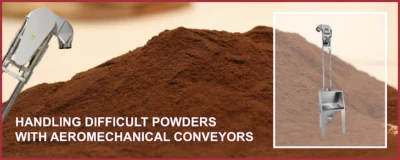
Handling Difficult Powders with Aeromechanical Conveyors
Explore hopper design, flow assistance and material testing for difficult powders. The article discusses feeding and conveying challenges within a complete material-handling arrangement.
Review conveying considerations for fragile and friable materials, including breakage, surface degradation and dust generation, and the TipTrak features discussed in the article.
DISCUSS YOUR ENVIRONMENTAL OR ENERGY MATERIAL HANDLING APPLICATION
Let’s review your material and the transfer you need.
Tell us what you’re conveying, the capacity you need and where the material needs to go. Include the handling problem you want to solve and a layout or photo if available. Our team will help identify the next step.